


A painful hip can gradually narrow your life: shorter walks, disrupted sleep, difficulty getting in and out of the car, and hesitation before activities you once enjoyed. When non-operative treatment is no longer providing enough relief, the question of hip resurfacing versus hip replacement may arise. Both operations can reduce arthritic pain and restore mobility, but they are different procedures designed for different patients.
The right choice is not simply about choosing the newest option or the operation with the quickest-sounding recovery. It depends on the condition of your hip, your bone quality, anatomy, age, activity goals and wider health. A specialist assessment should provide a clear recommendation based on those individual factors.
Hip resurfacing versus hip replacement: the key difference
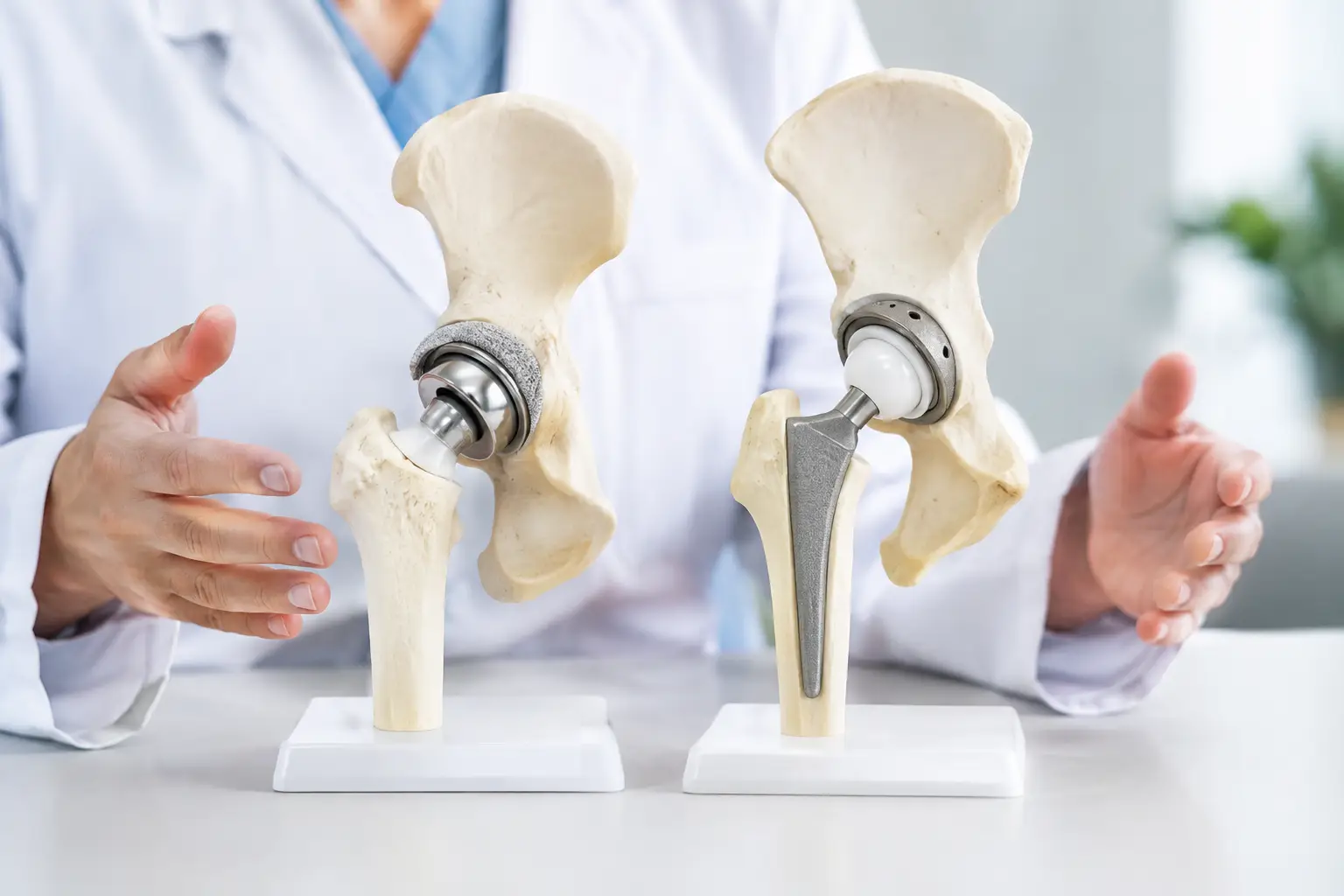
A total hip replacement removes the damaged ball at the top of the thigh bone, known as the femoral head, and replaces it with a metal or ceramic ball attached to a stem that sits within the femur. The damaged hip socket is also replaced with a new cup and liner. It is a well-established operation with excellent long-term results for many people with hip arthritis.
Hip resurfacing also replaces the damaged socket, but preserves more of the upper femur. Rather than removing the femoral head and inserting a stem into the thigh bone, the surgeon carefully shapes the existing femoral head and caps it with a smooth metal component.
This difference in bone preservation is the central appeal of resurfacing. However, preserving bone is only beneficial when the remaining bone is strong enough to support the implant safely. It is not automatically the best option for a younger or more active person.
Who may be suitable for hip resurfacing?
Hip resurfacing is most often considered for carefully selected, active patients with severe osteoarthritis, strong bone quality and a sufficiently large femoral head. In practice, it has historically produced its most predictable outcomes in younger men with larger bone structure.
Women and people with smaller femoral heads may face a higher risk of complications with resurfacing in some circumstances. This does not mean resurfacing is never appropriate, but candidacy requires particularly careful assessment. A history of osteoporosis, cysts or poor bone quality in the femoral head, significant hip deformity, reduced kidney function or sensitivity to metal may make a conventional total hip replacement the safer choice.
Resurfacing implants use metal-on-metal bearing surfaces. These can release very small amounts of metal wear particles and ions into the body over time. Modern patient selection, surgical technique and follow-up aim to reduce this concern, but it remains an important consideration. Some patients require blood tests and imaging after surgery to monitor the implant and surrounding tissues.
A consultation should therefore go beyond an X-ray alone. It should include your symptoms, previous treatments, medical history, activity level, bone health and the shape of your hip joint. If resurfacing is being considered, the discussion should be open about the specific implant proposed and the monitoring it may require.
When is total hip replacement the better option?
Total hip replacement is suitable for a much wider range of patients. It can be an excellent choice for men and women of varying ages, including those with more advanced joint damage, poorer bone quality, inflammatory arthritis, hip dysplasia or complex anatomy.
The procedure has evolved considerably. Modern implants offer different bearing materials and fixation methods, allowing the operation to be tailored to the individual. For example, ceramic and highly cross-linked polyethylene bearings are commonly selected for their low wear characteristics. The precise combination is chosen according to factors such as age, bone strength, anatomy and expected activity.
For many people, a total hip replacement provides the most reliable balance of pain relief, stability and long-term function. It is also generally the preferred approach when hip resurfacing carries a greater risk of femoral neck fracture, adverse reaction to metal debris or early implant failure.
Importantly, having a stemmed hip replacement does not mean giving up an active life. Many patients return to walking, cycling, swimming, golf, gym-based exercise and other low-impact activities once they have recovered. The objective is not simply a good X-ray result, but a hip that allows you to move with confidence in everyday life.
Benefits and trade-offs to discuss
Both procedures can be highly successful, and both carry the usual risks associated with major joint surgery, including infection, blood clots, leg-length difference, nerve or blood vessel injury, stiffness and the possibility that further surgery may eventually be needed.
Hip resurfacing has potential advantages in the right patient. Because it uses a large ball, it may offer a lower risk of dislocation than some traditional total hip replacement designs. It also preserves more femoral bone, which can be helpful if revision surgery is required later in life. Some active patients value the natural-feeling stability that a large head may provide.
Those advantages need to be balanced against resurfacing-specific risks. A fracture of the femoral neck can occur, particularly if the bone is not strong enough. Metal wear and reactions in the tissues around the hip are another concern, and the procedure is technically demanding. Outcomes depend heavily on accurate implant positioning and appropriate patient selection.
Total hip replacement removes more bone from the femur, but it has a longer and broader track record across patient groups. Modern large-head and dual-mobility designs can also be used in selected cases to improve stability. Should a hip replacement wear out or loosen years later, revision surgery is possible, although it is more complex than a first operation.
There is no universal winner. The best operation is the one that gives you the strongest prospect of durable pain relief and useful movement with an acceptable level of risk.
Recovery: is one operation quicker?
Recovery after hip resurfacing and total hip replacement is broadly similar. Most patients stand and walk with support soon after surgery, usually with the guidance of physiotherapists. You will then build strength, confidence and walking distance progressively over the following weeks.
The first few weeks are focused on protecting the hip, managing swelling and discomfort, and moving safely around the home. Driving, returning to work and resuming daily routines depend on the type of work you do, which leg has been operated on and how recovery is progressing. Desk-based work may be possible earlier than physically demanding work, but recovery should not be rushed.
By around three months, many people feel substantially more mobile and comfortable. Improvement can continue for a year or longer as muscles regain strength and the body adapts to the new joint. Your commitment to rehabilitation, along with careful surgical planning, has a meaningful effect on the final outcome.
Questions worth asking at your consultation
A major hip operation deserves clear answers. Ask whether you are genuinely a candidate for resurfacing and why. Ask what your imaging shows about bone quality and hip anatomy, which implant materials are recommended, and what the likely benefits and limitations are for your particular lifestyle.
It is also reasonable to ask about the surgeon’s experience with the procedure, the expected recovery plan, complication rates in comparable cases and how you would be followed up after surgery. If you are considering resurfacing, ask specifically how metal ion monitoring and further imaging would be managed if needed.
For patients in London and Kent, an assessment with a fellowship-trained hip specialist can help turn a confusing choice into a considered plan. The aim is to understand not only what is damaged in the joint, but what you want to return to: walking without planning every route, playing with grandchildren, working comfortably or enjoying exercise again.
The most reassuring decision is often not the operation that sounds most appealing at first, but the one that fits your hip, your health and the life you want to lead afterwards.