


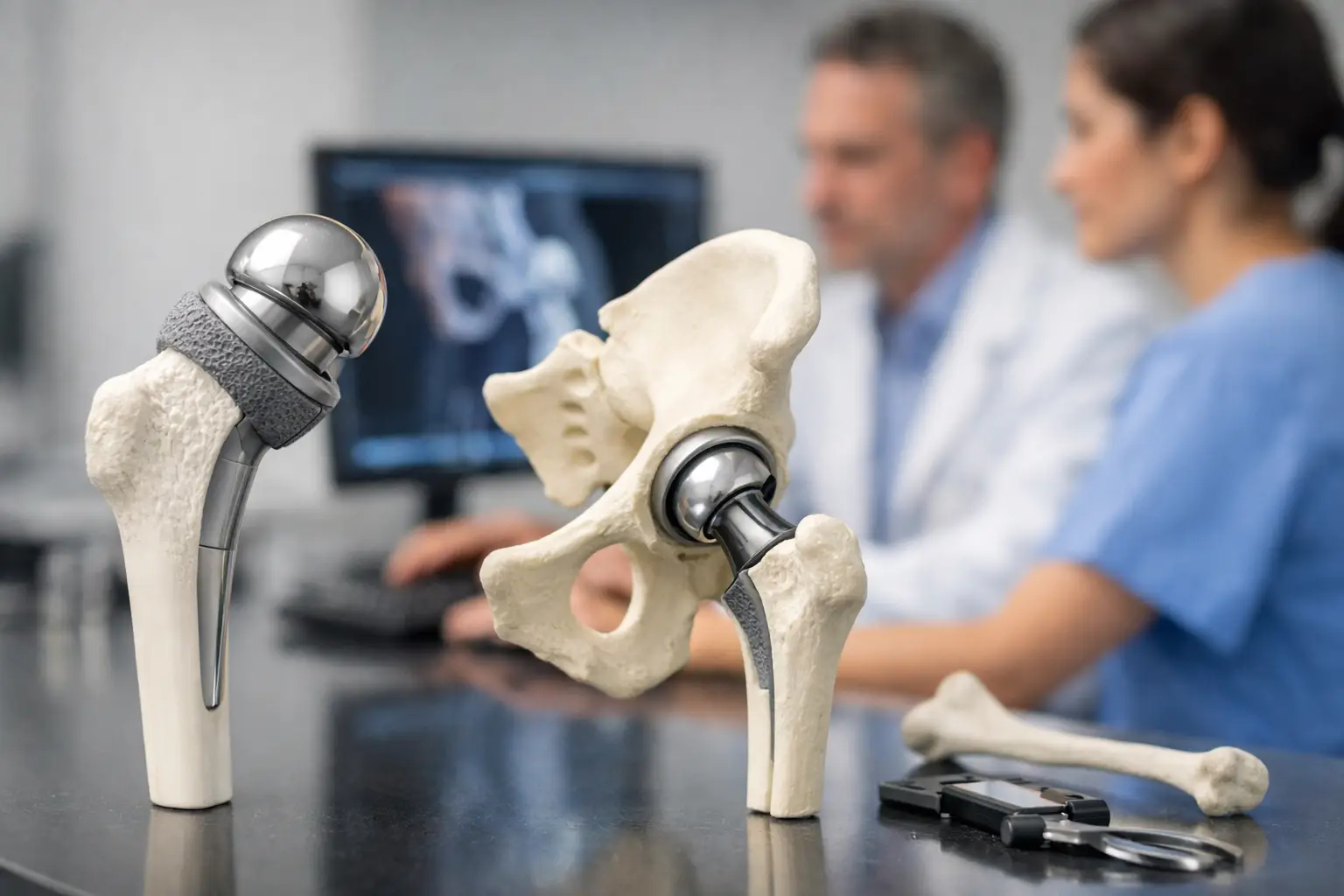
Hip replacement is not simply about exchanging a worn joint for an artificial one. It is about restoring comfortable, dependable movement in a way that suits your anatomy, lifestyle and surgical needs. Personalised hip replacement technology helps make that possible by giving the surgeon more detailed information before and during surgery.
For someone whose hip pain is limiting sleep, work, walking or time with family, the technology can sound reassuring. But it is not a substitute for specialist judgement or a guarantee of a particular outcome. Its value lies in supporting careful planning, accurate execution and an informed conversation about the treatment that is right for you.
What does personalised hip replacement technology mean?
The phrase is used in several ways, which can make it confusing. In practical terms, personalised hip replacement technology describes tools and techniques that tailor parts of hip replacement surgery to an individual patient rather than relying solely on standard measurements and conventional planning.
This may involve detailed imaging, computer-based planning software, three-dimensional modelling, patient-specific instruments, surgical navigation or robotic assistance. In selected cases, it can also include custom-designed implants. These are different technologies, and not every patient needs each one.
A conventional total hip replacement remains a highly successful operation for many people. Personalisation does not mean that established techniques are outdated. It means that, where appropriate, imaging and planning can provide another level of detail for a surgeon who is already focused on positioning the components accurately and restoring function.
Why planning matters in hip replacement surgery
The hip is a ball-and-socket joint, but replacing it is not as simple as fitting two matching parts. The surgeon must consider the shape of the pelvis and femur, bone quality, leg length, the centre of rotation of the hip, soft-tissue tension and the condition of the surrounding muscles and spine.
Small differences in component position can affect stability, range of movement and how the joint feels during everyday activities. The aim is to create a hip that is stable and comfortable while respecting your individual anatomy.
Pre-operative planning has always been part of good hip replacement surgery. Personalised technology can make that planning more detailed. A CT scan or specialised X-rays may be used to create a three-dimensional representation of the hip. The surgeon can then assess deformity, bone loss or previous implants, and plan implant size and position before entering the operating theatre.
This can be particularly useful where anatomy is less straightforward, such as after previous surgery, childhood hip conditions, trauma or in revision hip replacement. For a routine primary replacement, the benefit must be weighed against the additional imaging, cost and radiation exposure associated with a CT scan.
Planning for the person, not just the X-ray
A successful result is not defined by an image alone. Your surgeon will also consider what you need from your hip after recovery. Returning to a desk-based role, walking the dog, managing stairs, playing golf and caring for grandchildren all place different demands on the joint.
Your general health, bone strength, medication, previous operations and expectations matter too. A precise digital plan is valuable, but it should sit within a wider treatment plan that includes anaesthetic assessment, pain management, physiotherapy and realistic recovery goals.
The technologies that may be used
Three-dimensional imaging and digital planning
Digital planning software allows the surgeon to study your hip in detail and test different implant options virtually. It can help estimate the size of components, identify differences in leg length and plan the intended orientation of the cup and stem.
The plan remains a guide rather than an inflexible script. Surgery sometimes reveals findings that were not fully apparent on scans, including the quality of bone or the condition of soft tissues. An experienced hip surgeon needs to respond safely to what they see while keeping the overall objectives clear.
Navigation and robotic assistance
Navigation systems use computer guidance to help the surgical team measure and check component position during the operation. Robotic systems may add a planned, controlled method of preparing bone and placing components within defined parameters.
These tools can provide useful real-time information, particularly in cases where accuracy is challenging. However, they do not perform the operation independently. The surgeon makes the clinical decisions, prepares the tissues, manages any unexpected issues and remains responsible for every aspect of care.
Robotic or navigated surgery may not be necessary for every hip replacement. Availability, anatomy, the planned surgical approach and the surgeon’s assessment will all influence whether it is likely to add meaningful value in your case.
Patient-specific instruments and custom implants
Patient-specific instruments are guides designed from pre-operative imaging to assist with a planned part of surgery. A custom implant is different: it is manufactured to match a patient’s particular anatomy.
Custom implants are usually considered for selected complex cases rather than standard primary hip replacements. They can be valuable when there is substantial bone loss, unusual anatomy or a difficult revision operation after a previous replacement has failed. They also require careful lead times and planning, so they are not always the fastest or most appropriate route.
When a personalised approach may be especially helpful
Every hip replacement should be individually planned. More advanced personalised techniques are often most helpful when that planning needs to address additional complexity. This may include a previous hip replacement that has become painful or loose, a hip altered by fracture or childhood disease, a significant difference in leg length, or bone loss around an existing implant.
For revision hip replacement, the questions are often more demanding. Why has the original replacement failed? Is there infection, instability, wear, fracture or loss of bone? How can the new components be fixed securely while preserving as much healthy bone as possible? Detailed imaging and specialist planning are central to answering these questions.
For patients having a first hip replacement for arthritis, the right approach depends on their symptoms, examination findings and imaging. Advanced technology may be helpful, but the most important factors remain an appropriate implant, careful surgical technique, infection prevention, rehabilitation and consistent follow-up.
Benefits and limits to understand
The potential benefit of personalised technology is greater precision in planning and, in some settings, better information during surgery. It can support decisions around implant positioning, leg length and the management of complex anatomy. It may also help patients understand why a particular surgical plan has been recommended.
It cannot remove the normal risks of hip replacement, which include infection, blood clots, dislocation, fracture, nerve or blood vessel injury, leg-length difference, stiffness and the possibility that further surgery may be needed in the future. Nor can it guarantee that every hip will feel completely natural after recovery.
There are practical considerations too. More detailed scans may not be appropriate for everyone, and some technologies increase the cost of treatment. Evidence is continuing to develop, particularly around whether improved technical accuracy consistently translates into better long-term patient outcomes across all types of hip replacement.
That is why the question is not simply, “Is this the newest technology?” A better question is, “Will this technology make a meaningful difference for my hip and my operation?” Honest advice should be tailored to the answer.
Questions worth asking at your consultation
A consultation should give you time to understand both the operation and the reasoning behind it. Ask what is causing your symptoms, whether non-operative treatment remains suitable, and what type of hip replacement is being considered. It is also reasonable to ask whether detailed imaging, navigation, robotic assistance or a custom implant would be useful in your case, and why.
You may also want to discuss the expected recovery timetable, the support you will need at home, when you may return to driving or work, and which activities you can reasonably expect to resume. Recovery varies between individuals, but clear preparation usually makes the process feel more manageable.
At Mr. Kam Cheema’s practice, treatment decisions are based on a detailed assessment of your hip, your symptoms and the life you want to return to. Technology is used thoughtfully, where it supports precision and safety, rather than as an end in itself.
The best hip replacement plan is one you understand and trust: grounded in specialist expertise, shaped around your needs and supported well from the first consultation through recovery.