


A hip replacement is not simply a choice between one artificial joint and another. The materials used where the new joint moves can influence wear, stability and the long-term plan for your mobility. This ceramic hip implant review explains what ceramic components can offer, where their limitations lie, and how a specialist helps decide whether they suit your hip, lifestyle and expectations.
For someone living with persistent hip arthritis, pain at night, difficulty walking or a growing reliance on pain relief, the priority is usually clear: reliable pain reduction and a return to normal daily life. The bearing surface is one part of achieving that result, but it should never be considered in isolation from the surgical technique, implant positioning, bone quality and rehabilitation.
What does a ceramic hip implant mean?
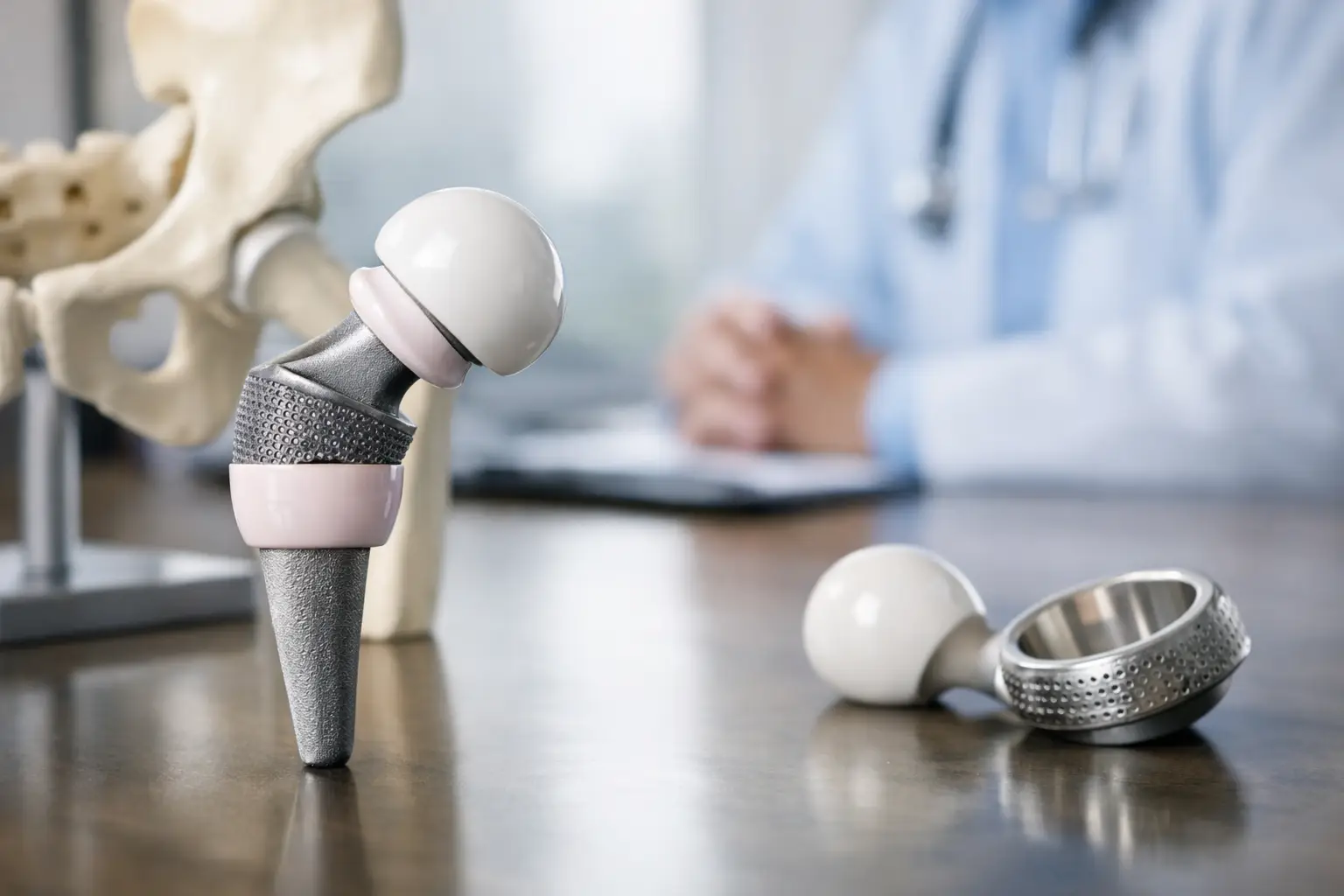
Most total hip replacements have a stem that sits within the thigh bone, a cup placed in the pelvis, a ball at the top of the stem, and a liner inside the cup. The ball and liner form the bearing – the surfaces that move against each other when you walk, sit, bend and climb stairs.
A so-called ceramic hip implant usually refers to a ceramic femoral head, a ceramic liner, or both. The stem and outer shell of the cup are commonly made from metal alloys, which are designed to secure the replacement to the bone. Ceramic is therefore not necessarily the material used throughout the entire implant.
The two main ceramic bearing options are ceramic-on-polyethylene, where a ceramic head moves against a highly cross-linked plastic liner, and ceramic-on-ceramic, where both moving surfaces are ceramic. Each has a well-established role in modern hip replacement, but neither is automatically the best choice for every patient.
Ceramic hip implant review: potential benefits
Ceramic is exceptionally hard, smooth and resistant to scratching. Those qualities can reduce friction at the bearing surface and may help limit the tiny wear particles produced over many years of use. Wear matters because, in some circumstances, particle debris can contribute to inflammation and gradual bone loss around an implant.
Ceramic-on-polyethylene is widely used because it combines a hard, smooth head with a durable modern liner. Contemporary highly cross-linked polyethylene has substantially improved wear performance compared with older plastic materials. For many patients, this bearing offers an excellent balance of longevity, reliability and versatility.
Ceramic-on-ceramic has the lowest wear rates in laboratory testing and can be particularly attractive for selected younger, active patients who may place greater demands on a replacement over several decades. The material is also biologically inert and does not create the same concerns around metal wear debris that influenced the move away from many metal-on-metal hip replacements.
There can be practical advantages too. A low-wear bearing may be a sensible consideration for a person who hopes to remain active with walking, cycling, golf, swimming or work that involves spending much of the day on their feet. However, a hip replacement is not designed to make high-impact running, repetitive jumping or contact sport entirely risk-free. The aim is comfortable, confident function, not simply choosing the hardest possible material.
The limitations and trade-offs to understand
Ceramic has evolved considerably, and modern ceramic components are highly reliable. Even so, every bearing choice involves trade-offs.
The risk of ceramic fracture is now very low, but it is not zero. Ceramic is extremely strong under normal use, yet unlike metal it does not bend before breaking. Precise component selection and positioning are therefore essential. If a ceramic component were to fracture, revision surgery would be more complex because very small particles would need careful management.
Some patients with ceramic-on-ceramic hips notice a squeaking or clicking sound during movement. It is uncommon and often harmless, but it can be bothersome. The cause may relate to implant position, activity, lubrication at the bearing surface or individual anatomy. Persistent noise, a new grinding sensation or pain should always be assessed rather than dismissed.
Ceramic-on-ceramic components also have less flexibility in certain complex situations. In patients with unusual anatomy, previous surgery, bone loss, spinal stiffness or a need for revision hip replacement, the most appropriate construct may be determined by stability and fixation requirements rather than wear characteristics alone. A larger head or a dual-mobility design, for example, may be considered where reducing dislocation risk is a key concern.
Cost may also differ between implant systems. In private care, it is reasonable to ask what implant has been recommended, why it has been selected and whether it affects the overall treatment cost. A higher-priced bearing is not necessarily a better bearing for your individual circumstances.
How ceramic compares with other hip bearing surfaces
A useful comparison is not ceramic versus poor-quality alternatives. Modern hip replacement uses several highly developed implant combinations, and the right answer depends on the person having surgery.
Ceramic-on-polyethylene
This is often regarded as a dependable all-round option. It offers low wear, avoids metal-on-metal articulation and is suitable for a wide range of ages and activity levels. For many people having a first hip replacement, it provides an excellent combination of long-term performance and practical reliability.
Ceramic-on-ceramic
This may be considered for selected younger and more active patients, particularly when minimising wear over a long anticipated implant lifespan is a priority. Its potential disadvantages include the small risk of noise and the rare risk of fracture. It is not automatically superior to ceramic-on-polyethylene in every case.
Metal-on-polyethylene
A metal head with a modern polyethylene liner remains a proven option and may be entirely appropriate. The decision can be influenced by implant design, component size, stability requirements and the surgeon’s assessment of the hip. It should not be confused with metal-on-metal bearings, which are a different category and are used far less commonly today.
The strongest evidence in hip replacement supports making decisions around the whole construct and the quality of surgery, not relying on one material label. An accurately planned, well-positioned implant with an appropriate bearing is more meaningful than a premium-sounding material used without a clear reason.
Who may be a good candidate for a ceramic bearing?
Age alone should not decide the bearing surface. A fit 70-year-old who walks several miles most days may have different requirements from a 55-year-old with reduced bone quality, a history of spinal fusion or prior hip surgery. Your surgeon will consider your activity goals alongside medical factors.
Ceramic may be particularly worth discussing if you are relatively young for hip replacement, lead an active life, have concerns about long-term wear, or have a sensitivity to particular metals. It may also be part of a sensible plan for an otherwise straightforward primary hip replacement where the anatomy permits its use.
Equally, a ceramic bearing may not be the priority where stability is the overriding issue. Patients with neuromuscular conditions, significant spinal stiffness, previous hip operations or complex deformity can have a higher dislocation risk. In those circumstances, a surgeon may recommend a different liner or implant design to improve stability, even if another bearing has theoretical wear advantages.
Questions worth asking at your consultation
You do not need to arrive knowing the engineering details of every hip system. You should, however, leave the consultation understanding the recommendation. Ask which bearing surface is proposed, whether it is ceramic-on-polyethylene or ceramic-on-ceramic, and why it is suitable for you.
It is also sensible to ask how your age, bone quality, activity plans and medical history affect the decision. If you have had previous hip surgery, inflammatory arthritis, back surgery or a known metal allergy, mention this clearly. These details can change implant planning.
Finally, discuss the recovery that will make the implant work well. Most patients are encouraged to mobilise soon after surgery, but progress varies. Careful pain control, physiotherapy, safe movement in the early weeks and gradual strengthening are central to restoring confidence. The material of the bearing cannot compensate for poor rehabilitation or a return to demanding activity before the hip has recovered.
Choosing the implant is part of choosing the right care
A ceramic bearing can be an excellent option in modern total hip replacement, particularly when low wear and long-term durability are important. Yet the most suitable implant is the one selected for your anatomy, stability needs, bone quality and life after surgery – and inserted with meticulous planning and technique.
At a specialist consultation, the conversation should focus on what you want to get back to: walking without planning every step, working comfortably, travelling, playing with grandchildren or sleeping without hip pain. A clear explanation of the available bearing options can help you make that decision with confidence, while keeping the goal where it belongs – on lasting movement and a life less limited by pain.