


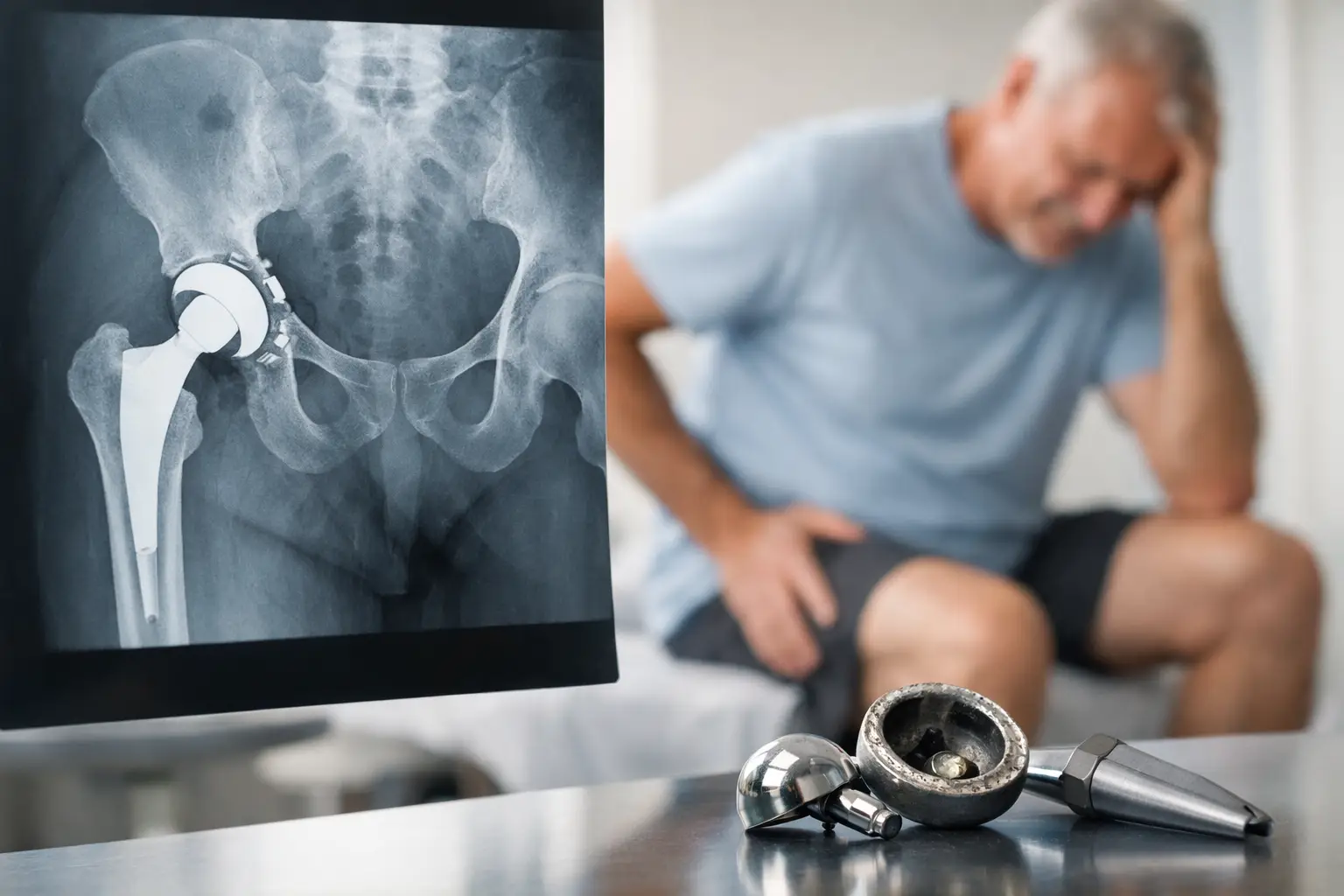
A failed arthroplasty does not necessarily mean that a joint replacement has suddenly broken. More often, it describes a hip or knee replacement that is no longer delivering the comfort, stability or movement it was intended to provide. For someone who has already been through major surgery, the return of pain or loss of confidence in the joint can be deeply frustrating. The priority is to identify the precise cause, rather than assuming that more surgery is automatically required.
What does failed arthroplasty mean?
Arthroplasty is the medical term for joint replacement surgery. A total hip, total knee or partial knee replacement is designed to relieve pain from worn or damaged joint surfaces and help restore everyday function. Most joint replacements perform very well for many years, but no artificial joint lasts indefinitely and some can develop problems earlier than expected.
A failed arthroplasty is a term used when the replacement is painful, unstable, stiff, infected, worn, loose or otherwise unable to function satisfactorily. The symptoms may begin soon after surgery, develop gradually over several years, or appear after a fall, injury or infection elsewhere in the body.
It is worth remembering that pain after a joint replacement does not always mean the implant has failed. Pain may arise from muscles, tendons, the spine, nerves or another nearby joint. A careful assessment is therefore essential before deciding on treatment.
Symptoms that should not be ignored
Some discomfort, swelling and stiffness are expected during the normal recovery period after replacement surgery. However, persistent symptoms, new symptoms after a previously successful recovery, or a clear deterioration in function should be assessed by a hip and knee specialist.
You may notice an aching pain while walking, pain at rest or at night, swelling around the joint, clicking or clunking, a sense that the joint may give way, or increasing difficulty with stairs and everyday activities. In the hip, groin, thigh or buttock pain can be significant. In the knee, patients may describe instability, stiffness, recurrent swelling or an inability to trust the leg when turning or walking on uneven ground.
A hot, red joint, wound leakage, fever, feeling unwell, or sudden severe pain needs prompt medical attention. These can be signs of infection or another urgent complication. Not every infection produces fever or obvious redness, particularly when it develops slowly, so persistent unexplained pain should never be dismissed.
Why hip and knee replacements can fail
There is rarely one explanation that applies to every patient. The timing of symptoms, the type of implant, the original reason for surgery, previous operations and a person’s overall health all matter.
Loosening and wear
Over time, the bond between the implant and bone can weaken. This is known as loosening and may cause pain, especially during weight-bearing. In some cases, tiny particles from the bearing surfaces trigger a reaction that leads to bone loss around the implant. Modern materials have improved considerably, but wear and loosening can still occur, particularly in replacements that have been in place for many years.
Infection
Infection around a joint replacement is one of the most serious causes of failed arthroplasty. It may occur shortly after surgery, but it can also develop years later. Bacteria can occasionally reach the joint through the bloodstream from another infection. Treatment depends on when the infection began, the organism involved and the condition of the surrounding bone and soft tissues. It may involve antibiotics alongside one or more operations.
Instability, stiffness and alignment problems
A knee replacement can feel unstable if the supporting ligaments are not functioning as needed, if the components are not appropriately balanced, or if the implant has moved over time. Hip instability may lead to repeated dislocation or a sensation that the hip is unreliable in certain positions.
Stiffness can be equally limiting. Scar tissue, implant position, infection or an underlying mechanical problem may restrict movement. Sometimes the cause is apparent on imaging; sometimes it only becomes clear after a detailed examination and review of the original operation.
Fracture or soft-tissue problems
A fall can cause a fracture around a hip or knee replacement. These periprosthetic fractures require specialist planning because the treatment must address both the broken bone and the stability of the implant. Weakness or damage in the muscles and tendons around the hip, including the abductor muscles, can also cause pain, limping and reduced confidence when walking.
How a specialist investigates a painful joint replacement
Good revision care begins with listening carefully. The pattern of pain can offer useful clues: whether it occurs on the first steps, after a certain distance, when climbing stairs, at night, or only during specific movements. Your surgeon will also ask about the original replacement, past wound issues, other infections, medical conditions and the level of activity you hope to return to.
The examination assesses walking, leg length, joint movement, stability, muscle strength and the condition of the skin and scar. Standard X-rays are usually the starting point, as they can show implant position, loosening, fracture, wear and changes in the surrounding bone.
Further investigations may include blood tests for infection, a CT scan to assess bone and component position in greater detail, or specialist nuclear imaging in selected cases. If infection is suspected, fluid may be taken from the joint and sent for laboratory analysis. This is often called an aspiration.
These steps can feel lengthy when you are in pain, but they are not unnecessary delays. Revision surgery is more complex than primary joint replacement, and the best outcome depends on treating the right problem with the right procedure.
Treatment for failed arthroplasty
Treatment is tailored to the diagnosis. If the implant is secure and the pain comes from a non-joint source, surgery may not be the best answer. Physiotherapy, targeted pain management, injections for a separate soft-tissue condition, or treatment of spinal or neurological causes may be more appropriate.
Where a replacement has loosened, become unstable, worn significantly, fractured the surrounding bone or developed infection, revision joint replacement may be recommended. Revision surgery involves removing part or all of the existing implant, addressing damaged bone or soft tissue, and inserting new components designed to restore fixation, stability and alignment.
Some revisions are relatively focused, such as replacing a worn liner or addressing a single loose component. Others require more extensive reconstruction, bone grafting, specialist implants or staged surgery for infection. The complexity depends on how much bone remains, the quality of the soft tissues, whether infection is present and how many previous operations have been performed.
The trade-off is straightforward: revision surgery can offer substantial relief from pain and improved function, but it usually carries greater risks and a longer recovery than a first replacement. An honest discussion should cover the likely benefits, the limitations of surgery and the alternative of managing symptoms without an operation where appropriate.
Planning for a safer revision operation
Precision planning is particularly valuable in complex hip and knee revision surgery. Detailed imaging helps determine implant size, the condition of the bone and whether specialist equipment or custom components may be needed. For infection cases, coordination with microbiology specialists helps guide antibiotic treatment and surgical timing.
Your overall health also forms part of the plan. Optimising diabetes control, nutrition, anaemia, smoking cessation and fitness can reduce complications and support recovery. If you take anticoagulants or have significant heart, lung or kidney conditions, these should be reviewed well before surgery.
A clear plan should also account for life after the operation. You may need crutches or walking aids initially, help at home, outpatient physiotherapy and time away from work or driving. Recovery is not identical for everyone, but understanding the practical demands beforehand can make the process more manageable.
When to seek a revision opinion
Consider a specialist opinion if pain persists beyond the expected recovery period, if your replaced joint has become less reliable, or if you have been told that your implant may be loose, worn or infected. It is also sensible to seek expert review when symptoms and earlier test results do not appear to match, particularly after more than one previous operation.
Bring any operation notes, implant details, previous scans and recent blood results if available. They can help build a clearer picture, although a specialist assessment can still proceed when records are incomplete.
A painful hip or knee replacement can make ordinary life feel uncertain, from walking the dog and managing stairs to returning to work or enjoying time with family. The most helpful next step is a thorough diagnosis and an open conversation about what can realistically improve. With the cause properly understood, treatment can be planned around one meaningful aim: helping you move with less pain and greater confidence again.