


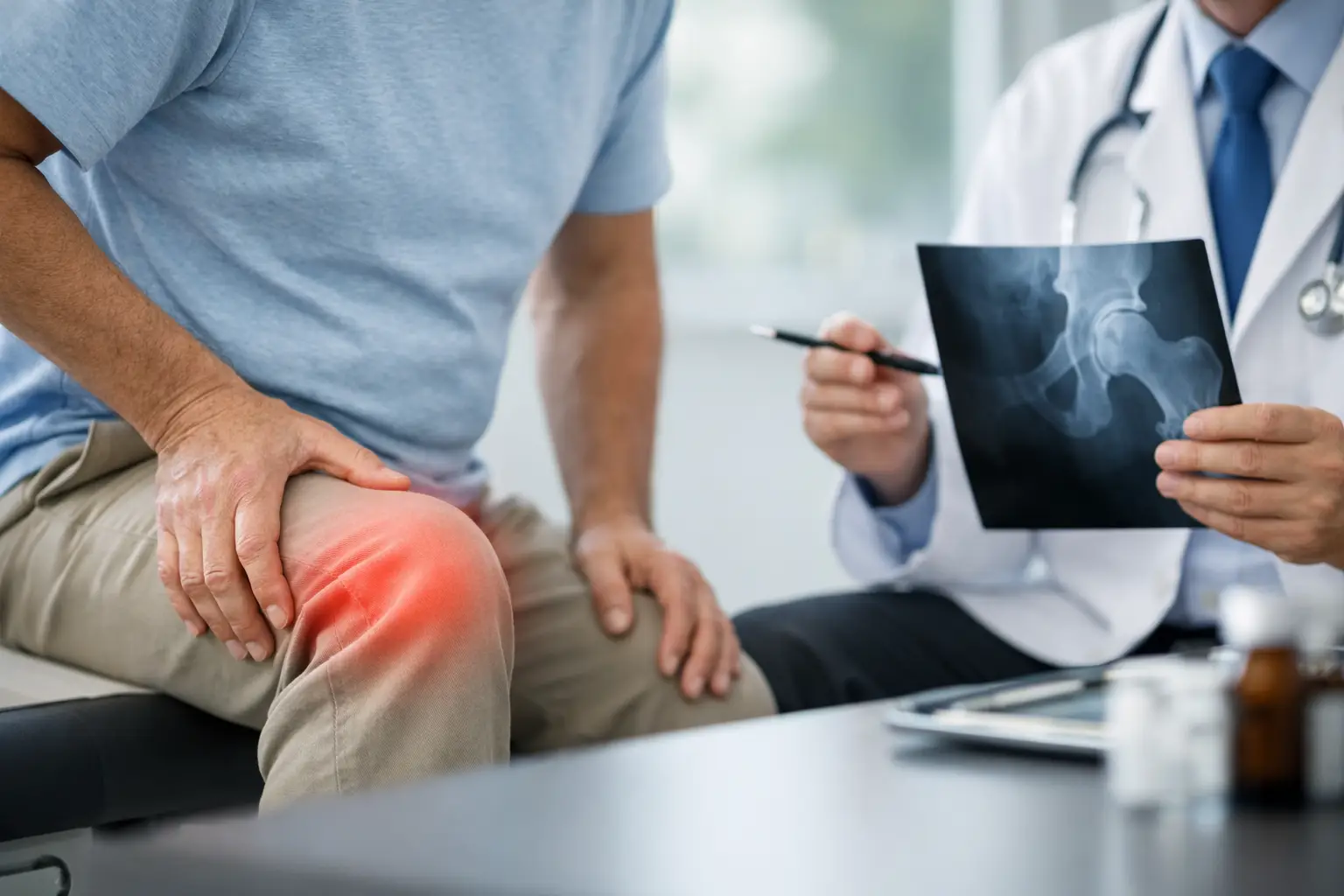
A painful hip or knee is often caused by arthritis, tendon problems or an injury. A joint infection is different: it can damage cartilage, bone and surrounding soft tissue quickly, sometimes within days. It requires urgent medical assessment, particularly when pain is severe, the joint is hot or swollen, or you feel unwell.
For people who have had a hip or knee replacement, a new increase in pain, swelling or wound leakage should never be dismissed as a normal part of recovery. Although infection after joint surgery is uncommon, recognising it promptly gives the best chance of protecting the joint, restoring mobility and avoiding more extensive treatment.
What is a joint infection?
A joint infection, also called septic arthritis, occurs when bacteria, and less commonly other organisms, enter a joint. The immune response that follows can create damaging inflammation inside the joint. In a natural hip or knee, this may harm the smooth cartilage that allows comfortable movement. Around a joint replacement, bacteria can attach to the metal and plastic components, making infection more difficult to clear.
Infection may reach a joint through the bloodstream from another part of the body, such as the skin, urinary tract or chest. It can also follow an injury that breaks the skin, an injection, an operation or, rarely, a dental or medical procedure in someone with particular risk factors. Sometimes there is no obvious source.
A painful joint is not automatically infected. Arthritis flares, gout, inflammatory conditions and blood in the joint can produce similar symptoms. The priority is to distinguish these conditions safely rather than waiting to see whether things settle.
Symptoms that need urgent assessment
Symptoms can develop suddenly over hours or days, but infections involving a replacement joint may occasionally present more gradually. Seek urgent medical advice if you experience a combination of severe or worsening joint pain, swelling, warmth, redness, difficulty moving the joint or an inability to put weight through the leg.
Feeling feverish, shivery, unusually tired or generally unwell increases concern, although not everyone with a serious infection has a high temperature. The hip sits deep beneath muscle and fat, so swelling or redness may be less visible than it is around the knee. Severe groin, buttock or thigh pain with marked difficulty walking still needs prompt attention.
After hip or knee surgery, contact your surgical team urgently if there is increasing wound redness, persistent drainage, a wound that opens, new swelling, escalating pain after an initial improvement, or a fever. These signs do not always mean infection, but they should be assessed without delay.
If you are acutely unwell, confused, faint, breathless, or have rapidly worsening pain and fever, attend A&E or call 999. A spreading infection can lead to sepsis, which is a medical emergency.
Who is more at risk?
A joint infection can affect anyone, but the likelihood is higher in people with diabetes, immune suppression, rheumatoid arthritis, significant skin disease or a previous joint infection. Risk may also be increased by poor circulation, kidney disease, regular injections into a joint, intravenous drug use, or recent surgery.
Having a joint replacement does not mean infection is likely. Modern surgical precautions are designed to keep the risk low. However, an artificial joint has no immune system of its own, and an infection around it requires specialist assessment. Previous surgery, revision surgery and complex reconstruction can add to the clinical considerations, which is why clear follow-up and early reporting of symptoms matter.
How a suspected joint infection is diagnosed
Diagnosis begins with a careful history and examination. Your clinician will ask when symptoms began, whether there has been a recent infection elsewhere, any injury or procedure, and how the pain has changed. They will assess the wound if you have had surgery and examine the hip or knee, as well as your general wellbeing.
Blood tests can look for signs of inflammation or infection, but no single test gives the complete answer. X-rays may show the position of a joint replacement, changes in bone or another explanation for pain, though they can be normal early in an infection. Ultrasound, CT or MRI scanning may be helpful in selected cases, especially for a deep hip joint.
A key investigation is often aspiration: using a sterile needle to take fluid from the joint for laboratory testing. The sample can identify the organism and guide the choice of antibiotic. When a patient is clinically stable, samples are ideally taken before antibiotics are started, because antibiotics can make the infection harder to identify. Where someone is seriously unwell, treatment must not be delayed for testing.
For a suspected infection around a hip or knee replacement, diagnosis is particularly precise. The clinical team may combine blood markers, joint-fluid results, scans and the findings from surgery if an operation is needed. This approach helps separate infection from mechanical loosening, instability or other causes of pain after replacement.
Treatment depends on the joint and timing
Treatment is urgent and tailored to the individual. It commonly involves antibiotics, usually started in hospital and then refined when laboratory results are available. The type of antibiotic, route and duration depend on the organism, the severity of infection and whether there is a natural or replaced joint.
In many cases, infected fluid must also be removed. For a natural knee, this may be done with repeated aspiration or an arthroscopic washout. A hip or a more established infection may require surgery to wash out the joint thoroughly. The aim is to reduce the bacterial load, relieve pressure and protect the joint as far as possible.
Infection after joint replacement
An infection around a hip or knee replacement needs an individual plan. If it is identified very early, the components are stable and the organism is suitable, a surgical washout with exchange of the removable liner or bearing surface may be considered. This is often described as DAIR – debridement, antibiotics and implant retention.
That approach is not right for every situation. When infection has been present for longer, the components are loose, there is a sinus or persistent wound drainage, or the infection cannot be controlled, revision joint replacement may be needed. This can involve removing the existing components, treating the infection with surgery and antibiotics, and reconstructing the joint at a later stage or, in selected circumstances, during the same operation.
These decisions can feel daunting. The balance is between controlling infection reliably, preserving bone and soft tissue, and giving you the best prospect of a stable, comfortable, functional joint. Complex infection and revision cases benefit from a specialist hip-and-knee assessment, with close collaboration between orthopaedic surgeons, microbiologists, radiologists and physiotherapists.
Recovery: protecting function while infection is treated
Recovery is not defined by the operation alone. Pain control, wound monitoring, antibiotic management and a structured rehabilitation plan all contribute to the result. Early movement may be encouraged where safe, but the amount of weight-bearing and exercise will depend on the procedure performed, the condition of the bone and soft tissue, and your overall health.
It is normal for recovery to require patience, particularly after revision surgery. Your team will monitor symptoms, blood results and wound healing, and adjust treatment if needed. Report a return of fever, wound leakage, increasing redness, sudden swelling or worsening pain rather than waiting for a routine appointment.
Most importantly, do not try to manage a suspected infection with rest, painkillers or leftover antibiotics at home. Painkillers can mask changes in symptoms, while unsuitable antibiotics may delay an accurate diagnosis without resolving the problem.
Getting the right help promptly
A joint infection is not a condition to self-diagnose, but it is one where acting early can make a meaningful difference. If a hip or knee becomes suddenly painful, hot, swollen or difficult to use – especially after a replacement or recent procedure – seek urgent assessment. Clear diagnosis and timely specialist treatment offer the strongest foundation for controlling infection and getting back to the everyday movement that matters to you.