


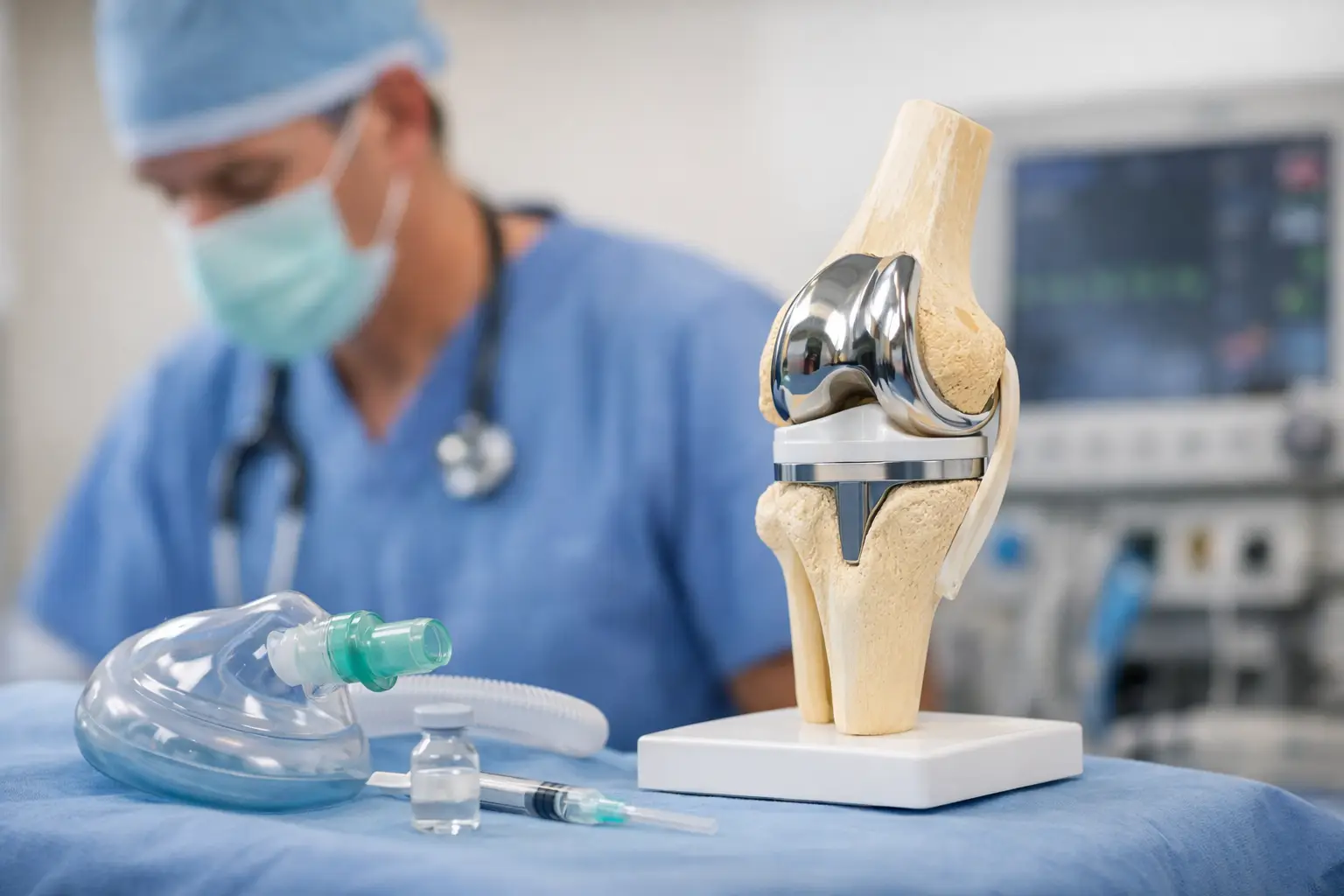
The prospect of being anaesthetised can cause as much concern as the joint replacement itself. Yet for most people, a clear conversation with the anaesthetic team replaces uncertainty with a practical plan. This joint replacement anaesthesia guide explains the usual options for hip and knee surgery, what you may feel before and after the operation, and how your care is tailored around safety, comfort and a confident start to recovery.
Why anaesthesia matters in joint replacement
Anaesthesia does more than ensure you are comfortable during surgery. It affects pain control in the first hours after an operation, how quickly you can begin moving with the physiotherapy team, and the management of nausea, blood pressure and other medical considerations.
There is no single best approach for every patient. Your anaesthetist will consider the planned procedure, your age, general health, medicines, previous experiences of anaesthesia and personal preferences. A straightforward primary knee replacement may call for a different plan from a revision hip replacement or complex reconstruction.
The goal is consistent: to provide safe conditions for surgery while controlling pain effectively enough for you to begin rehabilitation without unnecessary delay.
Joint replacement anaesthesia guide: the main options
For hip and knee replacement, anaesthesia commonly involves a spinal anaesthetic, a general anaesthetic, or a combination of the two. Sedation and local anaesthetic techniques may also form part of the plan.
Spinal anaesthetic
A spinal anaesthetic is an injection into the lower back that temporarily numbs the body from around the waist down. You will not feel the operation. Your legs will initially feel warm, heavy and weak, and this effect usually wears off gradually over a few hours.
Many patients having hip or knee replacement are suitable for a spinal anaesthetic. It may be used with light sedation, so you feel relaxed or sleep through the procedure, or you may remain awake if you prefer. A screen separates the operating area from you, and the anaesthetic team stays with you throughout.
Potential advantages can include good early pain relief, less need for strong opioid medicines and a lower chance of sickness for some patients. However, a spinal is not right for everyone. Certain blood-thinning medicines, spinal conditions, infections or particular medical circumstances may make another approach safer.
General anaesthetic
A general anaesthetic means you are fully unconscious for the operation. Medicines are given through a cannula, usually in the hand or arm, and you are closely monitored while you sleep. You will wake in the recovery area once surgery is complete.
General anaesthesia may be preferred because of your medical history, the complexity or expected length of surgery, or your own wishes. It can also be used if a spinal anaesthetic is unsuitable or does not provide the required effect.
Some people worry that general anaesthesia will leave them confused or unwell. Temporary drowsiness, a dry throat, shivering and nausea can occur, but modern techniques are carefully adjusted to reduce these effects. Your team can offer medicines to prevent sickness and will monitor you closely as you wake.
Combined techniques and sedation
It is common to use more than one technique. For example, a spinal anaesthetic may be paired with sedation, while local anaesthetic may be placed around the joint during surgery to reduce pain afterwards. In selected cases, a nerve block may also be considered.
The exact combination depends on the operation and the individual. A nerve block can provide valuable pain relief, but if it causes temporary muscle weakness it may affect early mobility. This balance is considered carefully, particularly after knee replacement, where safe mobilisation is a priority.
Your pre-operative anaesthetic assessment
Before surgery, you will have an assessment with an anaesthetist or pre-operative team. This is the right time to discuss concerns openly, including previous anaesthetic problems, severe travel sickness, allergies, sleep apnoea, heart or lung conditions, and any history of difficult airways.
Bring an up-to-date list of medicines, including inhalers, diabetes treatment, blood thinners and supplements. Do not stop prescribed medication unless you have been specifically advised to do so. Blood thinners and certain diabetes medicines often need a personalised plan before surgery.
You will also receive instructions on fasting. Following them matters because an empty stomach reduces the risk of regurgitation while you are anaesthetised. Clear fluids may often be allowed until a specified time, but follow the instructions given by your hospital rather than relying on general advice.
If you have had an unpleasant experience before, say so. Whether it was nausea, difficult cannula placement, feeling anxious in theatre or pain that was hard to control, this information helps the team plan better for you.
What happens on the day of surgery
On arrival, you will meet members of the surgical, nursing and anaesthetic teams. Your anaesthetist will confirm your health information, explain the recommended approach and answer final questions before asking for your consent.
In the anaesthetic room or theatre, routine monitors are attached to measure your heart rate, blood pressure and oxygen levels. A cannula is inserted, and you may receive medication to help you relax. If you are having a spinal, the team will guide you into a safe position, clean the skin and use local anaesthetic before the injection. Most people describe pressure rather than significant pain.
During the operation, your anaesthetist remains responsible for your wellbeing. They monitor your breathing, circulation, temperature and level of anaesthesia, making adjustments throughout the procedure.
Pain relief after hip or knee replacement
Good pain control is not about eliminating every sensation. It is about keeping pain manageable enough to breathe deeply, rest, move safely and take part in rehabilitation. This usually involves a planned combination of medicines rather than relying heavily on opioids alone.
You may receive regular paracetamol, anti-inflammatory medication where appropriate, local anaesthetic techniques and a limited amount of stronger pain relief for breakthrough pain. The safest combination depends on factors such as kidney function, stomach conditions, asthma, heart disease and other medication.
Tell the ward team early if pain is preventing you from moving or sleeping. Equally, report dizziness, nausea, itching, confusion or excessive drowsiness, as these can be side effects of stronger pain medicines that can often be adjusted.
Early movement after joint replacement is a key part of recovery. With support from physiotherapists and nursing staff, many patients stand and take their first steps on the day of surgery or the following day. The timing depends on the procedure, your medical condition and how you are feeling, not on a fixed timetable.
Understanding the risks
Anaesthesia for elective joint replacement is usually very safe, particularly when your health is assessed and optimised beforehand. Still, no anaesthetic is entirely without risk.
Common short-term effects include nausea, shivering, a sore throat after general anaesthesia, temporary low blood pressure, bruising around a cannula site and tiredness. A spinal anaesthetic can occasionally cause headache, difficulty passing urine for a short period or, rarely, a temporary drop in blood pressure.
Serious complications are uncommon, but the level of risk varies between patients. Frailty, significant heart or lung disease, obesity, obstructive sleep apnoea and complex revision surgery may require additional planning. Your anaesthetist will explain risks that are relevant to you, rather than overwhelming you with risks that do not apply.
Questions worth asking your anaesthetist
Ask whether a spinal, general anaesthetic or combined approach is recommended and why. It is also reasonable to ask how pain will be managed, whether you are likely to feel nauseous, when you can expect to eat and drink, and what will help you mobilise safely.
If your priority is to remain awake, avoid opioids where possible, minimise sickness or get moving promptly, say so. These preferences can often be accommodated, although safety and the clinical requirements of your operation must always come first.
A successful hip or knee replacement relies on more than the implant itself. Careful anaesthetic planning gives you the best possible platform for surgery, early rehabilitation and a return to the activities that matter to you. The most useful next step is a calm, honest discussion with your surgical and anaesthetic teams, so your treatment plan reflects both your health needs and your recovery goals.