


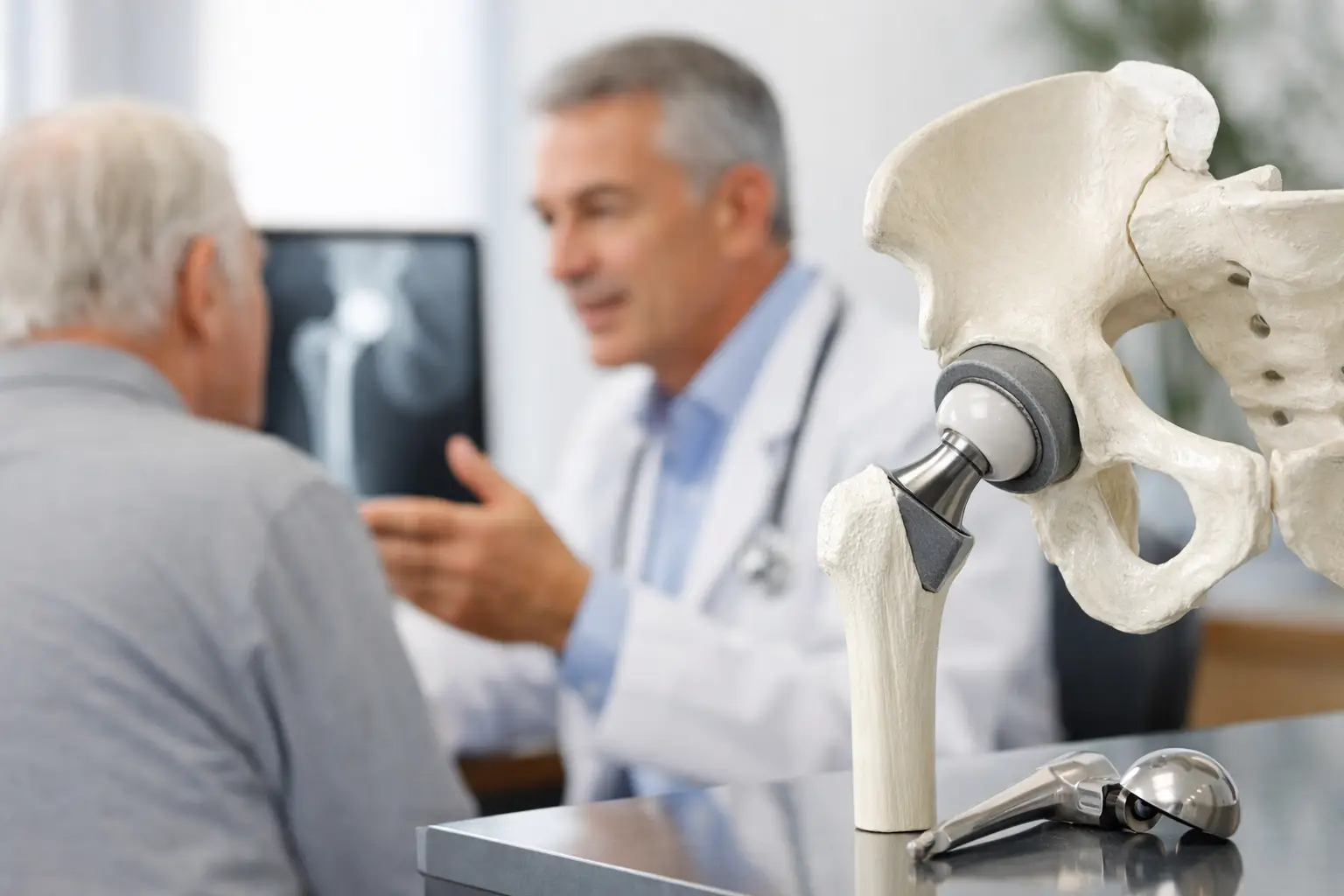
A painful hip can gradually make ordinary life feel smaller. Walking the dog, getting in and out of the car, sleeping comfortably or keeping up with grandchildren may all require more planning than they should. The hip replacement options Kent patients can access range from carefully selected non-operative treatment to primary, custom and revision surgery. The right choice depends on the cause of pain, the condition of the joint and what you need to return to.
When should hip replacement be considered?
Hip replacement is usually considered when pain and stiffness from arthritis or another significant hip condition are affecting day-to-day life despite appropriate non-surgical treatment. A scan alone does not determine whether surgery is right. Some people have pronounced arthritis on an X-ray but manageable symptoms, while others have less dramatic imaging changes and substantial pain or loss of function.
The key question is whether your hip is preventing you from doing the things that matter to you. This may mean walking without stopping, returning to work, managing stairs, enjoying exercise or simply sleeping through the night. A specialist assessment should bring together your symptoms, medical history, examination findings and imaging, rather than treating an X-ray result in isolation.
There is no advantage in delaying assessment until mobility has severely deteriorated. Equally, replacement surgery is a major procedure and should not be rushed when symptoms remain manageable. Clear advice is about helping you understand the likely benefits, limitations and timing of each option.
Hip replacement options in Kent
Non-operative treatment and symptom control
Not every painful hip requires replacement surgery. If symptoms are intermittent, imaging does not show advanced joint damage, or surgery is not currently the right step, a tailored non-operative plan may help reduce pain and maintain movement.
This can include activity modification, physiotherapy-led strengthening, weight management where appropriate and medication reviewed with your GP or specialist. Image-guided injections may also be considered in selected circumstances. A steroid injection can sometimes reduce inflammation and clarify whether pain is coming from the hip joint itself, although the benefit is often temporary. The suitability of other injection treatments depends on the diagnosis and should be discussed honestly rather than presented as a substitute for surgery when the joint is severely worn.
Conservative care is not a lesser option. For many people, it provides worthwhile relief and buys time. For others, it confirms that the hip has reached the point where replacement is likely to offer the more reliable improvement.
Total hip replacement
Total hip replacement is the most common surgical treatment for advanced hip arthritis. The damaged ball and socket surfaces are replaced with carefully selected components designed to reduce pain and restore smoother movement. It can be considered for osteoarthritis, inflammatory arthritis, avascular necrosis and certain deformities or consequences of previous injury.
The aim is not simply a better X-ray. It is to give you a more comfortable, dependable hip for daily life. Most patients can expect substantial improvement in arthritic pain, although no operation can guarantee that every ache disappears or that the hip will feel exactly as it did before symptoms began.
Implant choice is individual. It is influenced by factors such as bone quality, anatomy, age, activity level and any previous surgery. A specialist should explain the reasons for the recommended components and the expected plan for rehabilitation, rather than offering a one-size-fits-all operation.
Custom hip replacement
Standard implants work very well for many patients. However, previous trauma, developmental differences, major deformity or complex anatomy can make precise planning especially important. Custom hip replacement uses detailed imaging and pre-operative planning to help match the reconstruction more closely to an individual’s anatomy.
This may be appropriate when a conventional approach would not provide the desired fit, restoration of leg length or joint stability. It is not automatically better for every patient, but in the right situation it can offer a thoughtful solution to a more complex problem. The decision should be based on the anatomy and surgical objectives, not on technology alone.
Revision hip replacement
A revision hip replacement is performed when an existing hip replacement becomes painful, loose, worn, unstable, infected or damaged by a fracture around the implant. These operations are often more complex than first-time replacement because the surgeon must assess the previous components, the quality of the remaining bone and the cause of failure.
Revision surgery needs careful investigation and planning. The treatment may involve replacing one component or both, rebuilding bone loss, improving stability or addressing infection through a staged approach. A patient who has been told that a previous replacement has failed should seek specialist advice early, particularly if pain is increasing, the hip feels unstable or there has been a sudden change in function.
Partial hip replacement
Partial hip replacement, also called hemiarthroplasty, replaces the ball of the hip but not the socket. It is most commonly used after particular types of hip fracture, rather than for routine osteoarthritis. Whether it is appropriate depends on the injury, the condition of the socket and the person’s overall health and mobility before the fracture.
Choosing between your hip replacement options
The best procedure is the one that addresses your particular problem with an appropriate level of intervention. During a consultation, the discussion should cover the source of pain, the degree of joint damage, your general health, medication, previous procedures and what you hope to achieve after treatment.
It is also sensible to discuss practical matters. How long might you need away from work? Who can help at home during the first weeks? Are you aiming to return to golf, gardening, long walks or lower-impact exercise? These details help shape realistic rehabilitation goals.
At Mr Kam Cheema’s practice, care is centred on fellowship-trained hip and knee expertise, precision-led planning and clear communication at every stage. This is particularly valuable for patients with complex anatomy, previous surgery or a painful replacement that needs further investigation.
What recovery after hip replacement involves
Recovery begins on the day of surgery. Most patients are encouraged to stand and walk with support soon afterwards, guided by the hospital physiotherapy team. You will initially use walking aids, with the pace of progression depending on your strength, balance, the nature of the operation and your home circumstances.
The first few weeks are focused on wound healing, pain control, safe movement and steadily increasing walking distance. Tiredness is common, and progress is rarely perfectly linear. Some days will feel easier than others. Regular exercises and following the advice given by your surgical and physiotherapy teams are central to rebuilding confidence and function.
Many people return to light daily activities within several weeks, but recovery continues over months. Driving, work and sport should be resumed only when it is safe for your individual circumstances. A desk-based role may be possible sooner than physically demanding work. Low-impact activities such as walking, cycling and swimming are often realistic goals, while high-impact activity requires a more individual conversation.
Understanding risks and making a confident decision
Hip replacement is a well-established operation, but it carries risks that deserve a straightforward discussion. These include infection, blood clots, dislocation, leg-length difference, fracture, nerve or blood vessel injury, ongoing pain and the possibility that components may require revision in the future. The likelihood of these risks varies according to health, anatomy and the complexity of surgery.
Good preparation helps reduce avoidable risk. This may include optimising diabetes control, stopping smoking, reviewing medication, improving fitness within your limits and arranging support for the first stage of recovery. It is equally important to know who to contact after surgery and to attend planned follow-up appointments.
A hip that limits your life should not be something you simply accept. An informed specialist assessment can clarify whether non-operative care remains appropriate or whether hip replacement offers the clearest route back to more comfortable movement, independence and the activities you value most.