


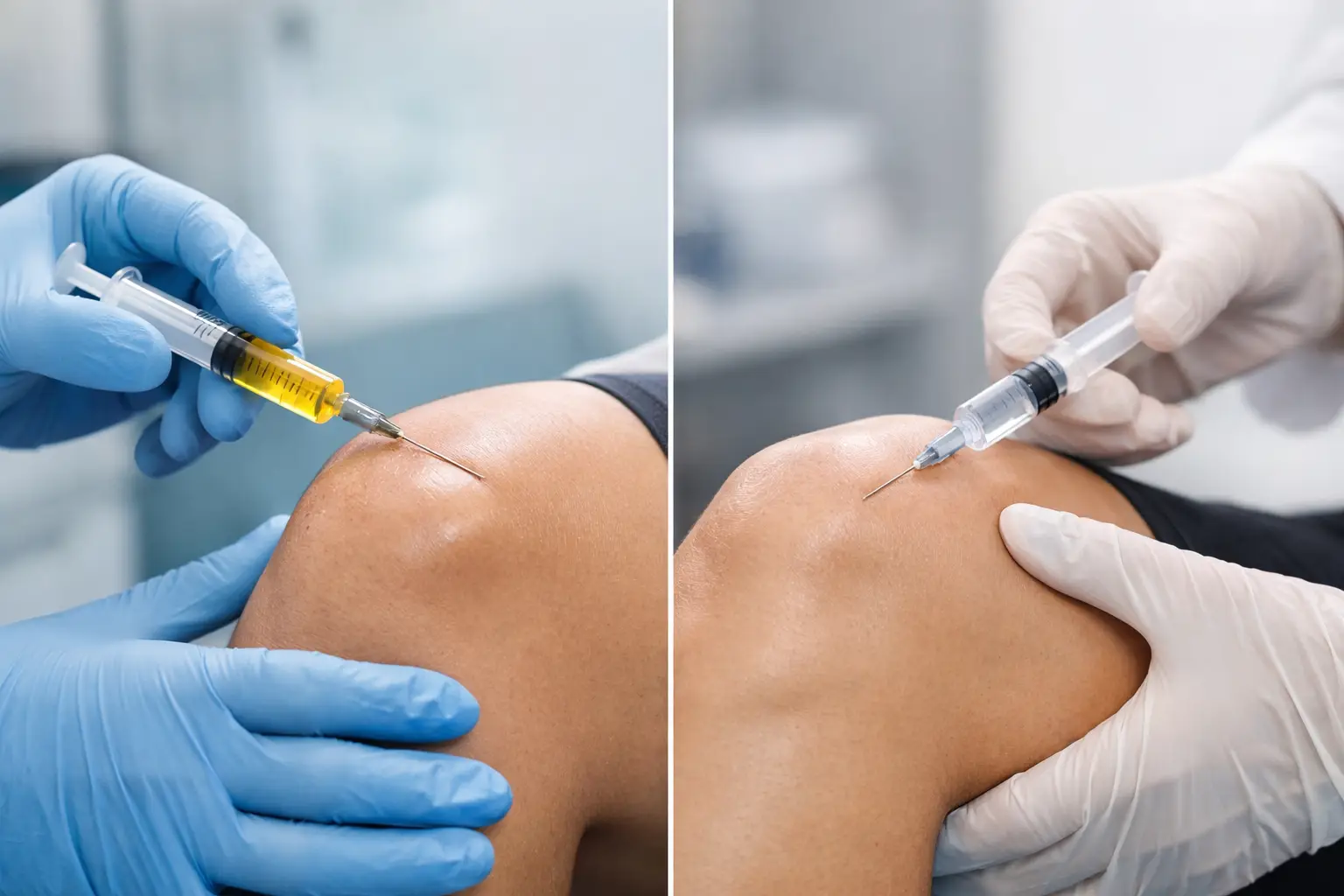
A painful knee can make a short walk, a flight of stairs or getting up from a chair feel like a negotiation. When physiotherapy, activity modification and simple pain relief have not been enough, injections may be discussed. The choice of PRP versus steroid is not simply a choice between a newer treatment and a familiar one. Each works differently, suits different circumstances and has different expectations around relief.
The right option depends on the source of your pain, the condition of the joint, your wider health and what you need treatment to achieve. For some people, an injection creates a valuable window to progress rehabilitation or manage an important period of life. For others, it may be more appropriate to discuss longer-term options, including joint replacement.
PRP versus steroid: the essential difference
A steroid injection is designed to reduce inflammation within or around a joint. It usually contains a corticosteroid, often combined with local anaesthetic. Corticosteroids are not the same as the anabolic steroids associated with muscle building. In orthopaedics, they are used to settle inflammatory pain and swelling.
Platelet-rich plasma, usually called PRP, is made from a small sample of your own blood. The blood is processed to concentrate platelets and other components, then injected into the area being treated. Platelets contain signalling proteins involved in the body’s normal healing response. PRP is intended to influence the local joint environment rather than provide the direct anti-inflammatory effect of a steroid.
Neither treatment can reliably restore severely worn cartilage or reverse established advanced arthritis. That honest distinction matters. Injections can reduce symptoms and improve function for a time, but they do not remove the need to understand why the hip or knee is painful in the first place.
When a steroid injection may be considered
Steroid injections are often considered when pain is clearly inflammatory, particularly where there is joint swelling, a flare of osteoarthritis or synovitis. They can also be helpful in selected soft-tissue conditions around the knee or hip, although the precise injection site and diagnosis are crucial.
The principal advantage is speed. Some patients notice improvement within a few days, although this varies and a brief post-injection flare can occur before symptoms settle. Relief may last weeks or months, but it is not predictable. For a person whose knee pain is preventing sleep, work or participation in physiotherapy, a well-timed steroid injection may allow them to move more comfortably and rebuild strength.
There are limits. Repeated steroid injections into the same joint are not a long-term strategy for progressive arthritis. Frequent use may be associated with adverse effects on joint tissues, and it can become less effective over time. If pain returns rapidly after each injection, that is a reason to reassess the diagnosis and treatment plan rather than simply repeat the procedure.
Steroids can temporarily raise blood sugar levels, which requires particular planning for people with diabetes. They may also cause short-lived facial flushing, altered sleep or mood changes in a minority of patients. As with any injection, infection and bleeding are uncommon but important risks.
When PRP may be considered
PRP is commonly considered for mild to moderate knee osteoarthritis and selected tendon or soft-tissue problems. Some patients choose it because it uses their own blood products and may offer symptom improvement without corticosteroid exposure. Evidence suggests that certain people with knee osteoarthritis may gain pain relief and functional benefit, sometimes over a longer period than steroid treatment.
However, PRP is not a guaranteed solution, and results are variable. Studies use different preparation methods, platelet concentrations, injection schedules and patient groups, making simple promises unhelpful. The degree of arthritis is especially relevant. PRP is less likely to provide a meaningful or lasting answer where there is bone-on-bone arthritis, major deformity, substantial instability or severe mechanical restriction.
PRP is not usually associated with the systemic effects seen with steroids, but it can cause soreness and stiffness for several days after treatment. Because it is prepared from your own blood, allergic reaction is unlikely. Infection, bruising and a temporary pain flare remain possible with any injection.
A discussion about PRP should also include practical matters. It is often self-funded, may involve more than one injection depending on the treatment plan, and should be paired with a realistic rehabilitation programme. Its value lies in whether it supports meaningful improvement in your walking, exercise, work or daily independence, not simply whether an injection has been given.
The diagnosis matters more than the label on the injection
Knee pain is not one condition. Osteoarthritis, a degenerative meniscal tear, patellofemoral pain, ligament instability, inflammatory arthritis and referred pain from the hip can all produce different symptoms. A swollen arthritic knee needs a different conversation from a knee that locks, repeatedly gives way or became painful after a recent injury.
The same applies to hip pain. Pain at the front of the groin may arise from arthritis within the joint, while pain over the outside of the hip may relate to the tendons or bursae. Giving an injection without establishing the likely source of pain risks treating the wrong structure and delaying the treatment that would be more effective.
A specialist assessment normally considers your history, activity goals, examination findings and appropriate imaging. X-rays can show the pattern and extent of arthritis. In selected cases, an MRI scan or ultrasound may clarify tendon, cartilage, meniscal or other soft-tissue concerns. The purpose is not to order tests routinely, but to make a decision based on the fullest useful picture.
How to decide between PRP and steroid treatment
The choice is often guided by the timescale and aim of treatment. A steroid injection may be the more appropriate option when inflammation needs to settle promptly so that you can sleep, travel or engage properly with physiotherapy. PRP may be worth considering for selected patients with earlier-stage degenerative knee symptoms who are seeking a non-operative option and understand that improvement may be gradual and variable.
Your medical history matters. Diabetes, blood-thinning medication, immune suppression, active infection and previous responses to injections all need to be considered. So does the possibility of future surgery. If joint replacement is likely, the timing of any injection should be discussed carefully with your surgeon, as treatment plans may need to take account of infection-risk considerations around an operation.
It is equally important to ask what an injection will enable you to do. If reduced pain helps you strengthen the muscles around the knee, improve walking tolerance and manage weight where appropriate, it can have a useful role in a broader plan. If your main difficulty is severe loss of movement, night pain and a steadily shrinking ability to live normally, an injection may only postpone a more definitive conversation.
What treatment looks like after the injection
An injection is usually one part of care, not the whole plan. You may be advised to rest from strenuous activity briefly, then restart movement in a measured way. The exact advice differs according to the injection, the area treated and your diagnosis.
Rehabilitation is where the potential benefit is put to work. Targeted exercises can improve quadriceps, hip and core strength, joint control and confidence in movement. For some people, a physiotherapy programme is enough to regain useful function once pain has settled. For others, injections provide only partial relief, which is still valuable information when deciding whether surgery should be considered.
Seek urgent medical advice after an injection if you develop increasing redness, heat, marked swelling, fever or feel unwell. These symptoms are uncommon, but they need prompt assessment.
A decision built around your life
The best injection is not necessarily the newest option or the fastest one. It is the treatment that fits an accurate diagnosis, has a proportionate risk-benefit balance and moves you closer to the activities that matter to you. A careful hip and knee assessment can establish whether PRP, steroid treatment, another non-operative option or surgery offers the clearest route back to less pain and more confident movement.