


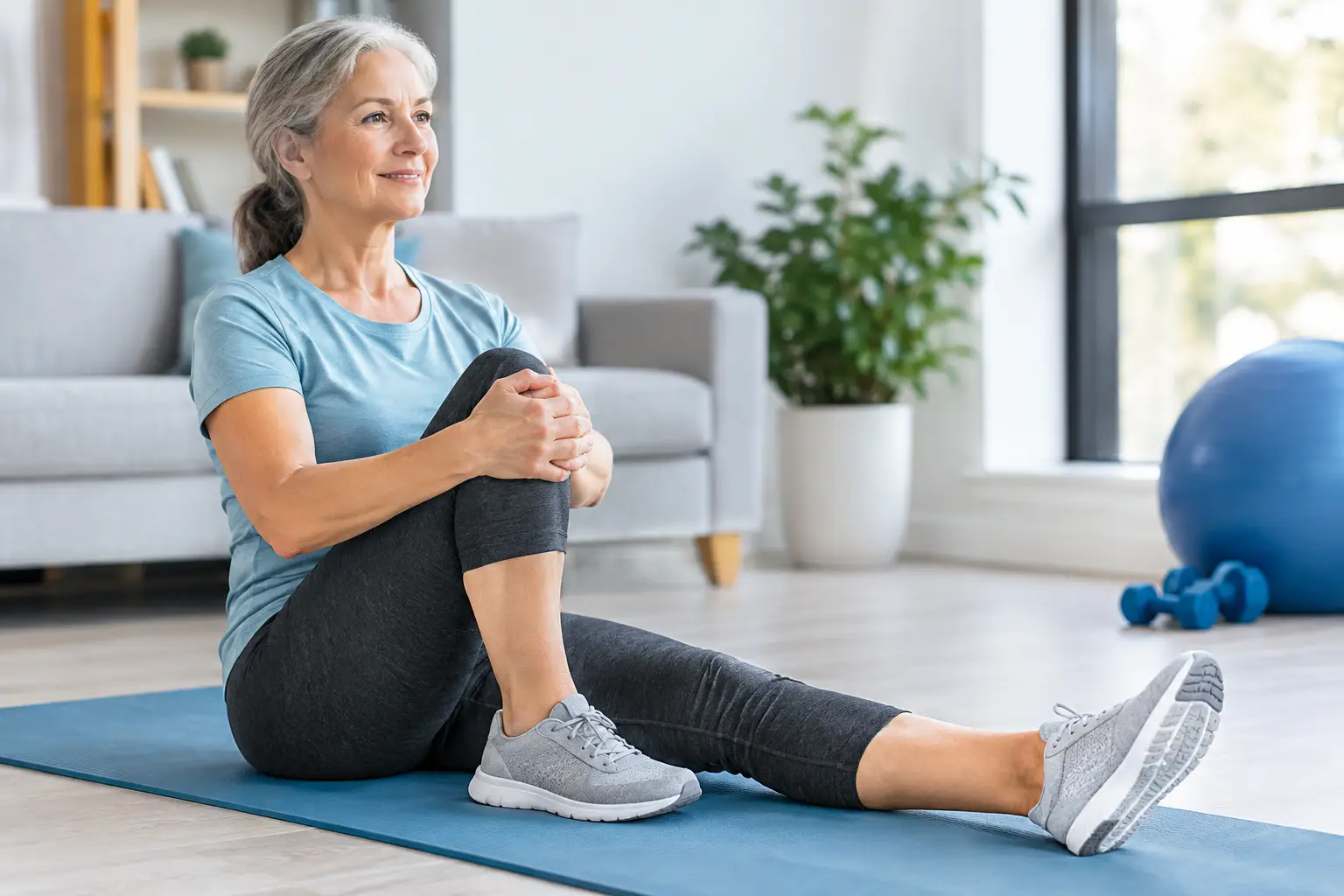
A knee replacement is a major step towards less pain and better movement, but the work you do beforehand can make a meaningful difference. The best exercises before knee replacement are not about pushing through severe arthritis pain or achieving a fitness target. They are about maintaining enough strength, movement and confidence to help you get out of bed, use walking aids and begin rehabilitation after surgery.
Your programme should always reflect your knee, general health and planned procedure. Someone with severe stiffness, instability or a previous operation may need a different approach from someone whose main issue is pain on stairs. A specialist physiotherapist or your surgical team can help you choose exercises that challenge you appropriately without aggravating the joint.
Why exercise before knee replacement?
The period before surgery is often called prehabilitation. Arthritis may have caused you to favour one leg, avoid stairs or reduce walking over many months. As a result, the muscles around the knee, hip and trunk can lose strength. This matters because those muscles help control the leg when you stand, walk and manage steps during the early stages of recovery.
A sensible exercise routine can improve quadriceps strength, preserve the knee’s available bend and straightening, and maintain general conditioning. It can also make the practical demands after surgery feel less daunting. Getting up from a chair, moving around your home and using crutches or sticks all require leg strength and balance.
Exercise cannot remove bone-on-bone arthritis or guarantee a particular recovery time. It may also be necessary to reduce activity if your knee becomes very swollen or painful. The aim is steady preparation, not a flare-up that leaves you less mobile before your operation.
Best exercises before knee replacement surgery
The following movements are commonly used to prepare for knee replacement. Complete them slowly on a stable surface, in supportive footwear where appropriate, and within a comfortable range. Mild muscle effort and a little temporary discomfort can be acceptable; sharp pain, catching, giving way or swelling that is noticeably worse the following day are signs to stop and seek advice.
Quadriceps sets
The quadriceps are the large muscles at the front of the thigh. They are essential for straightening the knee and providing stability when you stand. Sit or lie with your leg supported and as straight as is comfortable. Tighten the front of your thigh by gently pressing the back of the knee down towards the bed or floor. Hold for five seconds, then relax.
This simple exercise is particularly useful when bending the knee is uncomfortable. Start with a small number of controlled repetitions and build gradually. Focus on a firm contraction rather than forcing the knee completely straight.
Straight leg raises
Lie on your back with one knee bent and the affected leg straight. Tighten the thigh muscle first, then lift the straight leg a short distance from the bed. Pause briefly and lower it with control. If you cannot lift the leg without bending the knee or straining your back, return to quadriceps sets and ask your physiotherapist for guidance.
Straight leg raises work the quadriceps and hip flexors without asking the knee to bend deeply. They can be valuable preparation for the early postoperative period, when regaining control of the whole leg is an important milestone.
Seated knee extensions
Sit upright in a sturdy chair with both feet on the floor. Slowly straighten one knee as far as comfort allows, tightening the front of the thigh, then lower the foot back down. Avoid swinging the leg or snapping the knee straight.
This movement combines strength work with gentle practice of knee straightening. If the final part of the movement is sore, work within the range you can manage. Your physiotherapist may later advise light resistance, but weights are not necessary for everyone before surgery.
Supported sit-to-stands
Sit towards the front of a firm chair, with your feet hip-width apart. Lean forward slightly, push through both feet and stand up in a controlled way. Slowly sit back down, using the chair arms or a worktop for support if needed.
Sit-to-stands are highly practical because they rehearse a movement you will need repeatedly after surgery. Keep the knees tracking in line with the feet rather than allowing them to collapse inwards. If one knee is much more painful, do not force an even load at first; gradual improvement is more useful than perfect technique on day one.
Heel slides
Lie on your back or sit with your leg supported. Slide your heel slowly towards your body to bend the knee, then slide it away again. A towel or plastic bag beneath the heel can make the movement easier on a bed or smooth floor.
Heel slides are a gentle way to maintain knee bend. Do not pull forcefully at the leg or push into severe pain. For some people, especially those with an already very stiff knee, preserving the movement they have is a realistic and useful goal.
Calf raises and ankle pumps
Holding a worktop or the back of a stable chair, rise gently onto the balls of both feet, then lower your heels. If standing calf raises are too painful, ankle pumps can be done sitting or lying down by moving the feet up and down.
These exercises strengthen the calves and encourage circulation in the lower legs. They are also useful practice for standing tolerance, provided you can perform them safely and without losing balance.
Do not neglect the hip, balance and general fitness
Knee pain rarely affects the knee alone. Strong hip muscles help control the position of the leg as you walk. A simple option is a supported standing hip abduction: hold a kitchen worktop, keep the body upright and move one leg gently out to the side without leaning. This should be a controlled movement, not a high lift.
Balance work can also be helpful. Standing near a secure support and practising a small weight shift from one foot to the other may improve confidence. Do not attempt single-leg balance exercises without professional advice if the knee gives way, you have fallen recently or you feel unsteady.
Low-impact cardiovascular exercise has a place too. A stationary bicycle with the seat set high enough to avoid excessive knee bend, short walks on level ground, or water-based exercise may be suitable depending on your symptoms. The right choice is the activity you can repeat consistently without causing a prolonged increase in pain or swelling.
How often should you exercise?
For many people, short sessions most days are more manageable than an occasional long workout. Start with one set of a few repetitions for each exercise and increase gradually as your knee tolerates it. Your physiotherapist may give you more specific targets based on your strength, range of movement and surgery date.
Use a simple response rule: discomfort during exercise should settle soon afterwards and should not leave the knee substantially more painful, swollen or stiff the next morning. If it does, reduce the range, repetitions or frequency. A cold pack wrapped in a cloth and a period of relative rest may help after activity, but persistent swelling or a sudden change in symptoms should be discussed with your clinical team.
Preparing for recovery beyond exercise
Physical preparation works best alongside practical planning. Arrange a clear route through your home, consider a firm chair with arms for the first few weeks, and plan how you will manage meals, bathing and stairs. If you live alone or have caring responsibilities, discuss this early rather than waiting until just before admission.
It is equally worthwhile to ask about pain relief, blood-thinning medication, driving, wound care and the expected timetable for physiotherapy. Clear answers allow you to direct your energy towards recovery rather than uncertainty.
The most useful preparation is the plan you can follow consistently and safely. A few well-chosen movements, performed regularly and adapted to your symptoms, can help you arrive for surgery feeling stronger, better informed and more ready to take each stage of recovery as it comes.