


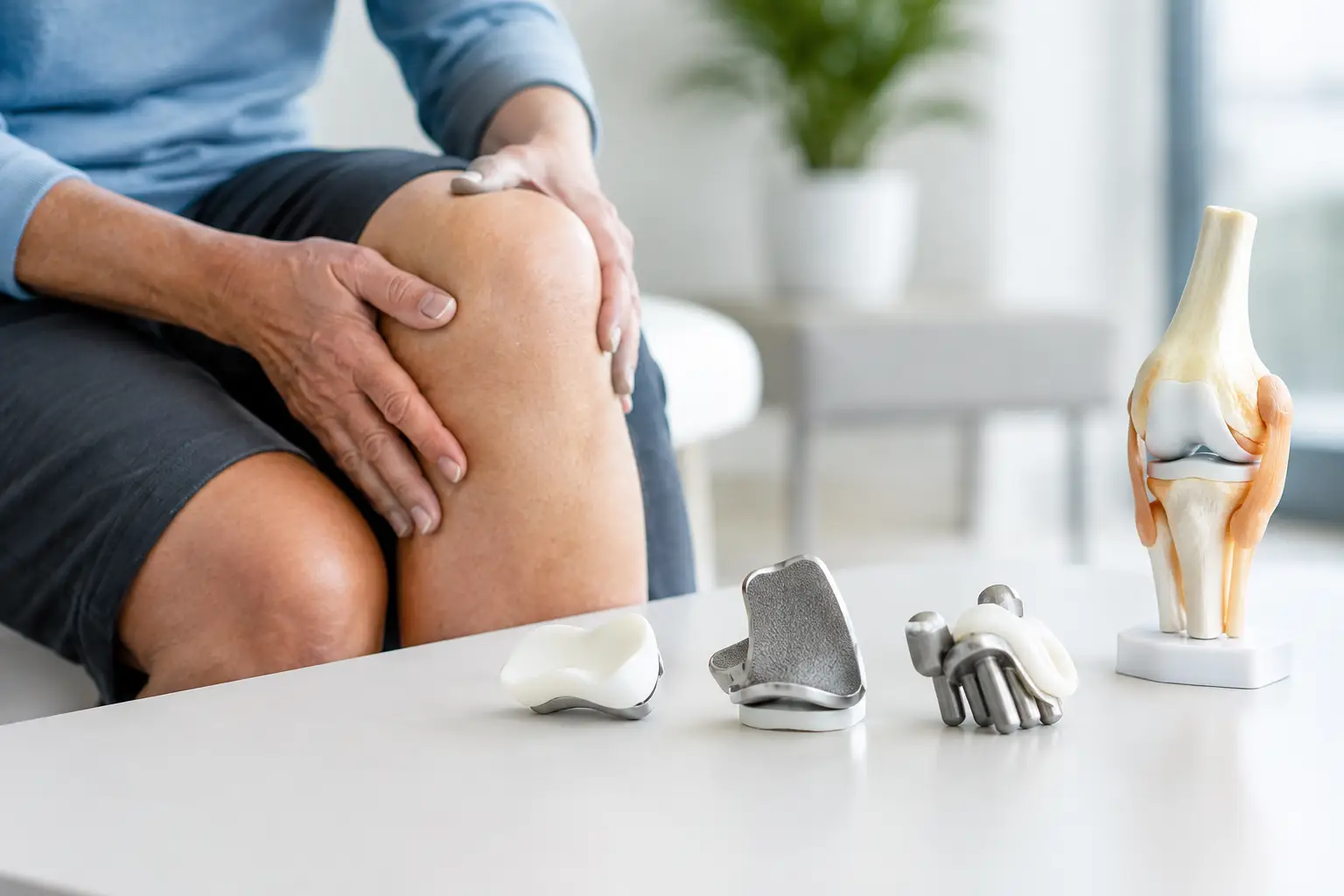
When stairs become a calculation, a short walk limits the rest of your day, or knee pain keeps you awake, it is reasonable to ask whether surgery is your only option. Knee replacement alternatives can reduce pain and improve movement for many people, particularly when symptoms are not yet severe or arthritis affects only part of the joint. The right choice depends on the cause of your pain, the condition of the knee, and the life you want to return to.
A replacement should never be recommended simply because an X-ray shows arthritis. Equally, persisting with treatments that no longer help can mean unnecessary pain, loss of confidence and reduced mobility. A careful assessment helps establish where you are on that spectrum.
When knee replacement alternatives are appropriate
Knee arthritis is not the same for every patient. Some people have early cartilage wear with manageable symptoms; others have bone-on-bone arthritis, deformity and pain that has become a daily limitation. A meniscal tear, ligament injury, kneecap arthritis or pain referred from the hip can also produce similar symptoms but require very different treatment.
A specialist assessment combines your history, examination and appropriate imaging. The aim is not simply to identify changes on a scan, but to understand what is stopping you from working, sleeping, exercising or enjoying family life. This matters because the most suitable treatment is often based on the relationship between symptoms and joint damage, rather than either one in isolation.
Non-operative treatment is most useful when pain is intermittent, the joint remains reasonably functional and there is scope to improve strength, movement or load through the knee. It can also be valuable for patients who need time to prepare for surgery or who are not ready to consider it.
Non-surgical knee replacement alternatives
Physiotherapy, activity and targeted strength
A strong thigh and hip can reduce the force transmitted through a painful knee and improve stability. A tailored physiotherapy programme may focus on quadriceps strength, hip control, balance, flexibility and confidence with everyday movements such as getting up from a chair or using stairs.
The goal is not to push through significant pain. It is to find activity that keeps the joint moving without repeatedly provoking it. Cycling, swimming, cross-trainer exercise and walking on level ground may be more comfortable than running, deep squats or impact sport. For some people, a change in training routine makes a meaningful difference; for others with advanced arthritis, it provides support but cannot overcome the mechanical problem within the joint.
If weight is contributing to knee load, gradual weight reduction can also lessen symptoms. This should be approached practically and without blame. Even modest, sustainable changes can make walking and exercise more achievable, which in turn supports joint function.
Pain relief and supportive measures
Simple pain relief or anti-inflammatory medication may help during flare-ups, provided it is appropriate for your wider health and any other medicines you take. Your GP, pharmacist or specialist can advise on the safest option. A knee brace or walking aid can be useful in selected cases, especially where one side of the joint is more affected or instability is present.
These measures are often most effective as part of a wider plan, rather than as a long-term solution on their own. If you are relying on regular medication but remain unable to walk comfortably or sleep well, it is sensible to review the treatment strategy.
Injections for symptom control
Injections may provide a window of reduced pain that allows you to rehabilitate, maintain activity or postpone surgery. They are not a cure for established arthritis, and their benefit varies between individuals.
A corticosteroid injection can settle inflammation and may offer short-term relief, particularly when the knee is acutely swollen or painful. It is generally not a treatment to repeat frequently, as repeated steroid injections may carry risks for joint tissues and can become less effective over time.
Hyaluronic acid injections aim to improve joint lubrication and may help some patients with mild to moderate osteoarthritis. Platelet-rich plasma, or PRP, uses a concentration of platelets from your own blood and is sometimes considered where the aim is to manage symptoms and support a programme of rehabilitation. Results can be variable, and PRP is not a replacement for joint replacement when arthritis is advanced.
Arthrosamid is a newer injectable hydrogel designed to cushion the knee joint lining. It may be an option for carefully selected patients with knee osteoarthritis who want to explore non-operative pain relief. As with any injection, suitability, expected benefit, cost and the limits of treatment should be discussed clearly before proceeding.
Surgical options that preserve more of the knee
Some procedures are alternatives to a total knee replacement, but they are still operations. Their suitability depends on the pattern of arthritis, knee alignment, ligament stability and your age, activity level and expectations.
Partial knee replacement
If arthritis is confined to one compartment of the knee, a partial knee replacement may replace only the damaged area while preserving healthy bone, cartilage and ligaments. It can offer a more natural-feeling knee and, for the right patient, a quicker recovery than total replacement.
However, it is not appropriate when arthritis is widespread, significant deformity is present or the ligaments are not functioning well. It also carries a possibility that arthritis in the remaining parts of the knee may progress, meaning a total knee replacement could be needed later.
Osteotomy and arthroscopy
For a younger or active person with arthritis mainly on one side of the knee and a bowed or knock-kneed alignment, an osteotomy may be considered. This procedure changes the alignment of the leg to shift pressure away from the damaged part of the joint. It preserves the native knee and can delay joint replacement, but rehabilitation is substantial and it is not suitable for every pattern of arthritis.
Knee arthroscopy, often described as keyhole surgery, has a more limited role in arthritis than many people expect. It does not reverse arthritic pain caused by general cartilage loss. It may still be useful for specific problems, such as a displaced meniscal tear causing genuine locking, loose bodies within the joint or certain mechanical symptoms. The distinction is important: treating a clear mechanical problem is different from using arthroscopy as a general treatment for arthritis.
When a total knee replacement may be the better answer
There comes a point when the most dependable route to less pain and better mobility is a total knee replacement. This is often the case when pain is persistent despite appropriate non-operative care, sleep is disturbed, walking distance has reduced considerably, or arthritis affects multiple parts of the joint.
A well-planned replacement is not a failure of conservative treatment. It is a considered decision to address a joint that can no longer meet the demands of daily life. Modern knee replacement aims to relieve pain, improve stability and restore useful movement, but it requires commitment to rehabilitation and realistic expectations about recovery. The best outcome is usually measured by returning to valued activities, whether that is walking the dog, travelling, working, gardening or playing with grandchildren.
Making a decision you can feel confident about
Good decision-making starts with honest answers. How severe is the pain? What have you already tried, and for long enough to judge it fairly? Is the problem limiting a particular activity, or has it begun to shape every part of your day? A specialist should explain not only what can be done, but what is most likely to help in your particular circumstances.
It is also reasonable to ask what each option cannot achieve. Injections may reduce symptoms but do not rebuild lost cartilage. Physiotherapy can improve strength and control but cannot correct severe bone-on-bone arthritis. Partial replacement can be excellent in the right knee but is not a smaller operation for a knee with widespread disease.
You do not need to decide on major knee surgery at the first consultation. You do need a clear diagnosis, a realistic understanding of the options and a treatment plan that respects both your symptoms and your goals. The most useful next step is often simply to have your knee assessed properly, so that any treatment you choose is based on evidence, precision and what matters most to you.