


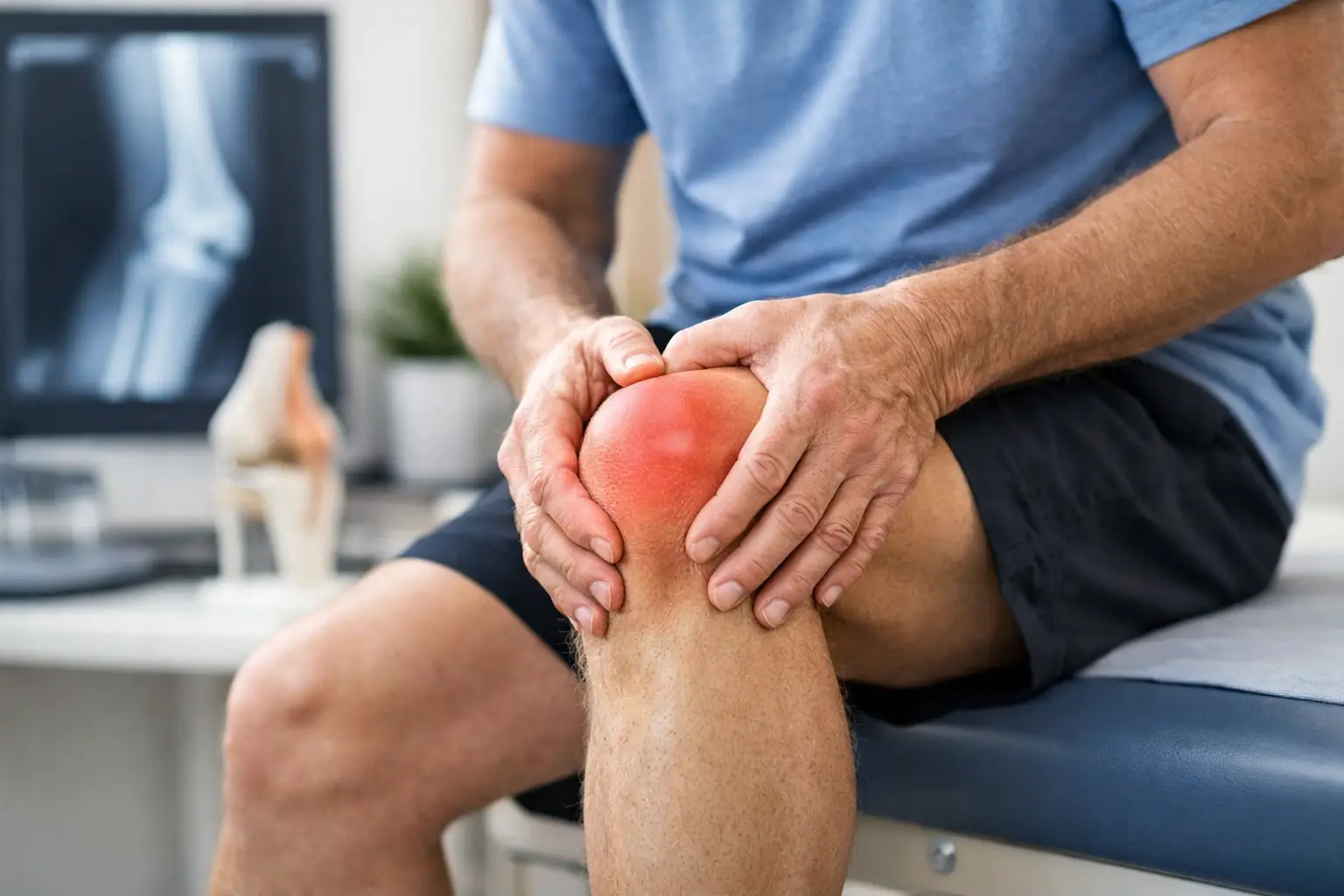
A knee that once hurt only after a long walk can gradually begin to affect stairs, sleep, work and confidence in getting about. So, can knee arthritis worsen? Yes. Osteoarthritis is usually a progressive condition, although the speed and pattern of change vary considerably from one person to another. More pain does not always mean the joint has suddenly deteriorated, but persistent changes deserve a proper assessment rather than being accepted as inevitable.
For many people, the aim is not simply to manage an X-ray result. It is to stay independent, continue exercising safely, keep up with family life and return to the activities that matter most with less pain and greater confidence.
Can Knee Arthritis Worsen Over Time?
Knee osteoarthritis develops when the joint tissues change over time. Cartilage, the smooth surface that helps the bones move against one another, can become thinner and less effective. The bone beneath it may remodel, and inflammation within the joint lining can contribute to pain, swelling and stiffness. Ligaments, muscles and the way the knee is aligned also influence how well the joint functions.
Arthritis does not follow a fixed timetable. Some patients have relatively stable symptoms for years, with occasional flares. Others notice a gradual loss of walking distance, increasing stiffness or more frequent swelling. A previous injury, such as a significant ligament injury, meniscal damage or fracture involving the joint, can increase the likelihood of arthritis developing or progressing earlier than it otherwise might.
Symptoms and scans do not always match neatly. A knee can look quite arthritic on an X-ray yet remain manageable, while a person with modest changes on imaging may have substantial pain. This is why decisions should be based on the whole picture: your symptoms, examination findings, imaging, daily function, health and goals.
Signs That Your Knee Arthritis May Be Progressing
A short-lived increase in discomfort after an unfamiliar activity is common and does not necessarily indicate lasting damage. More concerning is a pattern of symptoms that is becoming more frequent, more limiting or less responsive to the measures that previously helped.
You may notice that pain begins earlier in a walk, that you need to stop more often, or that stairs and uneven ground feel increasingly difficult. Stiffness after sitting, first thing in the morning or after a car journey may last longer. Recurrent swelling, reduced ability to fully straighten or bend the knee, grinding sensations and a feeling that the knee may give way can also be relevant symptoms.
Night pain is particularly worth discussing when it is persistent or regularly disturbs sleep. So is a change in how you walk. Limping may be a sensible short-term response to pain, but over time it can place extra strain on the other knee, hips and lower back.
When pain needs more urgent assessment
Seek urgent medical advice if a knee becomes suddenly very hot, red and swollen, particularly if you feel unwell or have a fever. A sudden inability to bear weight after injury, a locked knee, or a calf that is swollen and painful also needs prompt assessment. These symptoms are not simply assumed to be arthritis and may require different treatment.
What Can Make Knee Arthritis Feel Worse?
Body weight can affect knee loading, but it is only one part of the story. A flare may follow a period of unusually high activity, an awkward twist, kneeling, prolonged standing or a change in footwear. Conversely, doing much less because the knee hurts can weaken the quadriceps and reduce joint support, making everyday movement feel harder.
Poor sleep, stress and low mood can also amplify the experience of pain. This does not mean the pain is “all in the mind”. It means pain is influenced by the joint and by the nervous system, sleep and general wellbeing. A thoughtful treatment plan acknowledges all of these factors without dismissing the physical problem.
Alignment matters too. When arthritis is more pronounced on the inner or outer side of the knee, a bow-legged or knock-kneed position may place more load through the affected area. In some cases, instability from ligament damage or prior surgery contributes to ongoing symptoms. A specialist assessment can identify these details, which may alter the most appropriate treatment.
Slowing the Impact of Arthritis on Daily Life
While it is not currently possible to regrow worn joint cartilage with routine treatment, many people can reduce symptoms and maintain function for a meaningful period with the right approach. The best plan is individual. It should reflect the severity and location of arthritis, the condition of the rest of the knee, your medical history and what you want to get back to doing.
Appropriate exercise is often part of effective care. Strengthening the muscles around the knee can improve control and reduce the load experienced by painful areas. Low-impact activities such as cycling, swimming, an exercise bike and carefully paced walking may be better tolerated than repeated impact exercise during a flare. A physiotherapist can help build a programme that is challenging enough to be useful without repeatedly aggravating the knee.
If weight loss is appropriate for you, even a modest reduction can lessen knee load and may improve symptoms. It should be approached realistically and without suggesting that weight alone explains arthritis or determines whether someone deserves treatment.
Simple measures such as pacing activity, supportive shoes and using a stick in the opposite hand during a painful flare can be helpful. Pain relief and anti-inflammatory medicines may have a role for some people, but they are not suitable for everyone and should be considered alongside other health conditions and prescribed medication.
Non-Surgical Treatments and Injections
When symptoms persist despite exercise and practical measures, non-operative treatment may help control pain and improve movement. Options can include steroid injections for inflammation-related flares, hyaluronic acid injections, platelet-rich plasma (PRP) and Arthrosamid treatment in carefully selected cases.
These treatments are not interchangeable, and none should be presented as a permanent cure for established arthritis. Their likely benefit depends on the pattern and stage of arthritis, the knee examination and the person receiving them. An injection that offers worthwhile relief for one patient may offer limited benefit for another. Clear advice about expected results, limitations and alternatives is essential before proceeding.
When to Consider Knee Replacement
Knee replacement is usually considered when arthritis has become a sustained barrier to life and non-surgical treatments no longer provide acceptable relief. The decision is not based on age alone or on an X-ray alone. It is based on the impact of pain, loss of mobility, sleep disturbance, reduced independence and whether the benefits of surgery are likely to outweigh its risks for you.
Depending on where arthritis is located and whether the ligaments are intact, a partial knee replacement may be appropriate for some patients. When arthritis affects more than one compartment of the knee, or there is more extensive joint damage or deformity, total knee replacement may be the better option. Previous surgery, significant stiffness, instability or a failed joint replacement can make planning more complex and benefit from specialist hip-and-knee expertise.
Modern knee replacement is planned carefully, but it remains major surgery. Recovery requires commitment to rehabilitation, and the knee will not feel exactly like a natural joint. Most suitable patients pursue surgery because they want a dependable reduction in pain and a better ability to walk, sleep, work and take part in daily life. Honest discussion of both the likely gains and the recovery involved supports a confident decision.
A Specialist Assessment Brings Clarity
If your knee pain is changing, an assessment should start with listening carefully to your experience. How far can you walk? What happens on stairs? Are you avoiding social plans, work duties or exercise? Have you had injuries or operations before? These answers can be as informative as the scan itself.
A specialist will examine knee movement, alignment, stability and areas of tenderness, then review appropriate imaging. From there, the discussion should be practical: whether the priority is improving strength, settling a flare, considering an injection, investigating another source of pain or planning surgery. For patients in London and Kent, timely specialist advice can prevent months of uncertainty and help ensure treatment matches the problem.
You do not need to wait until pain has taken over every part of your day before seeking advice. A clear diagnosis and a plan tailored to your knee can help you make measured choices now, protect your mobility where possible and move towards the activities you value most.