


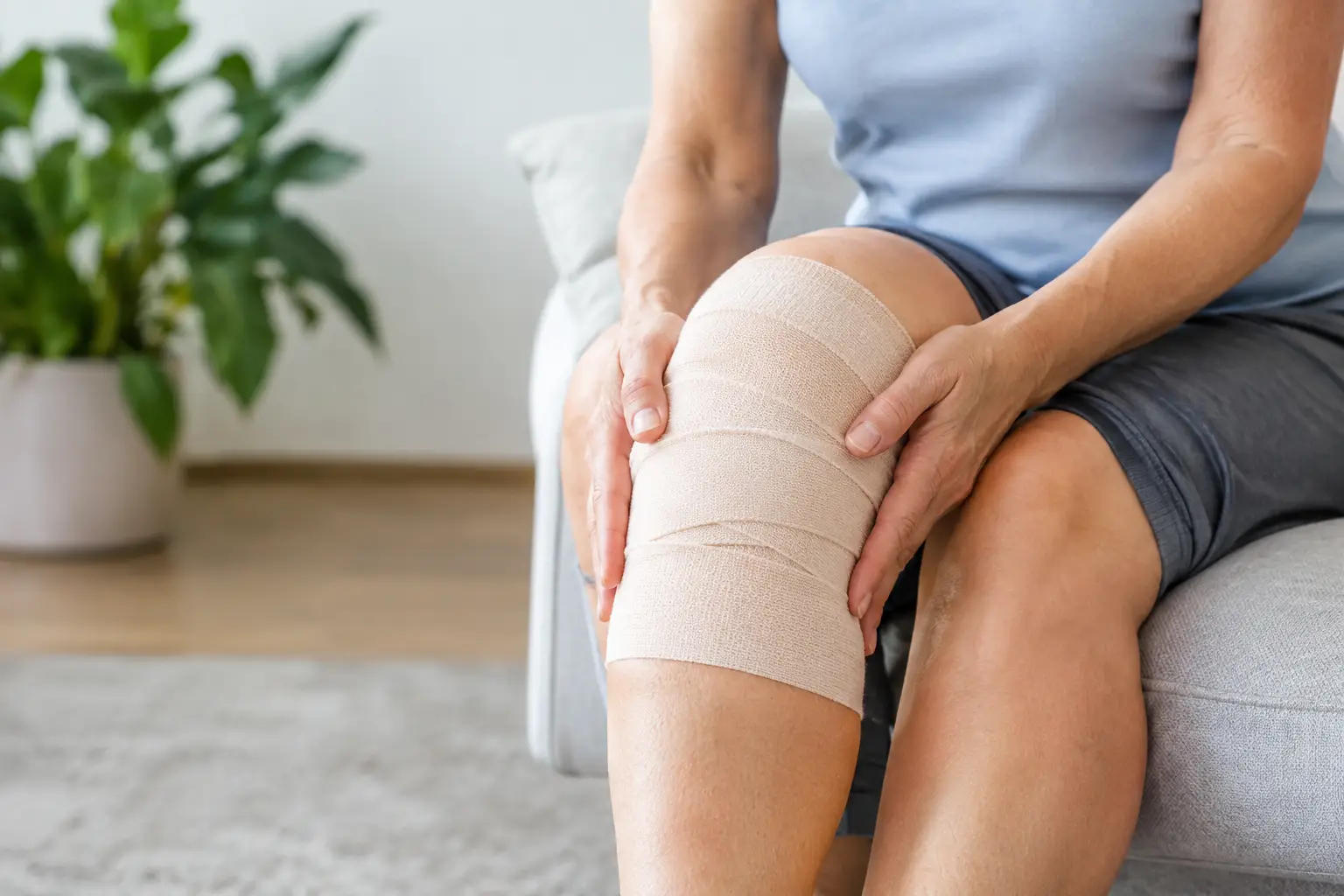
A swollen knee in the days and weeks after an operation can be uncomfortable, frustrating and, for some patients, alarming. Postoperative knee swelling is a normal part of tissue healing in many cases, particularly after knee replacement, arthroscopy or reconstructive surgery. However, the amount of swelling, the way it changes and the symptoms alongside it all matter.
The aim is not to achieve a completely normal-looking knee immediately. It is to support healing while steadily restoring movement, strength and confidence in walking. Knowing what to expect can help you recover with purpose and recognise when you should contact your surgical team.
Why postoperative knee swelling happens
Surgery deliberately disturbs tissues around the knee. Even carefully planned, minimally invasive procedures cause a healing response: blood flow increases, fluid moves into the tissues and inflammation begins the work of repair. The result is swelling around the knee, and sometimes in the calf, ankle or foot.
After a total or partial knee replacement, swelling can be more noticeable because the operation involves the joint surfaces, bone and surrounding soft tissues. Following arthroscopy, the swelling may be less dramatic, but it can still limit bending and make the knee feel tight. More complex reconstruction or revision surgery may bring a longer period of swelling because more tissue has required treatment.
Swelling often increases after activity, physiotherapy or spending a long period on your feet. This does not automatically mean you have damaged the knee. It may simply mean the joint has done more than it was ready for that day. Recovery is rarely a straight line: a useful exercise session can be followed by a temporarily fuller, warmer knee.
What is usually normal after knee surgery?
In the early stage, a knee that is puffy, warm and bruised can be expected. You may notice stiffness first thing in the morning, a feeling of pressure when bending the knee, and swelling that tracks down the leg due to gravity. The operated leg may also look different from the other side for some time.
The pattern is more helpful than a single snapshot. In general, normal postoperative swelling should gradually improve overall, even if there are day-to-day fluctuations. Pain should be manageable with the plan provided by your surgeon, and your walking, knee movement and ability to manage daily activities should slowly progress.
After knee replacement, residual swelling can take several months to settle fully. Some people, particularly those with pre-existing stiffness, circulation issues or extensive arthritis before surgery, may take longer. The goal is steady functional improvement rather than comparing your recovery too closely with someone else’s.
How to reduce postoperative knee swelling safely
Your discharge advice should always take priority, as the right plan depends on the operation you have had and your medical history. In most cases, swelling responds best to a balanced approach: regular movement without overdoing it, periods of rest, elevation and appropriate pain control.
Keep moving, but pace your activity
Gentle prescribed exercises support circulation, maintain knee movement and help prevent stiffness. Short, regular walks are generally more useful than one long walk that leaves the knee significantly more painful or swollen afterwards.
Use your symptoms as feedback. If swelling repeatedly becomes much worse after a particular activity, reduce the duration or intensity and build up again more gradually. This is not about avoiding movement; it is about giving the knee enough challenge to improve without overwhelming healing tissues.
Elevate the leg properly
When resting, elevate the leg so the ankle is above the level of your heart where practical and comfortable. Support the whole leg, rather than placing a pillow directly under the knee for prolonged periods. Keeping the knee constantly bent can make it harder to regain full straightening, which is an important part of recovery.
Several shorter elevation periods through the day are often realistic and effective. This can be particularly helpful after physiotherapy, a walk or time spent sitting with the leg down.
Use cold therapy as advised
Cold packs can reduce discomfort and help manage swelling. Protect the skin with a cloth barrier and follow the duration and frequency recommended by your surgeon or physiotherapist. Avoid applying intense cold directly to the skin, especially if you have reduced skin sensation, circulation problems or a condition that affects how you feel temperature.
Take medicines as prescribed
Pain relief is not simply about comfort. When pain is controlled, it is easier to walk safely, complete exercises and sleep, all of which support recovery. Take prescribed medication exactly as directed and ask for advice before adding over-the-counter medicines, particularly if you take blood-thinning medication or have kidney, stomach or heart conditions.
Wear compression only if recommended
Some patients are advised to wear compression stockings or a compression dressing. These can support circulation and help control swelling, but they are not suitable for everyone and must be used correctly. Do not substitute ordinary tight clothing or bandaging for a plan provided by your clinical team.
When swelling needs urgent medical advice
Although most postoperative knee swelling is part of recovery, complications need prompt assessment. Contact your surgeon, hospital team, GP or urgent medical service without delay if swelling is worsening rapidly rather than settling, especially if it is accompanied by increasing pain or a marked change in how the leg feels.
Seek urgent advice if you develop calf pain or tenderness, significant swelling in one calf, new redness or heat in the calf, or sudden shortness of breath, chest pain or coughing up blood. These can be signs of a blood clot and require immediate medical attention.
You should also contact your surgical team promptly if the wound becomes increasingly red, hot, painful or swollen, if there is new discharge or an unpleasant smell, or if you feel feverish, shivery or generally unwell. A wound infection is not the same as ordinary postoperative inflammation and should not be watched at home in the hope that it will pass.
Other reasons to seek advice include persistent drainage from the wound, a sudden inability to bear weight that is not explained by your recovery plan, or swelling that remains severe and makes it impossible to progress with movement. Trust a clear change in your symptoms. You know how your knee has been behaving from one day to the next.
Swelling and physiotherapy: finding the right balance
Physiotherapy is central to recovery after many knee operations, but it should be tailored to your stage of healing. A swollen knee can be reluctant to bend because fluid within and around the joint creates pressure. At the same time, avoiding movement entirely can lead to greater stiffness and weakness.
A good programme focuses on restoring knee straightening, gradually improving bend, rebuilding thigh muscle control and normalising your walking pattern. There may be temporary swelling after exercise, especially early on. The key question is whether it settles with rest and elevation and whether your overall function is improving over the following days.
It may be sensible to modify your programme if the knee remains significantly more swollen the next morning, your pain is escalating, or you are losing movement rather than gaining it. This is where clear communication with your physiotherapist and surgeon makes a practical difference. The right rehabilitation plan is neither a race nor a passive waiting period.
Factors that can prolong knee swelling
Recovery varies. More extensive surgery, previous operations, a history of inflammatory arthritis, reduced circulation, higher body weight and reduced muscle strength before surgery can all influence how long swelling lasts. Returning too quickly to demanding activities can also keep the joint irritated.
Long journeys and prolonged sitting may cause the lower leg to swell, particularly in the first weeks after surgery. Follow your surgeon’s individual guidance before travelling, and make regular movement, hydration and prescribed clot-prevention measures part of the plan.
For patients undergoing complex or revision knee surgery, the recovery timetable may be deliberately more cautious. That does not mean recovery is going badly. It means the rehabilitation needs to protect the reconstruction while building the foundations for durable function.
A recovery plan built around your progress
The best response to postoperative swelling is not simply to wait for it to disappear. It is to monitor the trend, manage activity sensibly and maintain close contact with the team guiding your recovery. Your plan should reflect the procedure performed, the condition of your knee before surgery and the activities you want to return to – whether that is walking comfortably, working, caring for family or getting back to exercise.
If you are concerned about changes in your knee after surgery, asking early is always reasonable. Clear advice and timely assessment can provide reassurance when healing is on track, or the right treatment when your recovery needs extra support.