


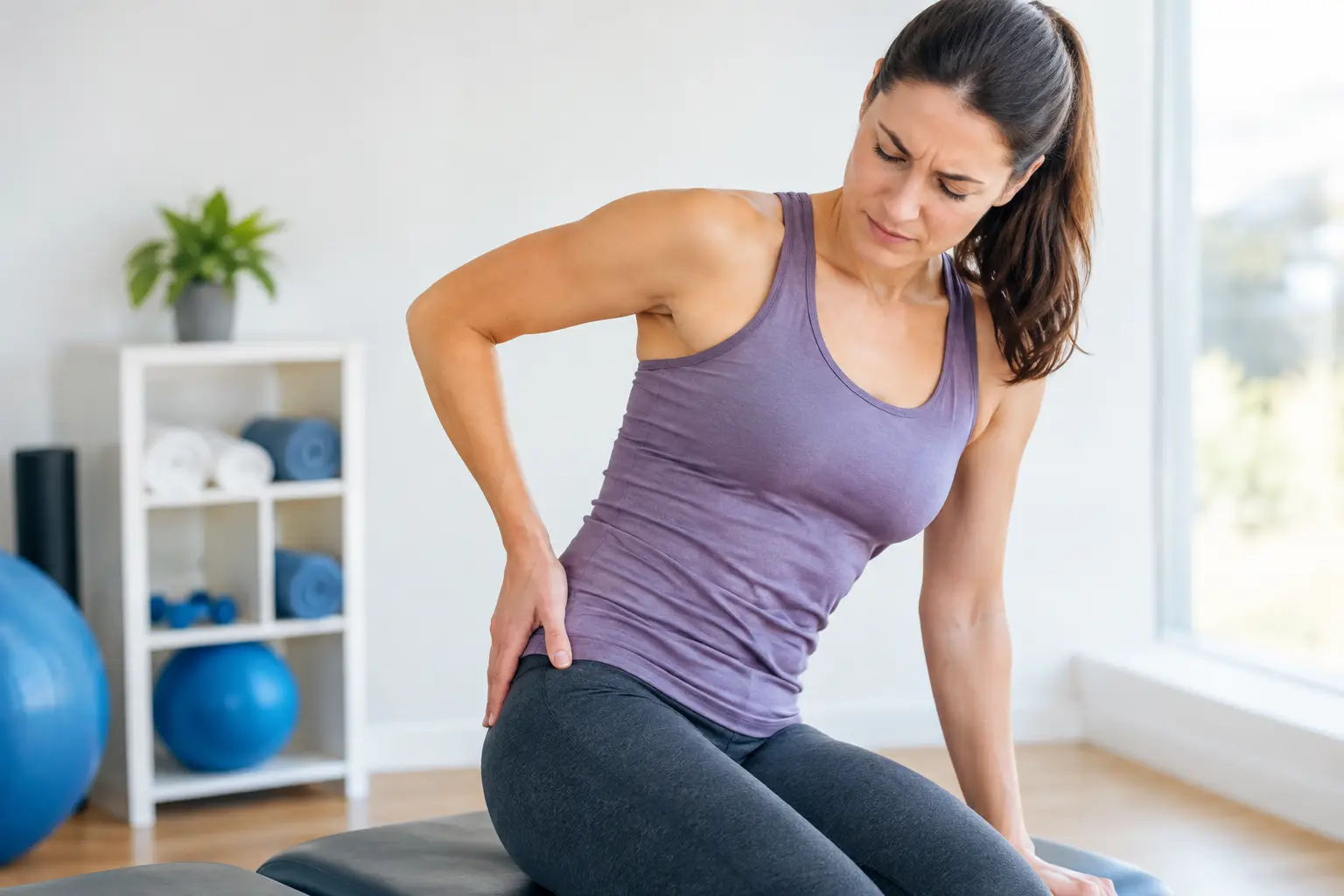
Outer hip pain can make ordinary movements unexpectedly difficult. Climbing stairs, getting out of a car, walking the dog or lying on the affected side may all become painful. If you are trying to treat hip bursitis, the most useful starting point is recognising that the pain may not be caused by the bursa alone. A careful diagnosis helps ensure treatment addresses the real source of the problem and gets you back to the activities that matter to you.
What people mean by hip bursitis
Hip bursitis usually describes pain over the bony point on the outside of the hip, known as the greater trochanter. A bursa is a small fluid-filled sac that reduces friction between soft tissue and bone. It can become irritated, but many people with this pattern of pain also have irritation or weakness in the gluteal tendons that attach nearby.
For this reason, specialists often use the term greater trochanteric pain syndrome. It is a broader and more accurate description of persistent outer hip pain. The distinction matters because simply trying to reduce inflammation may provide temporary relief, whereas improving tendon strength and reducing excessive pressure on the outside of the hip can produce a more durable result.
This condition is common in adults over 40, particularly women, but it can affect anyone. It may develop after a change in activity, a fall, prolonged walking on uneven ground, running, or simply over time. Hip arthritis, lower back problems, differences in leg strength and previous hip surgery can also contribute.
Confirm the cause before you treat hip bursitis
Pain felt at the side of the hip is not always bursitis. Hip osteoarthritis more often causes groin pain, stiffness and difficulty putting on shoes or socks, although symptoms can overlap. Pain travelling below the knee, numbness or tingling may indicate a problem arising from the lower back. A tendon tear, stress fracture or referred pain from another area also needs different management.
A specialist assessment usually begins with a discussion about where the pain is felt, what triggers it and how it affects sleep, work and mobility. Examination assesses hip movement, tenderness, walking pattern and the strength of the muscles around the pelvis. An X-ray may help identify arthritis or other bony changes. Ultrasound or MRI scanning is not always required, but can be useful where symptoms are persistent, the diagnosis is uncertain, or a significant tendon injury is suspected.
This step avoids a common frustration: receiving repeated treatment for “bursitis” when the main issue is actually hip arthritis, spinal pain or gluteal tendon disease.
First steps that reduce irritation
The goal is not complete rest. Avoiding all activity for weeks can weaken the muscles that support the hip and make the problem harder to settle. Instead, temporarily reduce the activities that consistently provoke sharp pain, then rebuild your tolerance in a structured way.
Simple adjustments can make a meaningful difference. Avoid standing with your weight dropped onto one hip, crossing your legs for prolonged periods and sitting in very low chairs. When sleeping on your side, use a firm pillow between your knees and ankles to keep the top leg supported. If the painful side is compressed against the mattress, sleep on the other side where possible, again with a pillow between the legs, or sleep on your back for a short period.
Walking is usually helpful if it remains manageable. Shorter, flatter walks may be preferable initially to long walks, steep hills or uneven paths. If a particular exercise class, run or gym movement causes pain that lingers into the following day, reduce the load rather than trying to push through it.
Ice can ease soreness after activity for some people. A wrapped cold pack applied for around 10 to 15 minutes is generally sufficient. Pain-relieving medicines or anti-inflammatory medication may also be appropriate for short-term symptom control, but they are not suitable for everyone. This is particularly relevant if you have stomach ulcers, kidney disease, heart disease, take anticoagulants or have been advised to avoid anti-inflammatory medicines. A pharmacist, GP or specialist can advise on the safest option for you.
Physiotherapy is often the key treatment
Targeted physiotherapy is central to successful recovery for most people with greater trochanteric pain. The focus is usually on restoring the strength and control of the gluteal muscles, particularly those that stabilise the pelvis while walking and climbing stairs.
The right programme should be individual. Early exercises may involve gentle isometric work, where the muscle contracts without moving the joint, followed by progressive strengthening. As symptoms improve, rehabilitation can build towards step-ups, controlled single-leg work, resistance exercises and activity-specific movements.
Technique matters as much as the exercise itself. Exercises that place the leg far across the body or create heavy compression at the outside of the hip can aggravate symptoms in the early stages. A physiotherapist can adjust the position, resistance and pace so that strengthening is challenging without repeatedly flaring the pain.
Progress is rarely perfectly linear. Mild discomfort during rehabilitation can be acceptable, but severe pain or a marked increase in symptoms lasting more than 24 hours suggests the programme needs modification. Many patients notice improvement over six to 12 weeks, while longer-standing tendon pain may take several months to resolve fully. Consistency is more valuable than attempting too much too soon.
When an injection may help
If pain is preventing sleep, limiting rehabilitation or failing to improve despite sensible load management and physiotherapy, an injection may be considered. The choice depends on your examination findings, scan results where relevant, medical history and goals.
A corticosteroid injection can reduce local inflammation and pain, sometimes allowing a patient to sleep more comfortably and engage properly with physiotherapy. It can be particularly useful when symptoms are acutely aggravated. However, it is not a cure for underlying tendon weakness, and repeated steroid injections around tendons are approached cautiously because they may affect tendon quality. Its role is usually to create a window for rehabilitation, not to replace it.
Other options may be considered in selected cases. Platelet-rich plasma, known as PRP, is sometimes used for persistent tendon-related pain, although the evidence is still evolving and results vary between patients. The potential benefits, cost and uncertainty should be discussed openly before proceeding. Image guidance may be used to improve injection accuracy when appropriate.
When to seek specialist advice
Arrange an assessment if outer hip pain has not improved after several weeks of adjusted activity and guided rehabilitation, keeps returning, or significantly affects sleep and daily life. Early review is also sensible if you have a history of hip replacement, previous trauma or known arthritis, as the cause of the pain may be different.
Seek urgent medical attention if you cannot bear weight after an injury, have a hot, swollen joint, fever, rapidly worsening pain, unexplained weight loss, or new weakness, numbness or loss of bladder or bowel control. These symptoms are not typical of straightforward hip bursitis and need prompt assessment.
Surgery is rarely required for greater trochanteric pain syndrome. It may be discussed only when there is a confirmed significant gluteal tendon tear or persistent, disabling symptoms that have not responded to a well-delivered non-operative treatment plan. In those circumstances, detailed imaging and specialist hip assessment are important before any decision is made.
A plan built around your life
The most effective treatment plan accounts for more than a scan result or a tender point on the hip. It should consider whether you need to walk comfortably at work, look after grandchildren, return to sport, travel, or simply sleep without being woken by pain.
For many people, the path forward is reassuringly practical: reduce compression and overload, strengthen the muscles that support the hip, and progress activity at a pace the tissues can tolerate. When pain does not follow that expected course, a specialist opinion can clarify the diagnosis and provide a more precise route back to comfortable, confident movement.