


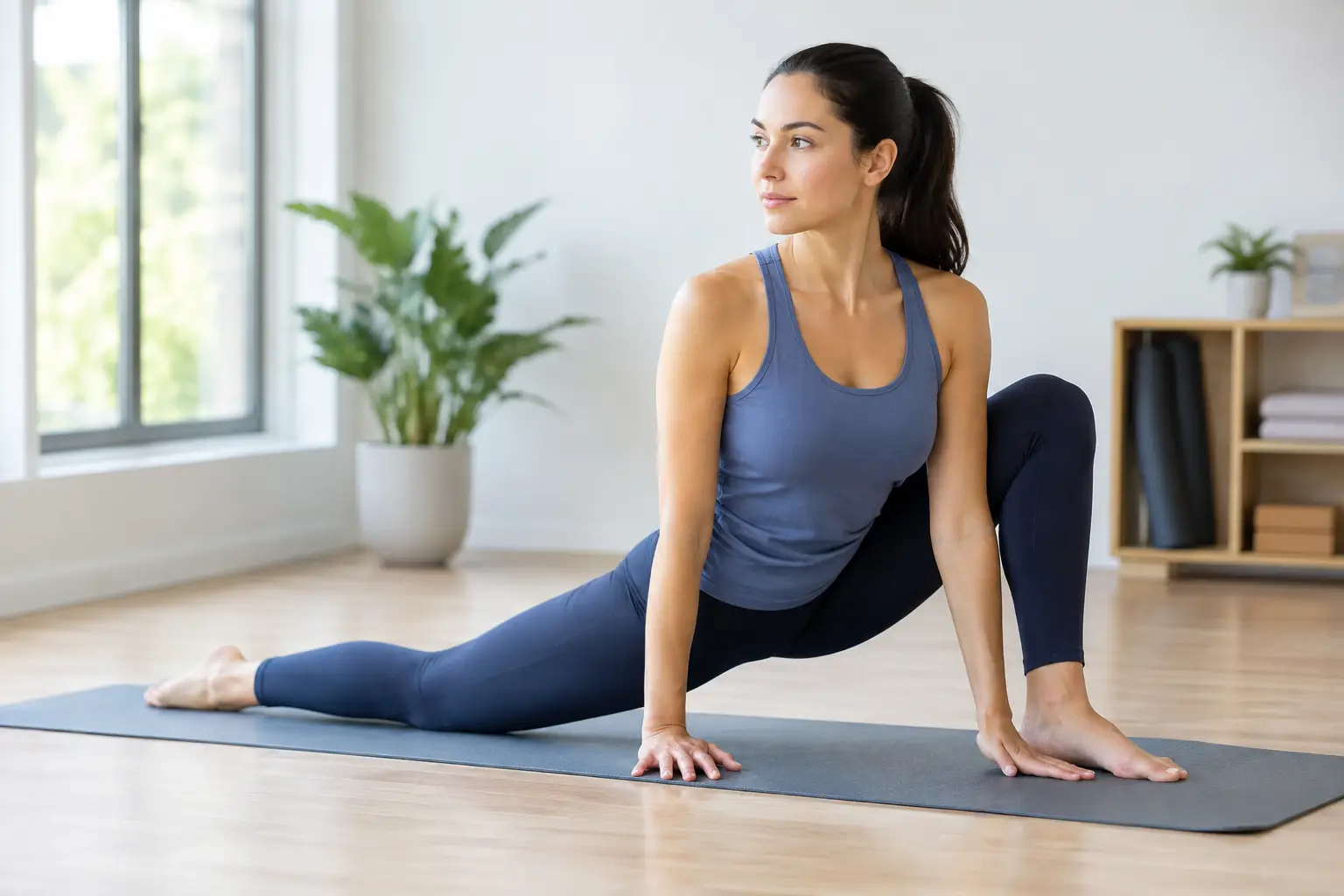
Getting out of a low chair, putting on shoes or turning in bed should not require careful planning. Yet these are often the moments when hip stiffness becomes most obvious. Knowing how to improve hip mobility begins with understanding why the hip feels restricted, rather than pushing through pain in the hope that more stretching will solve it.
The hip is a deep ball-and-socket joint designed to carry considerable load while allowing movement in several directions. Tight muscles can limit that movement, but so can arthritis, inflammation, tendon problems, previous injury or changes in the shape of the joint itself. The right approach depends on the cause.
What hip mobility actually means
Hip mobility is the usable range of movement at the hip, with enough control and strength to move comfortably. It is not about achieving extreme flexibility. For most people, useful hip mobility means being able to walk with a natural stride, climb stairs, sit and stand, dress independently and take part in the activities they value.
A hip can feel stiff because the surrounding muscles are guarded and underused, particularly after long periods of sitting or reduced activity. In this situation, gradual movement and strengthening can make a meaningful difference. However, if the joint surfaces are affected by osteoarthritis, or there is a structural problem within the joint, the limitation may not respond to stretching alone.
This distinction matters. Repeatedly forcing a painful movement can irritate the joint and leave you less active, not more mobile. The aim is comfortable, reliable function, not simply a larger number on a flexibility test.
How to improve hip mobility safely
Start with movements that are controlled, tolerable and easy to repeat. A small amount of regular movement is usually more helpful than an occasional demanding session. If an exercise causes sharp pain, catching, giving way or symptoms that remain worse into the following day, stop and seek advice rather than trying to work through it.
Begin with gentle daily movement
Walking is often an excellent starting point because it moves the hip through a natural, loaded range without asking for deep bending or twisting. Choose a distance that feels manageable and build gradually. If one longer walk aggravates your pain, shorter walks spread through the day may be better.
Avoid staying in one position for prolonged periods. If you work at a desk, stand and move for a few minutes each hour. When travelling, take breaks where possible. These changes will not reverse arthritis, but they can reduce the stiffness that follows immobility.
Gentle hip movements can also be useful. Lying on your back and sliding one heel towards your body, then away again, allows controlled hip and knee bending. Standing while holding a worktop or sturdy chair, slowly move one leg backwards without arching your back. A small, comfortable range is enough at first. The pelvis should stay reasonably level, rather than twisting to create the impression of more movement.
Build strength around the hip
Mobility and strength work together. When the muscles around the hip are weak, the body may stiffen or avoid certain movements because it does not feel secure. Strengthening the gluteal muscles, thigh muscles and trunk can improve control during walking, stair climbing and rising from a chair.
Simple sit-to-stands from a firm, higher chair are often practical. Keep your feet under your knees, lean forwards slightly from the hips and stand using a controlled movement. If this is difficult, use armrests initially or choose a higher seat. As strength improves, reduce the support gradually.
Side-lying leg lifts, bridge exercises and supported mini-squats may also help, provided they are comfortable and performed with good technique. The best exercise is not necessarily the most challenging one. It is the one you can do consistently without causing a flare-up.
Use stretching carefully
Stretching can be helpful where muscles around the hip, buttock or front of the thigh are genuinely tight. It is less likely to help if pain comes from an arthritic joint, a torn tendon or impingement within the hip.
Use a gentle stretch that creates mild tension rather than pain. Hold it steadily, breathe normally and avoid bouncing. A stretch at the front of the hip may feel useful after prolonged sitting, while a buttock stretch may help some people with outer hip tightness. If either produces groin pain, pinching or a deep joint ache, it is not the right exercise at that stage.
Choose low-impact activity when symptoms allow
Swimming, water-based exercise and cycling can support fitness and movement with less impact than running or jumping. But there is no single best option. Cycling involves repeated hip bending, which can aggravate some people with groin pain or hip impingement. Breaststroke may also be uncomfortable for those who have pain with rotation.
An upright exercise bike with the saddle set high enough to avoid excessive bending is often better tolerated than a low, aggressive riding position. The sensible choice is the activity that leaves the hip feeling the same or better afterwards, rather than substantially worse.
When stiffness may be more than tight muscles
Hip arthritis commonly causes pain in the groin, buttock or upper thigh, together with stiffness after rest and a progressive loss of movement. Some people first notice that they cannot comfortably put on socks and shoes, cross their legs or get in and out of a car. Pain can occasionally be felt at the knee, which is why a careful assessment is valuable when knee symptoms are not explained by the knee itself.
Other causes include bursitis or tendon pain on the outside of the hip, referred pain from the lower back, previous fracture, labral injury and hip impingement. The symptoms may overlap, but the treatment approach can differ considerably.
Arrange a specialist assessment if hip pain is persistent, is limiting sleep or daily activity, or has not improved with sensible self-management. Assessment usually involves discussing your symptoms and goals, examining your movement and, where appropriate, arranging imaging. This helps distinguish a problem that is likely to respond to physiotherapy and non-operative treatment from one where the joint is significantly worn or damaged.
Seek urgent medical attention if you have any of the following:
- a sudden inability to bear weight after a fall or injury;
- a hot, swollen hip with fever or feeling unwell;
- severe, rapidly worsening pain; or
- new loss of bladder or bowel control, or numbness around the groin.
Do injections or surgery improve hip mobility?
For some conditions, an image-guided steroid injection may reduce inflammation and pain sufficiently to make rehabilitation more comfortable. It is not a cure for arthritis, and its effect is variable and often temporary. Other non-operative options may be considered depending on the diagnosis, overall health and treatment aims.
When hip arthritis is advanced and pain continues to restrict sleep, walking and independence despite appropriate non-operative care, total hip replacement can offer substantial improvement in pain and function. It is not undertaken simply because an X-ray shows arthritis. The decision should reflect how symptoms affect your life, what treatments you have already tried and whether the likely benefits outweigh the risks for you.
Following hip replacement, mobility improves through a structured recovery process. Early walking, guided exercises and progressive strengthening are all important, but recovery is individual. Good outcomes rely on precise surgical planning, careful rehabilitation and realistic pacing, not rushing to achieve a particular movement by a particular date.
Make progress measurable, not punishing
Rather than judging success by how far you can stretch, choose one or two meaningful markers. It may be getting dressed without help, walking to the shops with less discomfort, managing stairs more confidently or returning to a favourite form of exercise. Record how the hip responds over several weeks, not just after one session.
Some discomfort from using deconditioned muscles can be normal. Persistent joint pain, night pain or a clear decline in function is different. Being listened to and receiving a clear diagnosis can prevent months of exercises that are simply not suited to the problem.
Your hips do not need to move perfectly to support an active, independent life. They need a plan that respects the source of your symptoms, builds confidence gradually and keeps your focus on the movements that matter to you.