


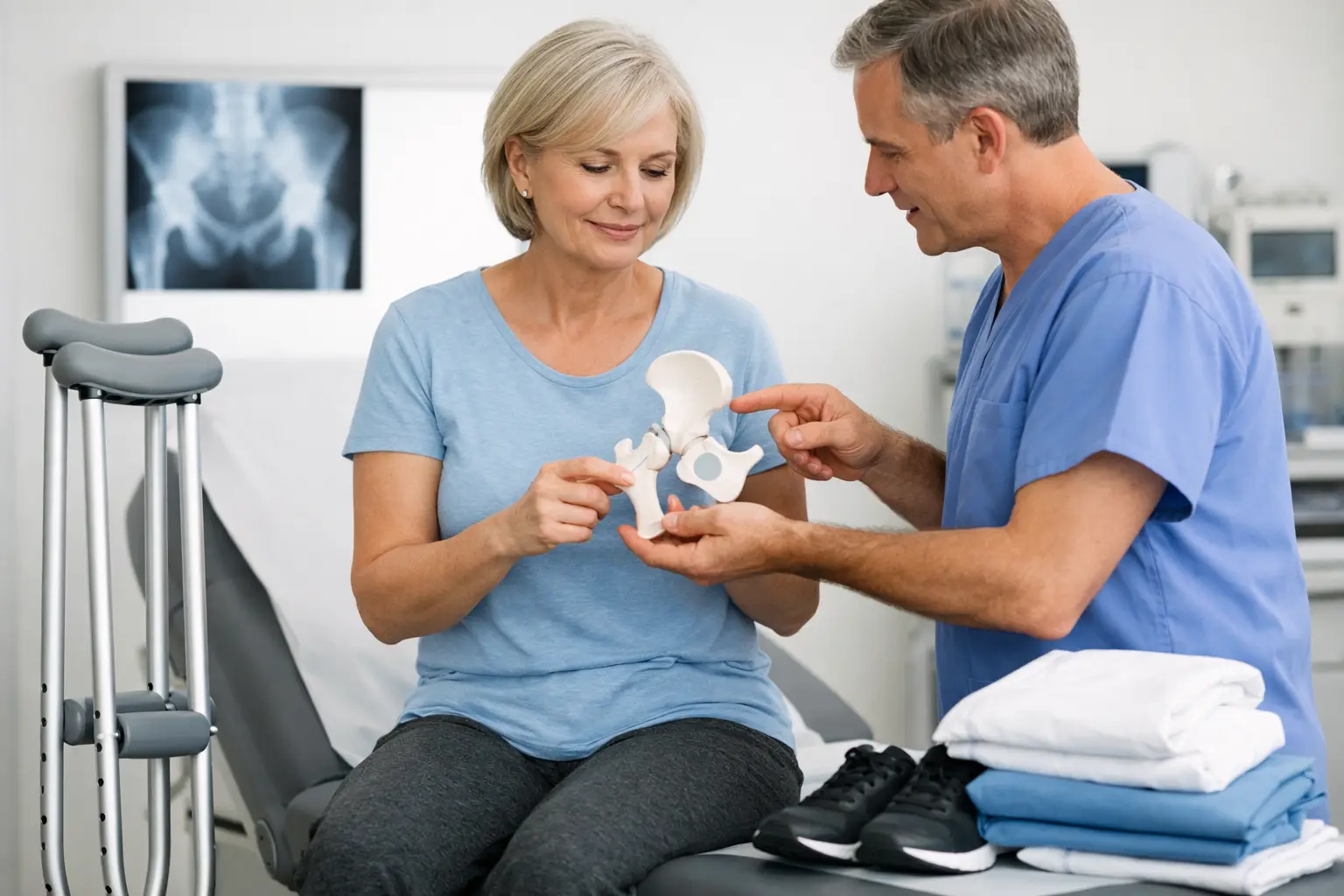
Getting out of a low chair, climbing stairs or putting on socks should not require a careful strategy. When hip pain has begun to dictate these everyday decisions, surgery can represent a positive step towards greater comfort, movement and independence. Good hip surgery preparation helps ensure that the step is as safe, calm and well organised as possible.
Preparation is not about trying to do everything perfectly. It is about understanding the plan, improving the factors you can influence, and arranging practical support so your energy can stay focused on recovery. Your surgeon, anaesthetist and wider clinical team will give advice tailored to your procedure, medical history and home circumstances. That individual advice should always take priority.
Start with a clear understanding of your operation
Hip surgery is not one single procedure. A total hip replacement for arthritis, a revision hip replacement after a previous operation, and surgery for a complex injury can each involve different considerations. The expected recovery timetable, weight-bearing instructions and rehabilitation plan may also vary.
Before your operation, make sure you understand why surgery is recommended, what it is intended to improve, and what limitations may remain. Ask about the type of anaesthetic, how long you may be in hospital, when you can expect to walk, and what level of pain is normal in the early days. Clear expectations can prevent unnecessary worry and help you recognise when you need advice.
It is also sensible to discuss your personal goals. For one person, success may mean walking the dog comfortably or sleeping without pain. For another, it may mean returning to work, looking after grandchildren or getting back to golf. A good surgical plan considers the activities that matter to you, alongside the clinical findings.
Hip surgery preparation begins with your general health
Your body will be doing important work after surgery: healing tissues, managing inflammation, rebuilding strength and adapting to a new pattern of movement. Small improvements before the operation can make a meaningful difference to recovery.
Keep moving within safe limits
Pain often makes activity feel counterintuitive, but remaining as active as your hip allows can help preserve muscle strength and confidence. Gentle walking, a static bicycle, swimming or exercises provided by a physiotherapist may be appropriate. The right choice depends on your diagnosis and pain levels, so avoid pushing through sharp pain or starting a demanding new exercise regime without guidance.
Strength around the buttock, thigh and core can support better walking after surgery. Even simple exercises, completed consistently, may be more useful than occasional strenuous activity. If your hip pain is severe, a physiotherapist can adapt a programme so that it is realistic rather than frustrating.
Support nutrition, sleep and smoking cessation
A varied diet with sufficient protein supports healing. If reduced mobility has affected your appetite, weight or general fitness, raise this at your pre-operative assessment. There may be specific recommendations based on your health and the nature of your surgery.
Sleep can be difficult when hip pain is persistent. While a perfect night’s sleep may not be realistic, maintaining a regular routine and using positions that reduce discomfort can help you arrive at surgery less exhausted. If pain is stopping you from sleeping most nights, tell your clinical team.
Stopping smoking is one of the most valuable changes you can make before an operation. Smoking can affect wound healing, circulation and infection risk. The earlier you stop, the better, but it is still worth seeking support even if surgery is approaching. Alcohol should also be discussed honestly, particularly if you drink regularly, as it can affect anaesthesia and recovery.
Attend your pre-operative assessment
Your pre-operative assessment is where the team checks that surgery can proceed safely and identifies any steps needed beforehand. This may include blood tests, heart tracing, swabs, medication review and discussion of conditions such as diabetes, high blood pressure, sleep apnoea or previous blood clots.
Be open about your medical history, allergies and any previous difficulties with anaesthesia. Bring an up-to-date list of prescribed medicines, over-the-counter treatments, inhalers, supplements and herbal remedies. Some medicines may need to be stopped or adjusted before surgery, particularly blood-thinning medication, certain diabetes treatments and anti-inflammatory drugs. Do not stop anything independently: the timing matters, and the advice will be specific to you.
Plan your home around the first two weeks
The first days at home are easier when ordinary tasks require fewer decisions and less bending, reaching or carrying. You may be walking with crutches or sticks initially, and you may be more tired than expected. Preparing your environment beforehand gives you room to concentrate on moving safely and completing your exercises.
Create a comfortable recovery area with a supportive chair, a table within reach, a mobile phone charger, water, regular medication and anything you use daily. If your bedroom or bathroom is upstairs, discuss the stairs plan with your physiotherapist before discharge. Many people manage stairs safely with the correct technique, but it is reassuring to practise it first.
Remove loose rugs, trailing cables and clutter from walking routes. Keep frequently used kitchen items at waist height where possible, and prepare simple meals in advance or arrange help with shopping. A raised toilet seat, shower chair, long-handled shoehorn or grabber may be recommended, although the equipment needed depends on your operation and individual mobility.
Think carefully about pets as well. An enthusiastic dog, a cat weaving around your feet or a lead that pulls sharply can create a genuine fall risk in early recovery. Arrange support with walks and feeding if necessary.
Arrange practical help, not just goodwill
Most patients value support after hip surgery, even when they are determined to be independent. Ask a relative, friend or neighbour for specific help rather than a general offer. A lift home, a check-in call, a prepared meal, help with washing or someone to collect prescriptions can make the first week considerably easier.
You will also need to plan transport. You should not drive yourself home after an anaesthetic, and you may be advised not to drive for a period after surgery. The timing of return to driving depends on your side of surgery, vehicle, comfort, strength, reaction time and insurance requirements. Your ability to perform an emergency stop safely is particularly relevant, so seek individual guidance before getting back behind the wheel.
If you live alone, this does not automatically prevent surgery, but it should be discussed early. The team can help identify what level of support, physiotherapy and equipment will be appropriate. Planning is particularly important if you have limited mobility in the other hip, knee, back or shoulders, as these can affect your use of walking aids.
Prepare for hospital with purpose
Pack lightly, but pack for comfort. Loose, easy-to-put-on clothing, supportive flat shoes, toiletries, glasses, hearing aids and any mobility equipment you have been asked to bring are useful. Take an accurate medicines list and bring medicines only if your hospital has specifically requested them.
Follow fasting instructions precisely. Eating or drinking when you have been asked not to can mean an operation needs to be delayed for safety reasons. If instructions are unclear, contact the hospital rather than making assumptions.
It can help to write down questions in advance. On the day, emotions and practical arrangements can make it easy to forget what you intended to ask. You might want to confirm your pain relief plan, blood clot prevention, wound care, physiotherapy arrangements and who to contact if you have concerns after discharge.
Know what recovery will ask of you
Hip replacement surgery is designed to reduce pain and restore function, but the operation is only one part of the process. Recovery also depends on protecting the wound, taking medication as prescribed, completing agreed exercises and gradually increasing activity without overdoing it.
Pain relief is not simply about comfort. When pain is controlled appropriately, it is easier to breathe deeply, sleep, move safely and engage with physiotherapy. Take medication exactly as directed, including any treatment prescribed to reduce the risk of blood clots. Contact your clinical team promptly if pain is escalating rather than settling, or if you are troubled by side effects.
You should also know the warning signs that require urgent advice. These can include increasing redness, heat, drainage or swelling around the wound; fever or feeling unwell; new calf pain or marked leg swelling; chest pain; or sudden shortness of breath. These symptoms do not always indicate a serious complication, but they should never be ignored.
Recovery is rarely a straight line. Some days you may feel encouraged by a little more movement, while others are defined by fatigue, stiffness or disrupted sleep. Comparing your progress with someone else’s can be unhelpful, especially where procedures and starting points differ. The more useful measure is whether you are progressing safely against the plan agreed with your surgeon and physiotherapist.
Make your questions part of the plan
The best hip surgery preparation is personal. It takes account of your health, your home, your support network and the life you want to return to. At your consultation, bring up the concerns that feel most practical or most worrying – whether that is managing stairs, returning to work, caring for a partner, travelling, or getting back to a favourite activity.
A carefully planned operation and a well-prepared home cannot remove every uncertainty, but they can replace much of it with a clear next step. That clarity allows you to approach surgery focused not only on the procedure itself, but on the mobility and confidence it is intended to help restore.