


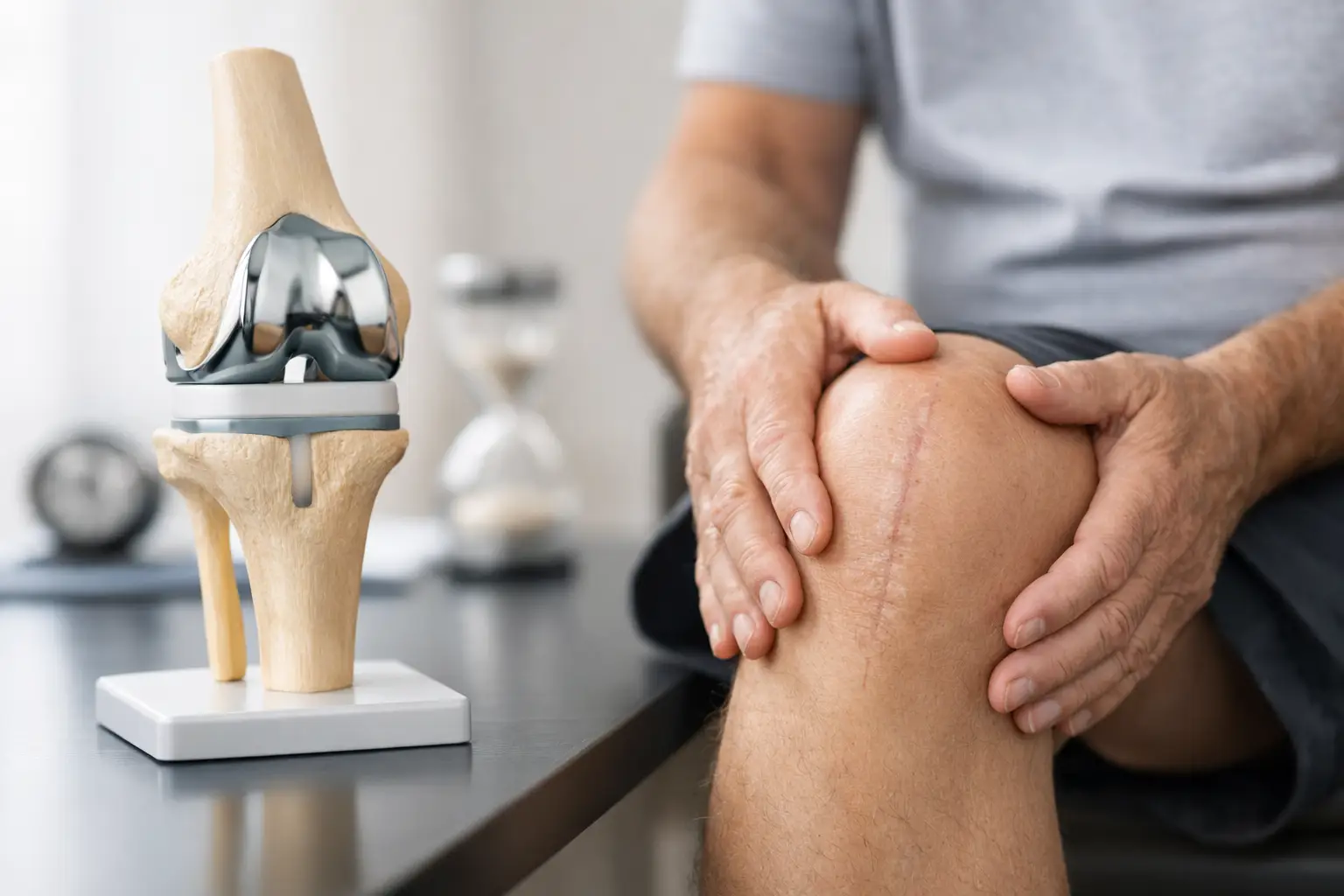
A knee replacement is designed to give you many years of more comfortable movement, not simply short-term relief. Understandably, one of the first questions patients ask is how long knee replacement lasts. The answer is reassuring, but it is not identical for everyone: most modern replacements perform well for 15 to 20 years or longer, and many last considerably beyond that.
The quality of the implant matters, but so do the precision of surgery, the condition of the knee before surgery, your activity levels, general health and the care you take during recovery. A thoughtful discussion with a knee specialist can turn a broad estimate into advice that is relevant to your circumstances and goals.
How Long Knee Replacements Last
For a total knee replacement, long-term research and national joint replacement data consistently show strong results. Around 90 to 95% of total knee replacements are still functioning well at 15 years. At 20 years, the majority continue to perform satisfactorily, although the chance of needing further treatment gradually rises over time.
These figures describe large groups of patients, rather than predicting exactly what will happen to one person. Someone in their late seventies having a knee replacement for severe arthritis may reasonably expect the replacement to last for the rest of their life. A physically active person having surgery in their fifties has more years of use ahead and is therefore more likely to require revision surgery at some point.
A successful knee replacement is not judged only by whether the components remain in place. It should also provide meaningful pain reduction, improve confidence when walking and help you return to the activities that matter to you, whether that is getting around the shops, enjoying a holiday, playing with grandchildren or remaining active at work.
Total and Partial Knee Replacement Longevity
A total knee replacement resurfaces all three compartments of the knee joint. It is generally used when arthritis is widespread and remains one of the most reliable operations in orthopaedic surgery.
A partial knee replacement treats only the damaged area of the knee, preserving healthy bone, ligaments and cartilage elsewhere. For carefully selected patients with arthritis confined to one part of the knee, this can feel more natural and may allow a quicker recovery. However, it is not suitable for every knee. The risk of future surgery can be slightly higher than with a total replacement, often because arthritis develops in another part of the joint rather than because the original partial replacement has failed.
The right operation is therefore not simply the one expected to last longest on paper. It is the procedure that most accurately addresses the pattern of arthritis, knee alignment, ligament stability and your functional needs.
What Can Affect How Long a Knee Replacement Lasts?
Modern knee implants are engineered to withstand repeated loading, but every knee replacement works within a living joint. Several factors influence its long-term performance.
Surgical planning and implant positioning
A knee replacement must be correctly sized, aligned and balanced. Even small differences in component position or soft-tissue tension can affect how forces travel through the joint. Detailed pre-operative planning and careful surgical technique aim to create a stable, comfortable knee that moves efficiently and places less stress on the implant over time.
This is particularly relevant where there is significant deformity, previous surgery, ligament damage or a complex pattern of arthritis. These cases benefit from assessment by a surgeon who works exclusively with hip and knee conditions and can advise honestly on the most appropriate approach.
Activity and body weight
Walking, swimming, cycling, golf and sensible strength training are usually excellent ways to maintain fitness after knee replacement. Regular movement supports muscle strength, balance and bone health, all of which help you use the knee well.
High-impact, repetitive activities such as running long distances, jumping sports and heavy manual work may increase wear or strain over many years. That does not mean a replacement leaves you inactive. It means activity should be discussed in the context of your knee, your expectations and the demands you place on it.
Carrying excess weight can also increase the load through the knee. Weight management is not about blame. Even a modest reduction in weight, where achievable, may reduce joint stress and make movement more comfortable before and after surgery.
Infection, injury and loosening
Most knee replacements do not fail because of everyday use. When revision surgery is needed, common reasons include infection, loosening of the components, instability, stiffness, wear of the bearing surface or a fracture around the implant following a fall or other injury.
Infection is uncommon, but it can occur soon after surgery or, rarely, later if bacteria enter the bloodstream from another source. Persistent wound leakage, increasing redness, fever, new swelling or worsening pain should always be assessed promptly. Early review gives the best opportunity to identify the cause and plan appropriate treatment.
Overall health and recovery
Conditions such as diabetes, inflammatory arthritis and poor circulation can affect healing and infection risk. Smoking can also impair wound healing and bone health. Optimising these factors before surgery is part of improving both immediate recovery and durable results.
Recovery itself deserves patience. A knee replacement may continue to improve for up to a year, and some swelling or stiffness is common during the early months. Following your physiotherapy programme, gradually rebuilding strength and attending planned reviews are practical investments in the outcome.
Does Pain Mean the Knee Replacement Is Wearing Out?
Not necessarily. A new ache around a replaced knee does not automatically mean the implant has loosened or worn out. Muscles, tendons, the kneecap, the hip and even the lower back can all contribute to knee symptoms. Changes in activity, a minor injury or temporary inflammation may also be responsible.
That said, a previously reliable knee should be reviewed if pain is persistent, worsening or associated with swelling, instability, reduced range of movement, clicking that is new and painful, or difficulty putting weight through the leg. An examination and X-rays can often clarify whether the replacement is well fixed and aligned, or whether further investigation is needed.
Avoid assuming that discomfort is something you simply have to tolerate. Equally, avoid assuming the worst. A specialist assessment is the most reliable way to understand what is happening.
Looking After a Knee Replacement for the Long Term
There is no special product or complicated routine that guarantees an implant will last. Consistent, sensible habits make the greatest difference. Keep the leg muscles strong, remain active within comfortable limits and build up new activities gradually rather than testing the knee all at once.
Choose supportive footwear for longer walks and take particular care to avoid falls. If you have a significant fall, especially if pain, swelling or weight-bearing suddenly becomes difficult, seek medical advice. Tell clinicians and dentists that you have a joint replacement when discussing treatment for infections or invasive procedures, so they can consider your wider medical history.
Routine follow-up arrangements vary between surgeons and hospitals. You may not need frequent appointments when you are doing well, but it is useful to know who to contact if symptoms change. For patients with complex surgery or a previous revision, planned surveillance may be more relevant.
When Is Revision Knee Replacement Considered?
Revision knee replacement means replacing some or all of a previous knee replacement. It is a more complex procedure than first-time surgery because there may be bone loss, scar tissue, instability or infection to address. It is not undertaken simply because an implant reaches a certain age.
The decision is based on symptoms, examination findings, imaging and the likely benefit of surgery. Some patients have X-ray changes but little discomfort and can be monitored safely. Others have pain or instability that is limiting their daily life and may benefit from specialist revision assessment.
If you are considering knee replacement, the most useful question is not only how many years it may last. Ask what result is realistic for your knee, what activities you hope to return to and how your treatment can be planned around the life you want to lead. Clear advice at the outset helps you move forward with confidence.