


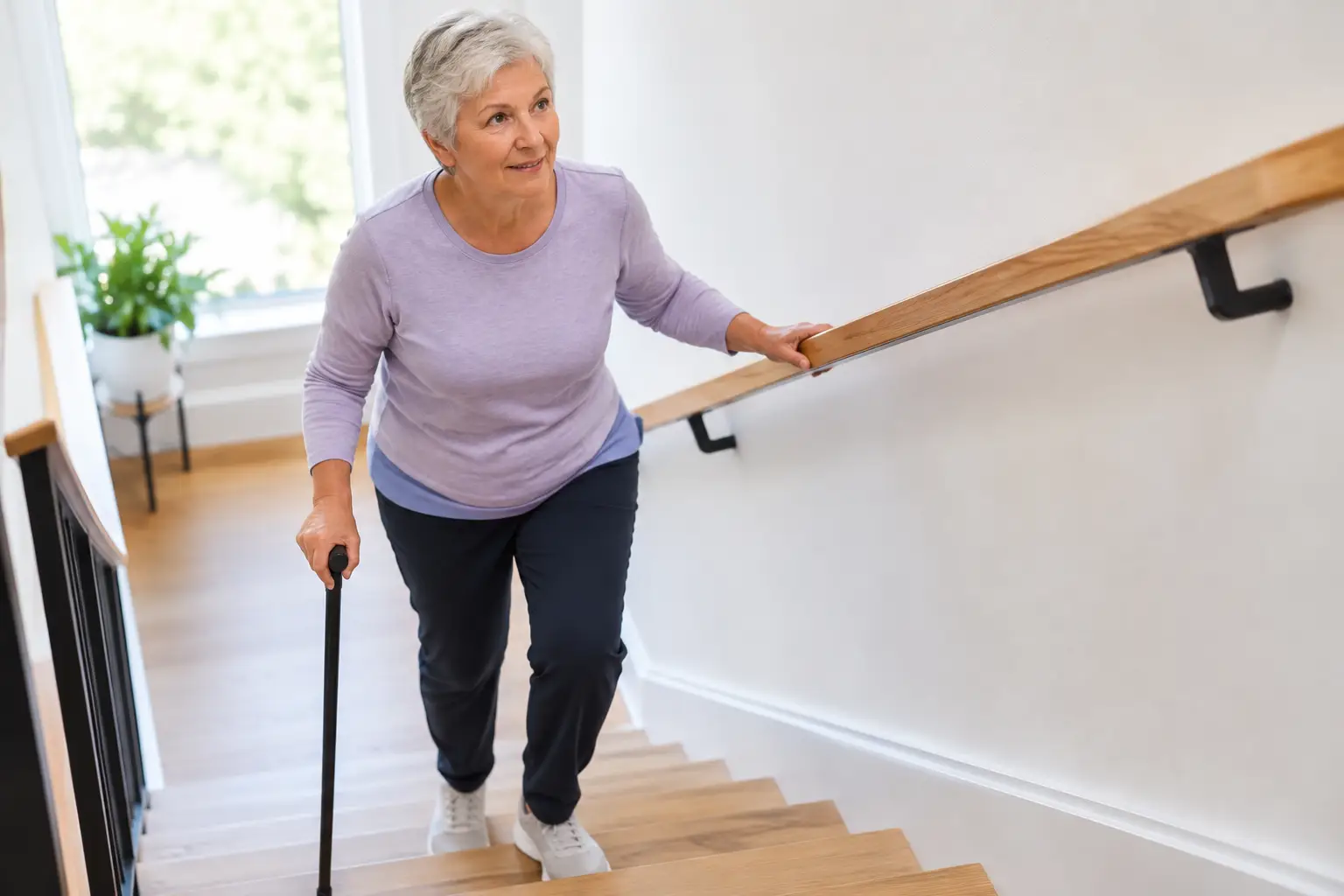
A staircase can feel like the biggest obstacle in the house when you first come home. Yet stairs after hip replacement are usually manageable much sooner than patients expect, provided you have been assessed by your physiotherapist, use the right technique and resist the urge to rush. The aim is not to tackle several flights of stairs for exercise. It is to move safely between the parts of your home that matter to you.
For many people, practising the stairs is part of the discharge process after a total hip replacement. Your physiotherapy team will ensure that you can get up and down a small number of steps safely with the walking aid appropriate for you. That may be crutches, a frame or walking sticks. Their advice should always take priority, particularly if you have had a complex operation, revision surgery or have other balance, heart or neurological conditions.
Stairs after hip replacement: when can you start?
Many patients use a few stairs before leaving hospital, often within the first day or two after surgery. This does not mean that your hip has fully healed. It means you have demonstrated a safe method for essential stair use while protecting the new joint and managing your pain.
The timing varies. Someone who is otherwise fit, has good strength and lives in a home with a handrail may progress quickly. Someone recovering from revision hip replacement, complex reconstruction, a fracture or a medical complication may need a slower plan. It is sensible to arrange your home so that you only need to use stairs when necessary in the early days.
Pain control also makes a practical difference. Trying the stairs when your pain relief has worn off, when you are very tired or when you feel light-headed increases the risk of a misstep. Take prescribed medication as directed and allow enough time for it to work before practising with your physiotherapist or carer nearby.
The safest technique for stairs
The familiar instruction is: up with the good, down with the bad. In practical terms, when going upstairs, step up first with your unoperated leg. Bring the operated leg and your walking aid onto the same step afterwards. When going downstairs, place the walking aid down first, followed by the operated leg, then bring the unoperated leg down to join it.
Take one step at a time. Keep one hand on a secure handrail where possible, and hold your stick or crutch in the other hand as you have been shown. If there are rails on both sides, use them. Avoid carrying a bag, laundry basket, hot drink or anything else that takes a hand away from support. A small backpack or a pocketed dressing gown can be useful for carrying essentials without compromising balance.
Do not attempt to alternate feet on each step until your physiotherapist advises that your strength, control and confidence are ready. There is no prize for returning to a normal stair pattern early. The safer one-step method is temporary, and it allows the muscles around your hip to recover without unnecessary strain.
If your staircase has no handrail, speak to your surgical team or physiotherapist before discharge. In many cases, fitting a secure rail is a straightforward and worthwhile adaptation. A banister that is loose, too low or used as a place to hang coats is not reliable support.
Your individual hip precautions matter
Some patients are given specific movement precautions after surgery. These can differ according to the surgical approach, the stability of the hip, the type of operation and the findings during surgery. For example, you may be advised to avoid certain combined movements, such as bending deeply and twisting, for a defined period.
Stair climbing itself does not usually require excessive hip bending, but turning sharply at the top or bottom of the stairs can be a risk if performed carelessly. Take the corner in small steps rather than pivoting on the operated leg. Your own post-operative instructions are more relevant than general online advice, so follow the plan agreed with your surgeon and physiotherapist.
Making stairs safer at home
Before you return home, look at the route from your bedroom to the bathroom, kitchen and front door. Clear shoes, cables, pet bowls and loose rugs from the landing and hallway. Good lighting is essential, especially if you need to use the bathroom during the night. A bedside lamp, night light or switch within easy reach can prevent an avoidable fall.
If you normally sleep upstairs, it is often reasonable to continue doing so if you can manage the stairs safely. Some people prefer to set up a temporary downstairs sleeping area for the first few days. This can reduce fatigue, but it is not automatically necessary and may be less comfortable if it means sleeping in a low sofa or struggling to access a suitable bathroom.
The following simple preparations can make a meaningful difference:
- ensure the handrail is firm and easy to grip from top to bottom;
- keep every step dry, clear and well lit;
- wear supportive, non-slip footwear rather than socks or loose slippers;
- keep your mobile phone, medication and water close by, so you do not make unnecessary trips.
It is also sensible to have help available when you first arrive home. A family member or friend does not need to hold or pull you while you climb – that can upset your balance – but they can stay close, carry items and provide reassurance. If you feel uncertain, wait until your physiotherapist can review the technique again rather than practising alone.
How often should you use the stairs?
In the first week or two, use the stairs for a purpose rather than repeatedly going up and down to build fitness. Short, regular walks on a level surface are often a better way to increase activity, as they allow you to focus on a steady gait and good posture. Your rehabilitation programme will gradually develop strength in the hip muscles, thigh and core, all of which make stairs easier.
As swelling settles and your walking improves, you may find you need your walking aid less on the stairs. Do not stop using it simply because you are impatient to feel normal. The right time to progress is when you can climb with control, without a pronounced limp, sudden pain or a feeling that the leg may give way. Your follow-up assessment is an opportunity to discuss this in detail.
A temporary increase in muscular aching or tiredness after a more active day can be normal. Sharp groin pain, escalating pain that does not settle with rest, or a new feeling of instability is different. Reduce activity and seek clinical advice if this occurs.
When to ask for urgent advice
Contact your surgical team promptly if you cannot safely bear weight after previously managing, have fallen, or develop severe and increasing hip pain. Urgent assessment is also needed for a leg that appears shortened or turned out, or if you feel or hear a sudden pop followed by an inability to move normally. These can be signs of a dislocation or another complication.
Seek urgent medical attention for chest pain, shortness of breath, coughing up blood, or new painful swelling in the calf, as these symptoms require prompt assessment. Redness, heat, wound leakage, fever or feeling generally unwell may indicate an infection and should not be ignored.
Building confidence, one step at a time
Fear of falling can make the stairs feel harder than they are. It often causes people to grip too tightly, lean backwards or rush through the movement. Pause at the bottom, position your walking aid correctly and follow the same sequence every time. Repetition with good technique builds confidence more effectively than forcing yourself to do more than your body is ready for.
Recovery after hip replacement is measured in small gains: getting upstairs to your own bed, making a cup of tea safely, or taking a walk without the pain that previously limited you. Treat each safe step as progress, and allow your rehabilitation plan to set the pace.