


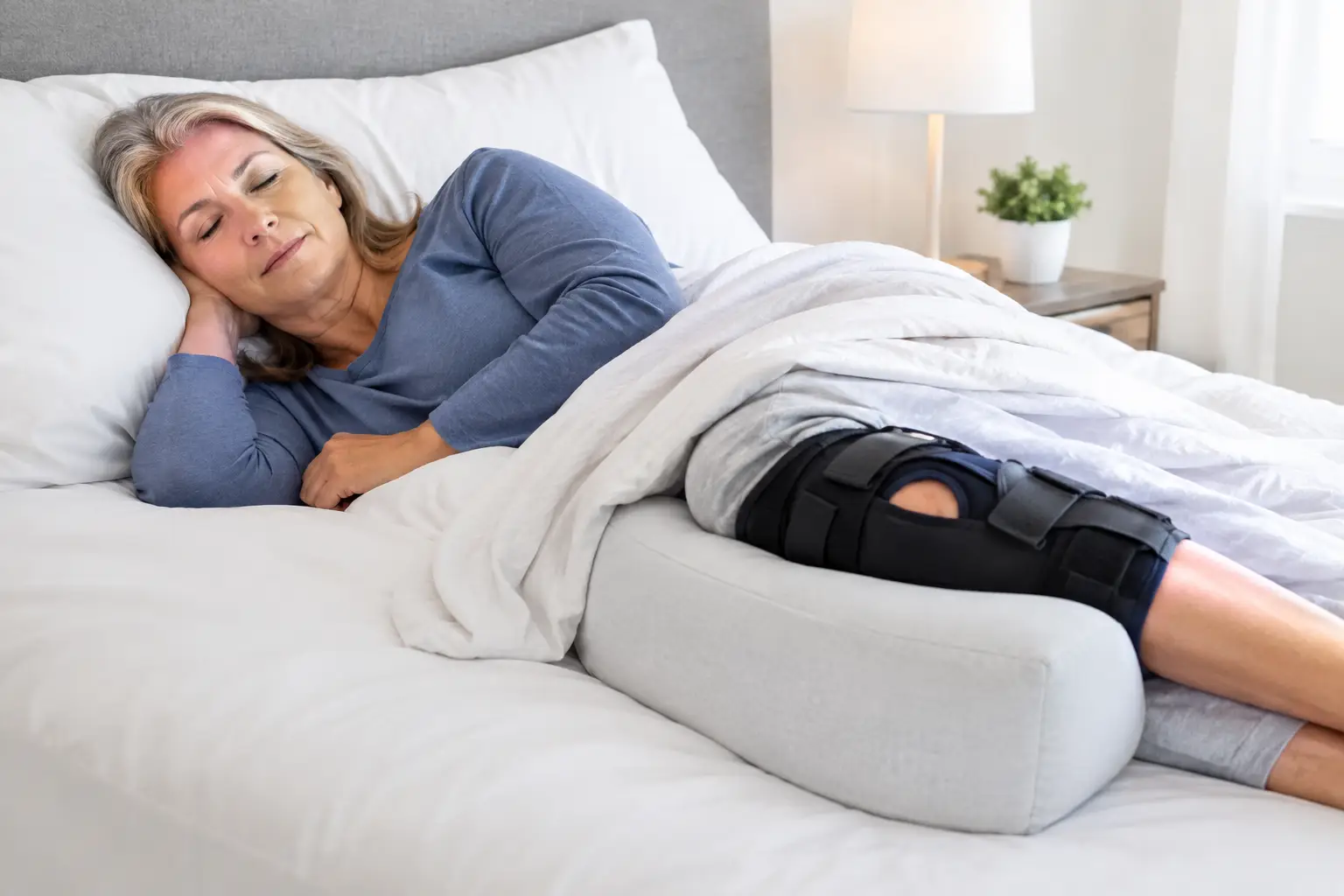
The first nights at home can be among the most challenging parts of recovery. Sleeping after knee replacement surgery is often disrupted by swelling, stiffness, discomfort and the unfamiliar need to protect your new joint. This is expected, particularly in the first few weeks, but it should not leave you feeling unsupported or unsure of what is safe.
Better sleep is not simply about feeling more rested. It can make it easier to manage pain, take part in physiotherapy and maintain the energy needed for day-to-day recovery. The aim is not to find one perfect position immediately, but to create a safe, comfortable routine that improves gradually.
Why sleep is difficult after knee replacement
A knee replacement is major surgery. Even when the operation and early recovery are progressing well, the tissues around the knee need time to settle. Swelling often increases later in the day, and this can create pressure, throbbing or a feeling of tightness when you lie down.
Pain medication may wear off overnight, while reduced daytime activity and a changed routine can make it harder to feel naturally sleepy. Some people also find that they are more aware of their knee in bed, where there are fewer distractions. These changes are usually temporary, but it is sensible to plan for interrupted sleep in the early stages rather than expect normal nights straight away.
Your experience will depend on the type of replacement, the condition of your knee before surgery, your general health and whether you have had previous operations. If sleep becomes steadily worse rather than gradually improving, your surgical team should know.
The best sleeping positions after knee replacement surgery
For most people, lying on the back is the simplest and most comfortable position in the first days after surgery. It keeps the operated leg supported and makes it easier to avoid twisting the knee while getting in and out of bed. A pillow under the calf and ankle can help elevate the leg and reduce swelling.
Avoid placing a pillow directly behind the knee for long periods. Although it can feel comfortable initially, consistently sleeping with the knee bent may make it harder to regain full straightening. Full extension is an important part of knee replacement rehabilitation, so support the lower leg rather than holding the knee in a flexed position.
Sleeping on your side is often possible when it feels comfortable, particularly once the initial pain and swelling have reduced. If you sleep on the non-operated side, place one or two firm pillows between your knees and lower legs. This supports the operated leg, reduces pressure on the knee and helps prevent the joint from rotating awkwardly. Some patients can sleep on the operated side later in recovery, but tenderness around the incision may make this unpleasant at first.
Sleeping on your stomach is generally best avoided in the early recovery period. It can put unnecessary strain on the knee and make it difficult to move safely if you need to get up during the night.
Setting up your bed for safer recovery
A well-prepared bedroom can make a meaningful difference. Your bed should be high enough that you can sit down and stand up without deeply bending the knee or struggling to push yourself upright. If the mattress is very low or soft, it may be more difficult to get in and out of bed safely.
Keep your walking aids, mobile phone, water, prescribed medication and a light within easy reach. This reduces the temptation to rush or twist when you wake during the night. A clear route to the bathroom is equally important. Remove loose rugs, trailing wires and anything that could create a trip hazard, and consider a night light if the room or hallway is dark.
When getting into bed, sit back until you can feel the mattress behind your legs, reach for the bed if needed, then lower yourself carefully. Move your legs onto the bed together, using your hands or a strap to assist the operated leg if advised by your physiotherapist. Reverse the process when getting up. Slow, deliberate movements are safer than trying to manage the knee as you did before surgery.
Managing night-time pain and swelling
Good pain control is one of the most effective ways to improve sleep. Take medication exactly as prescribed, and ask your care team whether the timing of your evening dose can be adjusted to give you better coverage overnight. Do not change doses or add over-the-counter medicines without checking first, especially if you take blood-thinning medication or have other health conditions.
Ice can help reduce pain and swelling before bed. Use a wrapped cold pack rather than placing ice directly on the skin, and follow the advice given by your surgeon or physiotherapist regarding how long to use it. Elevating the leg may also help, provided the whole lower leg is supported and the knee is not left resting in a bent position.
A short period of gentle movement before bed can reduce stiffness. Your prescribed exercises, a brief walk around the home or ankle pumps may be appropriate, but avoid turning bedtime into an intensive rehabilitation session. Overdoing activity late in the evening can increase swelling and make the knee more uncomfortable once you lie down.
A realistic evening routine
Recovery is easier when the evening follows a predictable rhythm. Finish any exercises recommended for that day, have a light meal, take medication as directed and allow time to settle swelling with elevation or ice if advised. Reducing caffeine later in the day and limiting alcohol can also support sleep quality, particularly while you are taking stronger pain relief.
Try not to judge recovery by one poor night. Sleep after surgery often improves unevenly: you may have two encouraging nights followed by a difficult one after a more active day. Look instead for progress over a week or two – less time awake, easier repositioning, or needing fewer pillows to feel comfortable.
Napping can be useful when your body needs rest, particularly in the first fortnight. However, long or late-afternoon naps may make it harder to sleep overnight. If possible, keep daytime rests shorter and continue with gentle daytime activity within the limits set by your rehabilitation plan.
When to contact your surgical team
Discomfort and disrupted sleep are common, but certain symptoms need prompt assessment. Contact your surgeon, ward team, GP or urgent care service if you develop increasing redness, heat, wound leakage, a fever, worsening pain that is not controlled by prescribed medication, or swelling that is suddenly much worse.
Seek urgent medical advice for chest pain, shortness of breath, coughing up blood, or new pain and swelling in the calf. These symptoms can indicate a serious complication and should not be managed by simply changing your sleeping position or waiting until the morning.
If you use a CPAP machine for sleep apnoea, continue using it unless your anaesthetic or surgical team has given you different instructions. It is also important to discuss persistent insomnia, anxiety or medication side effects. Sometimes the solution is as straightforward as revising pain relief timing; sometimes it needs a more individual review.
Give your knee time to settle
The early weeks after knee replacement ask a great deal of you. Rest matters, but so does regular movement, careful pain management and following the rehabilitation plan designed for your knee. There is no prize for coping with severe discomfort alone, and no failure in needing extra support while sleep is disrupted.
With safe positioning, a calm evening routine and timely advice when something does not feel right, nights usually become more comfortable. Each better night is part of the wider recovery: less pain, more confidence on your feet and a steadier return to the activities that matter to you.