


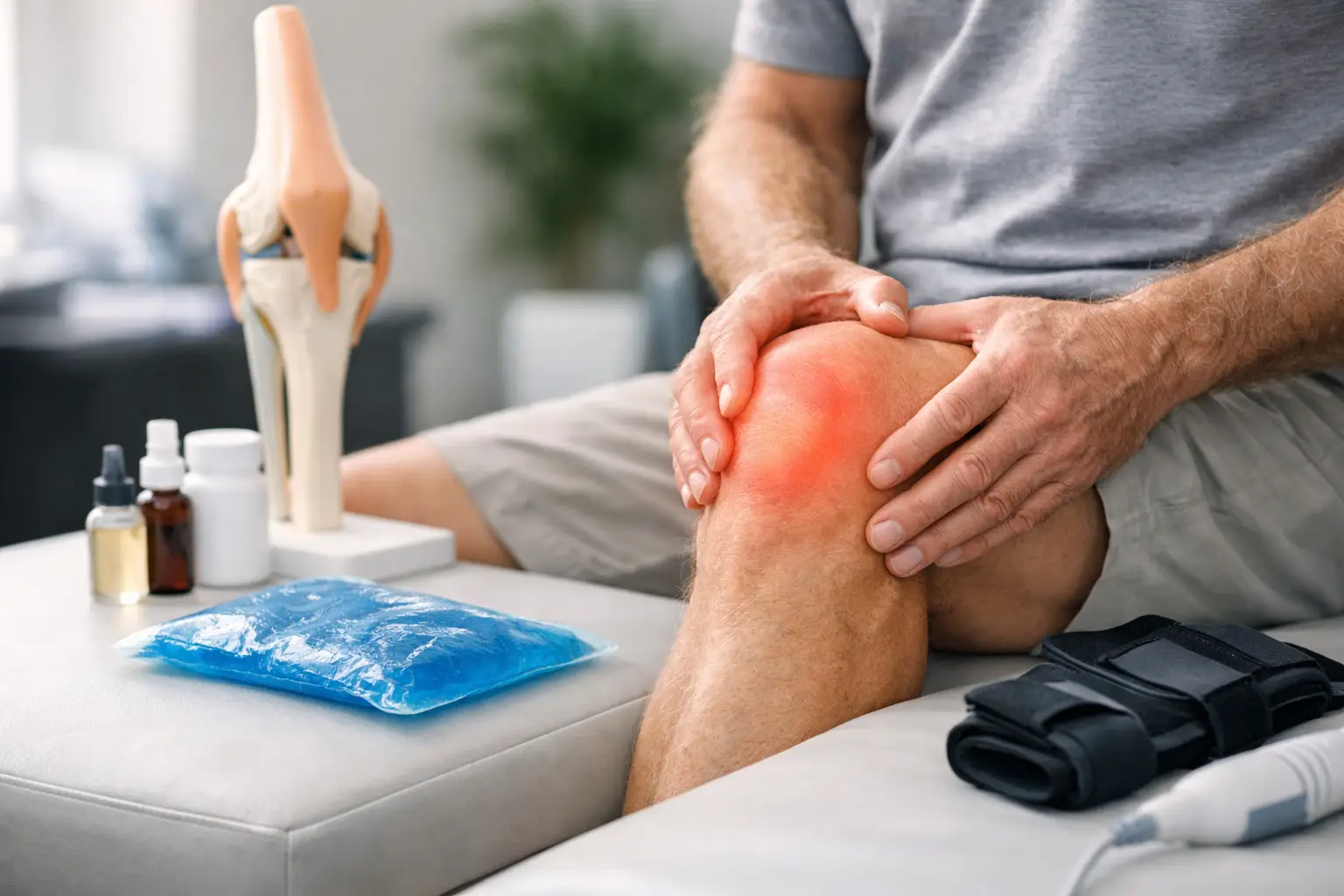
Knee arthritis can make small parts of the day feel disproportionately difficult: getting down the stairs, standing up after a meal, walking the dog or keeping pace with grandchildren. Non-surgical knee arthritis treatment is often an effective first step, but it should be based on a clear understanding of what is causing your pain, how advanced the arthritis is, and what you need your knee to do.
The aim is not simply to postpone an operation at all costs. It is to reduce pain, improve confidence in movement and preserve the activities that matter to you, using the least invasive treatment likely to help. For some people, this provides lasting control of symptoms. For others, it creates a more comfortable period before knee replacement becomes the sensible option.
Understanding the cause of knee pain
Osteoarthritis is the most common form of knee arthritis. It develops when the smooth cartilage that helps the joint move freely becomes worn and the joint is no longer able to distribute load as comfortably. Symptoms may include aching after activity, stiffness after rest, swelling, clicking or grinding, and a gradual reduction in walking distance or knee bend.
However, not every painful knee is painful solely because of arthritis. A meniscal tear, ligament problem, inflammation around the joint, referred pain from the hip, or a previous injury can all affect symptoms and treatment choices. The location of arthritis matters too. Wear confined to one part of the knee may be managed differently from arthritis affecting the whole joint.
A specialist assessment usually combines a careful account of your symptoms and priorities with examination and appropriate X-rays. Scans can be useful in selected cases, but treatment should never be chosen from an image alone. Some people have substantial changes on an X-ray with manageable symptoms, while others are significantly limited by apparently moderate arthritis.
Non-surgical knee arthritis treatment: the foundations
Targeted exercise and physiotherapy
Appropriately planned exercise is among the most valuable treatments for knee arthritis. This can sound counterintuitive when the knee hurts, but strengthening the quadriceps, hamstrings, hips and core can reduce the load passing through the painful joint and improve stability. Better muscle control may also make stairs, uneven ground and rising from a chair feel more secure.
The right programme depends on the individual. A keen cyclist may need advice on bike position and training volume, while someone whose main goal is a comfortable walk to the shops needs a different starting point. Exercises should be challenging enough to build strength without causing a prolonged flare of pain or swelling. A physiotherapist can help adjust the plan when symptoms change.
Low-impact activity, such as cycling, swimming, walking in manageable amounts or using a cross-trainer, is often better tolerated than repeated high-impact exercise. That does not mean every higher-impact activity must stop permanently. It means finding a level and pattern of activity that your knee can recover from.
Weight management and practical load reduction
If weight loss is appropriate, even a modest reduction can lessen the force through the knee during everyday walking. This is not a judgement about fitness or willpower. It is a practical way of reducing joint load, and it works best alongside strengthening rather than as a stand-alone instruction to simply do more exercise.
Simple changes can also make a meaningful difference. Supportive footwear, pacing longer days, taking breaks before pain becomes severe and using a walking stick in the opposite hand when needed can improve comfort. Some patients benefit from a brace, particularly when arthritis is concentrated on one side of the knee and the leg alignment contributes to loading in that area. Braces are not right for everyone, but they can be worth considering after assessment.
Pain relief medication
Pain relief can help you remain active enough to benefit from rehabilitation. Topical anti-inflammatory gels may be suitable for some people, while anti-inflammatory tablets can be useful for short periods if they are safe alongside your medical history and other medication. They are not suitable for everyone, particularly those with certain stomach, kidney, heart or blood pressure conditions.
Paracetamol may help some patients, although its benefit for arthritis pain is variable. Stronger painkillers are usually approached cautiously because of side effects and the risk of dependence. The objective is to support movement and sleep, not to mask worsening symptoms indefinitely.
When injections may be appropriate
Injections can offer a focused way to settle pain and inflammation, particularly when exercise alone is not enough or when symptoms are preventing rehabilitation. Their role is to create a useful window for activity and recovery, not to promise a permanent cure for arthritis.
Steroid injections
A corticosteroid injection can reduce inflammation and pain, sometimes quite quickly. It may be particularly helpful during a significant flare, after swelling has developed, or when pain is making physiotherapy difficult. Relief varies widely: some patients gain a few weeks or months of improvement, while others notice little change.
Repeated steroid injections are not a long-term answer for every knee. The timing and number of injections should be considered carefully, especially if knee replacement may be needed in the near future. A specialist can discuss the likely benefits and limitations in the context of your X-rays, symptoms and wider health.
Hyaluronic acid injections
Hyaluronic acid is designed to supplement the lubricating properties of fluid in the joint. Some people experience reduced pain and improved function, often over a period of months, while others do not find it beneficial. Results can depend on the severity and pattern of arthritis, making careful patient selection important.
PRP and Arthrosamid treatment
Platelet-rich plasma, commonly known as PRP, uses a concentrated sample of your own blood platelets. It is intended to influence the joint environment and may reduce symptoms for selected patients. Evidence continues to develop, and expectations should remain realistic: PRP does not regrow severely worn cartilage or reverse established arthritis.
Arthrosamid is a non-biodegradable hydrogel injection intended to cushion the joint lining and reduce pain. It may be considered for certain people with knee osteoarthritis who wish to explore a non-operative option. As with any injection, suitability, expected benefit, possible adverse effects and the alternatives should be discussed in detail before proceeding.
Knowing when non-operative care is no longer enough
There is no single X-ray result that dictates when to have knee replacement. The more relevant question is how arthritis affects your life despite a well-considered course of non-operative treatment. Constant pain, disturbed sleep, repeated swelling, markedly reduced walking tolerance and giving up work, exercise or social activities are all reasons to seek a surgical opinion.
Knee replacement is not a failure of conservative treatment. It is a separate treatment choice, often offering reliable pain relief and improved function when arthritis is advanced and other measures no longer provide an acceptable quality of life. For patients with arthritis confined to one compartment, partial knee replacement may sometimes be appropriate. The decision requires an individual discussion of benefits, risks, recovery and long-term expectations.
Equally, surgery should not be rushed simply because arthritis is visible on an X-ray. If pain is manageable and you can do the things that matter to you, a non-operative plan may remain the right course. Honest advice includes recognising both situations.
A treatment plan built around your goals
The most successful approach is usually not one treatment in isolation. It may combine tailored strengthening, activity modification, sensible medication and an injection where appropriate, with regular review of what is actually changing. Is your walking distance improving? Are you sleeping better? Can you return to golf, travel, work or family life with less concern about the next flare?
For patients in London and Kent, a consultation with a hip and knee specialist can clarify the diagnosis and provide a structured plan rather than a succession of temporary fixes. Mr Kam Cheema’s approach is to explain the available options clearly, including when an injection is reasonable and when surgery may offer a more durable answer.
The right next step is the one that gives you the best prospect of moving with less pain and greater confidence, while keeping your own priorities at the centre of the decision.