


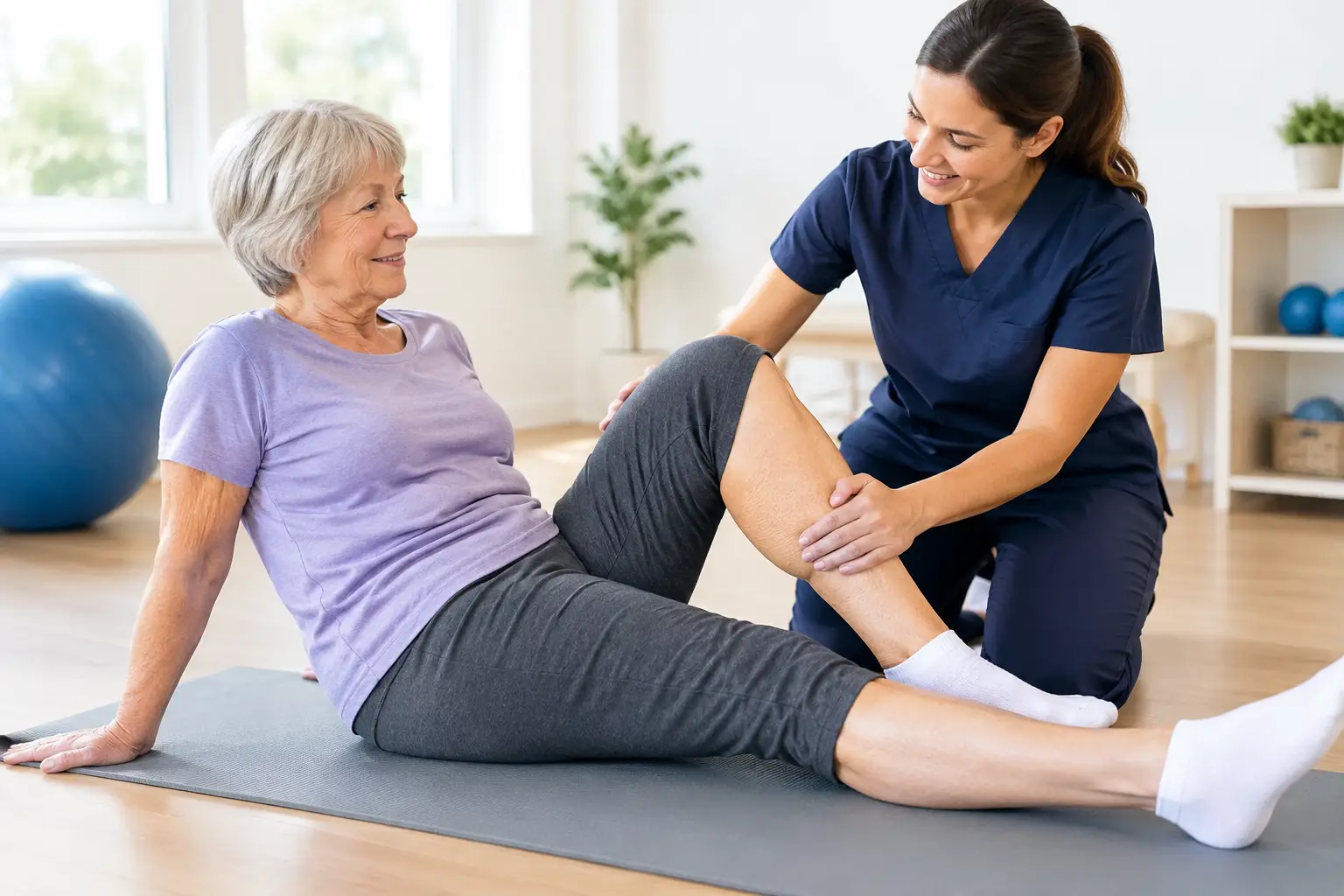
The first few weeks after surgery can feel surprisingly demanding, even when the knee pain that led to treatment is already beginning to change. Knee replacement recovery is not about forcing a rapid return to normal. It is a structured process of protecting the new joint, controlling pain and swelling, rebuilding strength, and gradually restoring the confidence to move well again.
Your recovery plan should reflect the type of replacement performed, your general health, the condition of your knee before surgery, and the activities you hope to return to. A person having a straightforward primary knee replacement will often progress differently from someone recovering from revision surgery, a partial replacement, or surgery after significant stiffness or previous trauma.
The early days: movement begins in hospital
Most patients are encouraged to stand and take a few supported steps soon after surgery, often on the day of the operation or the following day. This early movement is not a test of toughness. It is an important part of reducing the risk of complications, improving circulation and helping you regain safe independence.
A physiotherapist will guide you through simple exercises and show you how to use crutches or a walking frame. You will usually practise getting in and out of bed, walking short distances and managing stairs if needed for your home. Before leaving hospital, you should understand your medication plan, wound care advice and who to contact if you have concerns.
Pain relief is an essential part of this stage. It allows you to move, sleep and take part in rehabilitation. Take medication as prescribed rather than waiting until pain becomes difficult to manage. Ice packs, with a cloth barrier to protect the skin, and regular elevation can also help with swelling. Some swelling, bruising, warmth and discomfort around the knee are expected, particularly after exercise. They should steadily improve rather than intensify.
Knee replacement recovery in the first six weeks
The first six weeks are commonly the most active period of rehabilitation. At home, your focus is on short, frequent walks, prescribed exercises and gradually becoming more independent with everyday tasks. The knee may feel stiff, swollen and unfamiliar. This is normal, but it can be frustrating when progress is measured in small gains rather than dramatic changes.
Early exercises usually concentrate on straightening and bending the knee, activating the thigh muscles and improving circulation in the lower leg. Good knee extension – the ability to fully straighten the leg – matters as much as bend. It supports a more natural walking pattern and can be harder to recover if it is neglected. Your physiotherapist will set suitable goals and adjust them as your movement improves.
Avoid the temptation to do too much on a good day. A long walk, extensive standing or an ambitious exercise session may lead to more pain and swelling later that day or the next. Recovery responds better to regular, manageable effort than occasional overexertion. Equally, spending long periods sitting or lying down without moving can increase stiffness. Finding the right balance is one of the most useful skills to develop.
You may move from a walking frame to crutches and then to a stick as your balance, strength and gait allow. Do not stop using support simply because you are keen to be rid of it. Walking with a significant limp can reinforce poor movement patterns. The right time to reduce support is when you can walk safely and with reasonable control.
Weeks six to twelve: building function and confidence
By this point, many patients are walking more comfortably, sleeping better and managing much more of their usual routine. However, the knee can still swell after activity, and tiredness is common. Surgery places a substantial demand on the body, so recovery often requires more rest than patients expect.
Physiotherapy now becomes less about immediate post-operative mobility and more about strength, balance and functional control. That may include practising stairs, improving how you rise from a chair, increasing walking distance and rebuilding the muscles around the hip and knee. A strong leg protects the joint and makes day-to-day movement feel more secure.
Returning to work depends on the role. Some desk-based workers may be ready at around six to eight weeks, sometimes with a phased return. Work involving prolonged standing, driving, lifting, climbing or kneeling may require longer. Your surgeon can provide advice based on the demands of your job rather than a generic date.
Driving should only resume when you can safely control the vehicle and perform an emergency stop without hesitation or pain. You must also be off any medication that impairs alertness and check that your insurer is satisfied. For many people, this takes several weeks, but the timing varies, particularly if the operated knee is the right knee.
The months that follow: recovery is still progressing
A knee replacement is not fully recovered at the point you stop using walking aids. Improvements in strength, endurance, swelling and confidence often continue for many months. It is common to have occasional stiffness, numbness around the scar or swelling after a more active day during this period.
Low-impact activities are usually the best foundation for long-term fitness. Walking, cycling, swimming once the wound is fully healed, and carefully guided strengthening work can all support recovery. Higher-impact sport, frequent jumping, heavy twisting and activities with a substantial risk of falling may not be advisable for every patient. The aim is not simply to protect an implant on an X-ray. It is to help you keep a knee that feels dependable for the life you want to lead.
Kneeling is a particular concern for many patients. Some can kneel after recovery, while others find it uncomfortable or awkward because of numbness and pressure at the front of the knee. Kneeling does not usually damage a well-functioning replacement, but it should be approached gradually and with cushioning if it is needed for work, gardening or prayer.
What can influence your recovery?
No two recovery journeys are identical. Pre-operative strength and range of movement, age, weight, other health conditions and the complexity of surgery all play a part. Someone whose knee was severely stiff before surgery may need more focused rehabilitation to regain movement. Those having revision knee replacement often require a more cautious and individualised programme because the operation and surrounding tissues can be more complex.
Preparation before surgery can make a meaningful difference. Building leg strength where possible, addressing smoking, organising help at home and preparing meals and essential items in advance can reduce avoidable stress after discharge. A raised chair, clear walking routes and a plan for stairs can also make the first days at home safer.
The quality of communication matters too. You should know what exercises are expected, what degree of pain or swelling is reasonable, and when to ask for help. At a specialist practice such as Mr. Kam Cheema’s, recovery planning is part of the treatment pathway, not an afterthought once surgery is complete.
When to seek urgent advice
Most post-operative symptoms settle gradually, but certain changes need prompt assessment. Contact your surgical team, GP or urgent medical service if you develop increasing redness, heat or discharge from the wound, a fever, or pain that is worsening rather than settling. New calf pain or marked swelling in one leg may indicate a blood clot and requires urgent advice.
Chest pain, shortness of breath, coughing up blood, sudden faintness or severe breathing difficulty require emergency medical attention. These symptoms are uncommon, but acting quickly is essential.
It is also worth getting in touch if pain relief is inadequate, constipation from medication is becoming troublesome, or anxiety is preventing you from sleeping or engaging with rehabilitation. These are treatable issues, and raising them early can prevent a difficult few days becoming a setback.
Set goals that matter beyond the operation
A successful recovery is not defined only by how far the knee bends at a clinic appointment. It may mean walking the dog without planning every step, getting upstairs comfortably, returning to work, travelling with confidence or playing on the floor with grandchildren. Those personal goals should shape the rehabilitation plan.
Progress is rarely perfectly linear. There will be easier days and more difficult ones, particularly after activity or physiotherapy. Stay consistent with the programme agreed with your clinical team, respect pain and swelling as useful feedback, and allow the new knee the time it needs to become part of everyday life.