
A knee that catches on the stairs, swells after a short walk or no longer tolerates the activities you enjoy can be deeply frustrating. Knee cartilage damage is a common reason for these symptoms, but it is not one single diagnosis. The right treatment depends on which cartilage is affected, how extensive the damage is, the alignment and stability of the knee, and what you need to return to.
For some people, careful rehabilitation and targeted injections provide meaningful relief. For others, persistent mechanical symptoms, progressive arthritis or a previous operation that has not delivered the expected result may call for more specialist assessment. The aim is always clear: reduce pain, protect function where possible and help you move with greater confidence.
What does knee cartilage damage mean?
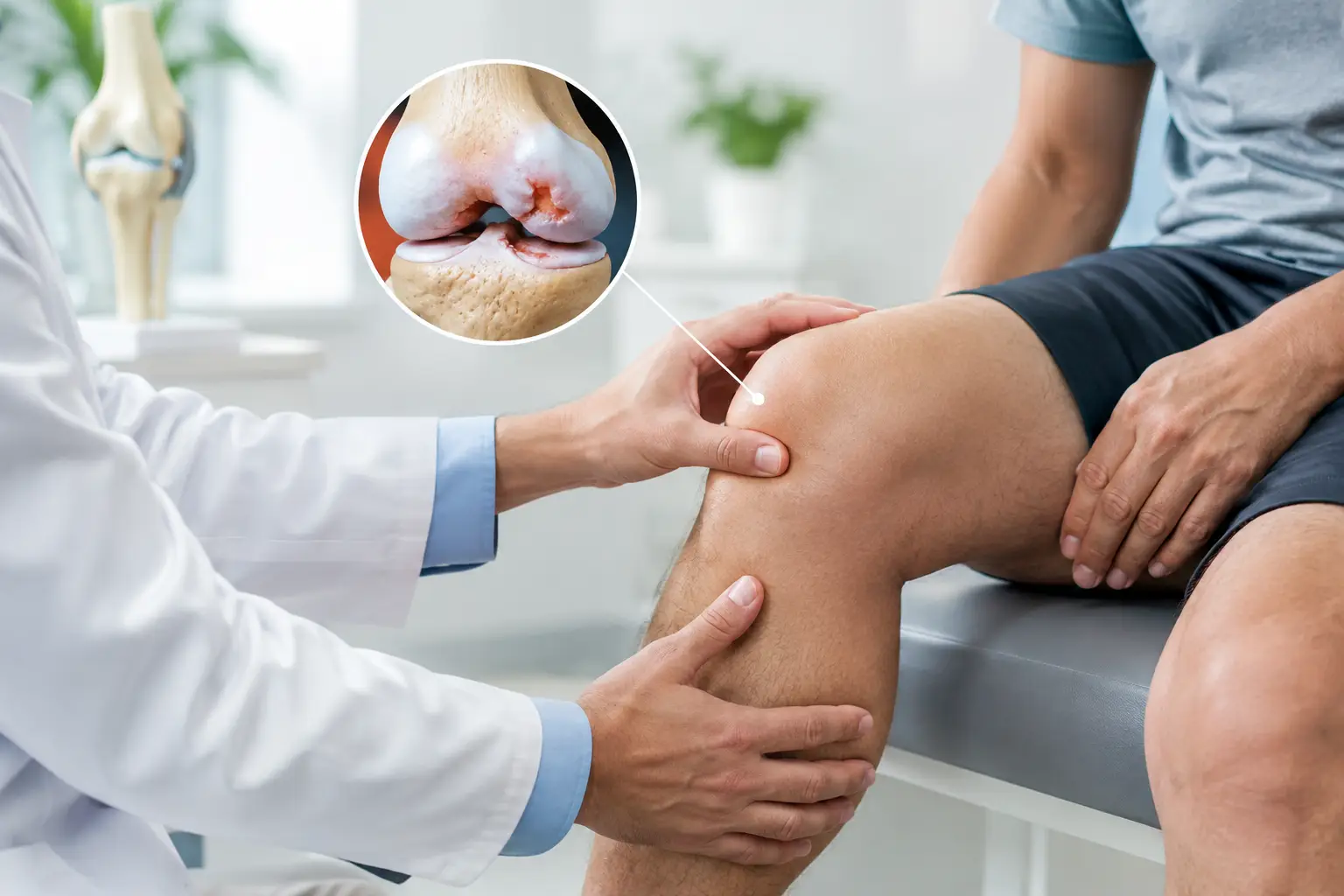
The knee contains two important types of cartilage. Articular cartilage is the smooth, firm covering on the ends of the bones. It allows the joint surfaces to glide with very little friction. The menisci are two crescent-shaped pads of tougher cartilage between the thighbone and shinbone. They distribute load, improve stability and provide cushioning.
Damage to either structure may be described as cartilage damage, although the symptoms, outlook and treatment can differ. A meniscal tear may follow a twist, squat or sporting injury, particularly in younger adults. In middle age and beyond, meniscal changes can also develop gradually as tissue becomes less resilient.
Articular cartilage may be injured in an impact or twisting injury, but it is also worn away over time by osteoarthritis. Once this smooth surface is significantly damaged, the knee may become painful, stiff and less reliable under load. Cartilage has a limited capacity to repair itself, which is why early, accurate assessment matters when symptoms persist.
Symptoms of knee cartilage damage
Pain is not always constant. Some people are comfortable at rest but develop aching, swelling or stiffness after walking, gardening, golf or a longer day at work. Others notice sharp pain with twisting, kneeling or rising from a chair.
Symptoms that warrant assessment include recurrent swelling, catching or locking, a sense that the knee gives way, loss of movement, pain that interrupts sleep, or difficulty managing everyday stairs and walking distances. A true locked knee, where you cannot fully straighten or bend it, needs prompt medical advice.
These symptoms do not automatically mean surgery is required. They can arise from arthritis, tendon problems, ligament injury or referred pain as well as cartilage damage. A diagnosis should not be based on a scan alone. Your history, examination and imaging need to be considered together.
How a specialist assesses the knee
A thorough consultation begins with what the knee is stopping you from doing. That might be returning to tennis, walking the dog comfortably, caring for grandchildren or simply getting through the working day without planning around pain.
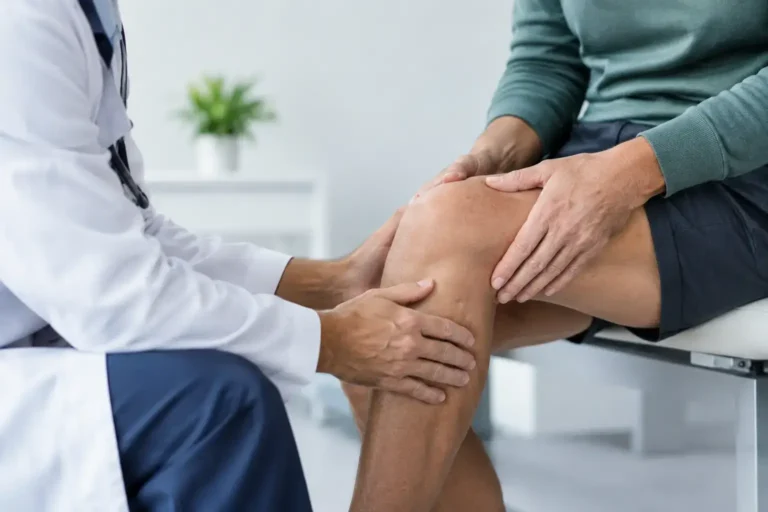
The examination considers swelling, tenderness, range of movement, muscle strength, ligament stability and the way the knee is aligned. Standing X-rays are often valuable for showing arthritis, narrowing of the joint space and deformity. MRI scanning can provide more detail about the menisci, ligaments and articular cartilage when it will influence treatment decisions.
Previous scans and operation notes are particularly useful for patients who have had prior knee surgery. A complex or revision case deserves careful planning rather than an assumption that repeating a previous procedure is the best answer.
Non-operative treatment can be the right first step
Not every cartilage lesion needs an operation, and an MRI finding does not always explain a person’s pain. When symptoms are manageable and there is no locked knee or major instability, non-operative care is often the sensible starting point.
A structured physiotherapy programme can improve strength around the hip and knee, restore movement and reduce the load placed on sensitive areas of the joint. This is not simply a matter of being told to exercise. The programme should reflect your pain level, fitness, goals and the specific problem found in the knee.
Weight management can also reduce joint loading for those for whom it is relevant, while pacing changes may help during a painful flare. Simple pain relief or anti-inflammatory medication may be considered with your GP or pharmacist, taking account of your wider health and other medicines.
Injection treatments may have a role for selected patients. Steroid injections can settle inflammation and pain in the short term, although repeated injections are not a long-term solution for every knee. Hyaluronic acid, platelet-rich plasma and Arthrosamid may be appropriate in particular circumstances, especially where the goal is to manage arthritis symptoms and maintain activity. Their likely benefit varies according to the condition and the individual, so they should be discussed honestly rather than presented as a cure for worn cartilage.
When might surgery be considered?
Surgery is considered when symptoms remain limiting despite appropriate non-operative treatment, or where the nature of the injury makes an operation more likely to help. The procedure should address the cause of symptoms, not simply an image on a scan.
Knee arthroscopy and meniscal treatment
Knee arthroscopy uses a camera and small instruments through keyhole incisions. It can be helpful for carefully selected meniscal tears, loose bodies and certain mechanical problems. Where possible, repairing a suitable meniscal tear is preferable to removing tissue, because preserving the meniscus supports the long-term health of the knee.
However, arthroscopy is not routinely beneficial for every degenerative meniscal tear or every arthritic knee. If pain is mainly caused by established osteoarthritis, keyhole surgery may not offer the durable improvement a patient hopes for. This is one reason a precise diagnosis and frank discussion of expected outcomes are essential.
Cartilage restoration and realignment procedures
Small, localised articular cartilage defects in an otherwise healthy knee may sometimes be treated with cartilage repair or restoration techniques. Whether these are suitable depends on the defect’s size and location, the condition of the surrounding cartilage, limb alignment, stability and activity level.
If the knee is significantly bowed or knock-kneed, abnormal loading may continue to overload one part of the joint. In selected cases, an operation to correct alignment may be considered alongside cartilage treatment. These are specialist decisions and recovery requires commitment to rehabilitation.
Partial or total knee replacement
When cartilage loss is widespread and arthritis is causing substantial pain, stiffness and loss of independence, joint replacement may provide the most reliable route back to function. A partial knee replacement may be an option when arthritis is confined to one compartment of the knee and the ligaments are suitable. A total knee replacement is designed to address more extensive joint disease.
Replacement surgery is not a minor decision, but it can be life-changing for the right patient. Careful pre-operative planning, realistic expectations and a well-supported rehabilitation programme all contribute to a durable result. For patients with a painful previous replacement, specialist investigation is needed to understand whether infection, loosening, instability, wear or another issue is responsible before revision surgery is considered.
Recovery: progress is personal
Recovery after knee cartilage damage, whether managed with physiotherapy or surgery, rarely follows a perfectly straight line. Swelling can fluctuate, and doing too much too soon may temporarily aggravate symptoms. Consistent rehabilitation, rather than occasional intense effort, usually delivers better progress.
After surgery, the timescale varies considerably. A simple arthroscopy may allow earlier return to daily tasks, while meniscal repair, cartilage restoration, realignment surgery and knee replacement each have different restrictions and rehabilitation demands. Your treatment plan should explain what to expect for work, driving, exercise and the activities that matter most to you.
Persistent knee pain should not be something you simply accept or work around indefinitely. A considered assessment can clarify what is damaged, what can realistically improve and whether the most appropriate next step is rehabilitation, an injection, a targeted operation or joint replacement. With honest advice and a plan tailored to your knee and your life, the goal is not merely a better scan result, but a more comfortable and capable return to the things you value.
Where damaged cartilage or a torn meniscus keeps the knee catching or locking, I set out when keyhole treatment is worthwhile on my knee arthroscopy page.