


What is a Knee Arthroscopy?
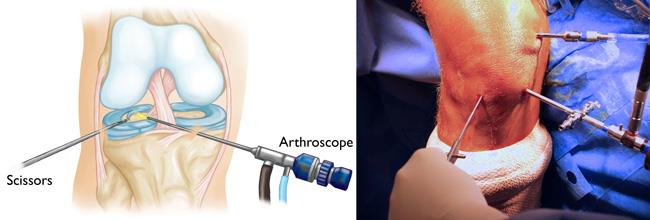
Knee arthroscopy is a minimally invasive keyhole procedure used to diagnose and treat problems inside the knee joint. Through two or three small incisions, a tiny camera and fine instruments are used to address conditions such as meniscal tears, loose cartilage and inflammation.
Arthroscopy allows quicker recovery, less pain and smaller scars than open surgery.
This guide explains knee arthroscopy, meniscectomy, meniscal repair, and post-operative care.
Why consider a knee arthroscopy?
A knee arthroscopy is considered when:
- You have a meniscal tear causing pain, catching or locking
- Symptoms persist despite physiotherapy and non-operative treatment
- There is swelling, giving way or mechanical symptoms
- Imaging (MRI) confirms a treatable lesion
- The knee is otherwise stable and healthy
The goal is to reduce pain, improve function and preserve long-term knee health.
Pre-operative Treatments & Preparation
Before surgery, several steps help ensure you are safe, prepared and able to recover quickly.
- Physiotherapy
- Strengthening around the knee
- Anti-inflammatory medication (if suitable)
- Activity modification
- These help reduce symptoms and prepare the knee for surgery.
- Review medical history and medications
- Complete necessary tests (bloods/ECG if indicated)
- Discuss anaesthetic options (usually general or spinal)
- Ensure you are safe for surgery
Treatment During Surgery: What Happens in a Knee Arthroscopy?
The procedure is typically 20–40 minutes, depending on findings.
Preparing the Knee
- After anaesthesia, the knee is cleaned and small (5–10 mm) incisions are made to insert:
- Arthroscope – a camera showing the inside of the knee
- Fine instruments – to treat any problems found
- Sterile fluid fills the knee to improve vision.
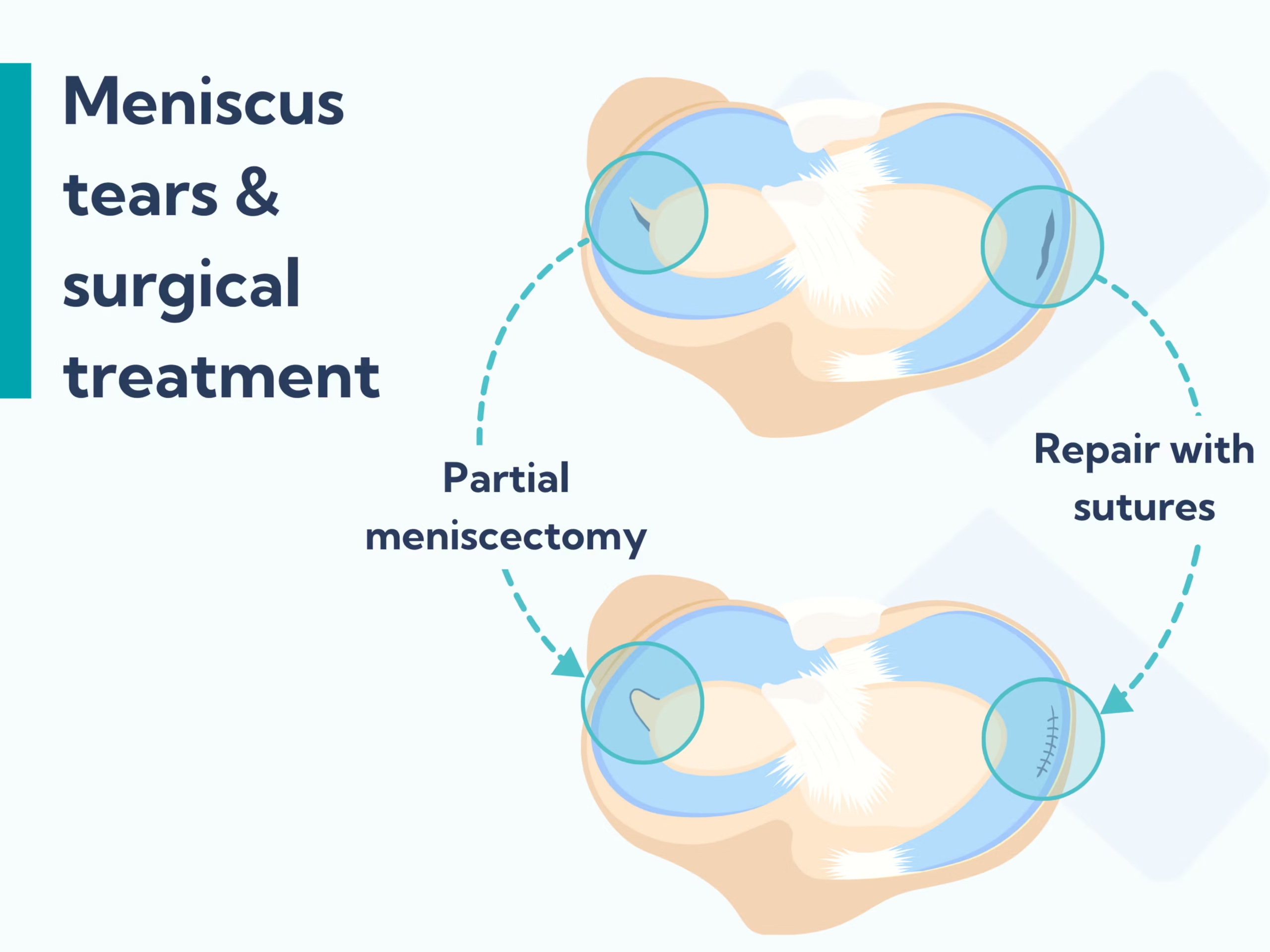
Meniscectomy (Trimming a Torn Meniscus)
If a meniscus tear cannot be repaired—for example if the tissue is frayed, worn or unstable—your surgeon may remove the damaged portion.
How it is done
- Only the torn, unstable fragment is trimmed
- The healthy, functioning rim is preserved
- The goal is to restore a smooth, stable meniscal edge
Why it is performed
- A repair is recommended when:
- The tear is degenerative
- The tissue quality is poor
- The tear cannot heal (e.g. inner avascular zone)
- The tear is causing catching, locking or persistent pain
Recovery after meniscectomy
- Weight bearing: immediately as tolerated
- Walking unaided: often within a few days
- Driving: 1–2 weeks
- Return to desk work: 1 week
- Sport: 4–6 weeks
Meniscal Repair (Stitching the Meniscus)
If the tear is in a vascular (healing) zone and the tissue is good quality, the meniscus may be repaired with sutures.
How it is done
- Special devices place stitches across the tear
- The goal is to restore the meniscus’ natural shape and function
- Preserves the meniscus and protects long-term joint health
Why it is performed
- A repair is recommended when:
- The tear is peripheral (near the capsule)
- The tear has good blood supply
- The knee is stable
- The tear pattern is suitable (vertical, longitudinal, bucket-handle)
Recovery after repair
- Because the meniscus must heal, rehabilitation is slower:
- Weight bearing: protected for 4–6 weeks
- A brace may be used to limit bending
- Driving: 4–6 weeks
- Return to desk work: 2–3 weeks
- Sport: 3–6 months, depending on healing
Post-operative Treatments & Recovery
Recovery after hip replacement is an essential part of treatment. Most patients walk on the day of surgery or the morning after.
Pain Management
- This may include:
- Local anaesthetic in the knee
- Ice therapy
- Oral painkillers
- Pain is usually mild and improves quickly.
Early Mobilisation
- A physiotherapist will guide you on:
- Safe walking with or without crutches
- Range-of-movement exercises
- Strengthening and balance work
- Rehabilitation differs depending on whether you had a meniscectomy or repair.
Physiotherapy
- Physio focuses on:
- Regaining knee bending and straightening
- Quadriceps activation
- Swelling control
- Gradual strengthening
Long-term Treatment After Arthroscopy
Maintaining Strength
- Ongoing strengthening of:
- Quadriceps
- Hamstrings
- Gluteal muscles
- helps protect the knee and reduce long-term wear.
Protecting Your Knee
- Especially after meniscectomy or repair:
- Avoid repetitive high-impact activity early
- Gradually build back to sport with physio guidance
Monitoring Symptoms
- Most patients recover fully, but persistent swelling, catching or pain should be reviewed.
Risks and Complications
Knee arthroscopy is very safe, but risks include:
- Infection
- Blood clots (rare)
- Stiffness
- Persistent pain or swelling
- Failure of meniscal repair (10–20% risk depending on tear)
- Need for further surgery (especially after degenerative tears)
All risks and benefits will be discussed with you before surgery.