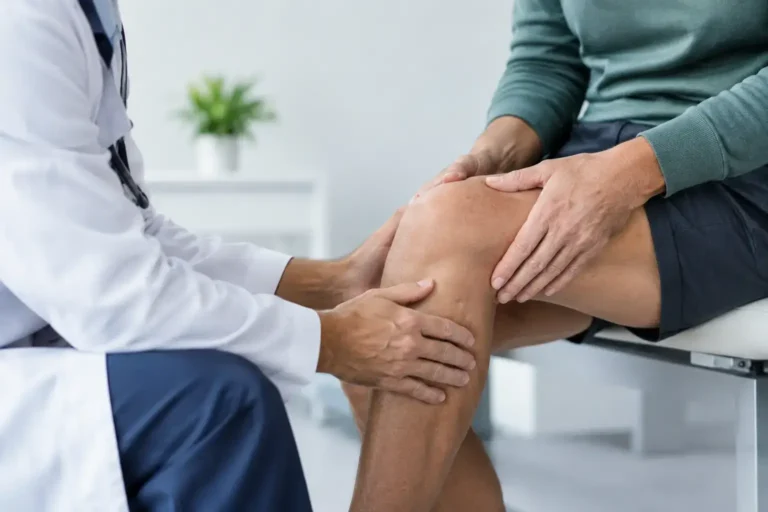


A successful hip or knee operation is about more than the procedure itself. The early days of recovery are carefully planned to control pain, restore movement and reduce avoidable risks. Blood clot prevention is a central part of that plan, particularly after joint replacement or other major lower-limb surgery.
Most patients recover without a clotting complication. However, surgery, temporary reduced mobility and individual health factors can increase the chance of a blood clot forming in a deep vein, usually in the leg. Knowing how prevention works, and when to seek urgent advice, can help you take an active and informed role in your recovery.
Why blood clots can occur after surgery
A deep vein thrombosis, often called a DVT, is a blood clot in a deep vein. It most commonly develops in the calf or thigh. Surgery can briefly make the blood more likely to clot, while swelling and less movement in the leg can slow blood flow. Hip and knee operations involve the lower limbs, so these effects need particular attention.
The concern is not simply the clot in the leg. In some cases, part of a clot can travel to the lungs and cause a pulmonary embolism. This is uncommon, but it is a serious condition requiring urgent assessment and treatment.
Your risk is not identical to another patient’s. Age, body weight, smoking, previous DVT or pulmonary embolism, inherited clotting conditions, cancer, heart or lung disease, hormone treatment and the type of operation all matter. A long period of immobility before surgery can also contribute. Equally, medicines that reduce clotting can carry a bleeding risk, which is why the right approach is personalised rather than one-size-fits-all.
Blood clot prevention begins before your operation
Pre-operative assessment is an opportunity to identify factors that may affect your care. Tell your surgical team if you have ever had a clot, have a close relative with a known clotting disorder, or take blood-thinning medication. Include prescribed medicines, over-the-counter remedies and supplements. Do not stop or restart any medication without specific instructions.
If you smoke, stopping before surgery supports circulation, wound healing and anaesthetic safety. Keeping as active as your hip or knee allows before the operation can also make the first stages of rehabilitation more manageable. This does not mean pushing through significant pain. It means following sensible advice tailored to your condition and preserving strength where possible.
For patients travelling home or planning a journey soon after surgery, practical arrangements should be discussed in advance. A long car, rail or air journey may require additional planning, particularly in the early recovery period when regular movement is essential.
Your personalised prevention plan after hip or knee surgery
Blood clot prevention usually combines early mobilisation, simple leg exercises and medication. In some circumstances, mechanical measures such as compression stockings or an intermittent pneumatic compression device may also be advised. The precise combination and duration depend on your procedure and clinical risk assessment.
Getting moving safely
Walking soon after surgery, with the support of a physiotherapist and the appropriate walking aid, is one of the most effective ways to improve blood flow in the legs. For many patients, this begins on the day of surgery or the following day. It is normal for movement to feel difficult at first, but early, supported mobilisation is a key part of a safe recovery.
Your physiotherapy programme may include ankle pumps, gentle knee bends, thigh muscle tightening and regular short walks. These movements encourage the calf muscles to assist circulation. Small, frequent efforts are usually more useful than remaining seated for long periods and then attempting too much at once.
Follow the weight-bearing and movement restrictions you have been given. After a straightforward joint replacement, the plan may differ from that following a complex reconstruction, revision operation or trauma-related procedure. The aim is confident, progressive movement without compromising the surgical repair.
Medication to reduce clotting risk
Many patients are prescribed an anticoagulant after hip or knee surgery. This may be an injection, a tablet or, for selected patients, another medication protocol determined by the surgical and anaesthetic teams. It lowers the chance of a harmful clot forming while you are less mobile.
Take it exactly as directed and complete the prescribed course unless a clinician tells you otherwise. The duration varies. A total hip replacement often requires protection for longer than a less extensive procedure, but individual circumstances always guide the decision.
Because anticoagulants affect clotting, report unusual bleeding or bruising promptly. This includes persistent nosebleeds, blood in urine or stools, vomiting blood, coughing blood, a wound that continues to bleed, or a severe headache after a fall or knock to the head. Ask before taking anti-inflammatory painkillers, aspirin or herbal products alongside anticoagulant medication, as some combinations may increase bleeding risk.
Compression and everyday habits
If compression stockings are included in your plan, wear them as instructed and ensure they are smooth, clean and not rolled down at the top. A stocking that is too tight, uncomfortable or causing skin irritation should be reviewed rather than simply tolerated. Not every patient needs stockings, and they are not a substitute for prescribed medication or regular movement.
At home, avoid long, uninterrupted spells in a chair or bed. Set realistic movement goals around your pain relief schedule, elevate the leg only as advised for swelling, drink regularly unless you have been asked to restrict fluids, and attend your planned follow-up appointments. Good pain control matters because it makes safe walking and exercises more achievable.
Warning signs that need urgent medical advice
Some swelling, bruising, warmth and discomfort are expected after hip or knee surgery. The operated leg may remain swollen for weeks. What matters is a new, worsening or unusual pattern, especially if it is accompanied by other symptoms.
Seek urgent medical assessment if you develop increasing calf or thigh pain, new one-sided swelling, tenderness, redness or heat in the leg. Do not massage the area or wait to see whether it settles.
Call 999 immediately if you experience sudden shortness of breath, chest pain that is worse when breathing in, coughing up blood, fainting, collapse, or a rapid unexplained heartbeat. These can be signs of a pulmonary embolism and need emergency care. If you are unsure whether a symptom is urgent, it is safer to seek advice promptly.
Questions worth asking before you go home
Before discharge, you should understand which anticoagulant you are taking, when and how to take it, and when the course ends. You should also know your exercise and walking plan, whether compression is recommended, how to manage pain safely and who to contact if you have concerns.
It is reasonable to ask how your personal clotting risk was assessed, particularly if you have had a previous DVT, are already taking blood-thinning medication or are having revision joint surgery. Clear answers allow you to leave hospital with a practical plan rather than uncertainty.
For people undergoing hip or knee treatment, the goal is not merely to avoid complications. It is to build a recovery that restores confidence in movement, supports independence and helps you return steadily to the activities that matter to you. Following your individual prevention plan and responding early to concerning symptoms are meaningful steps towards that goal. If you are preparing for surgery, I explain how I plan your operation and recovery on my total hip replacement and total knee replacement pages.