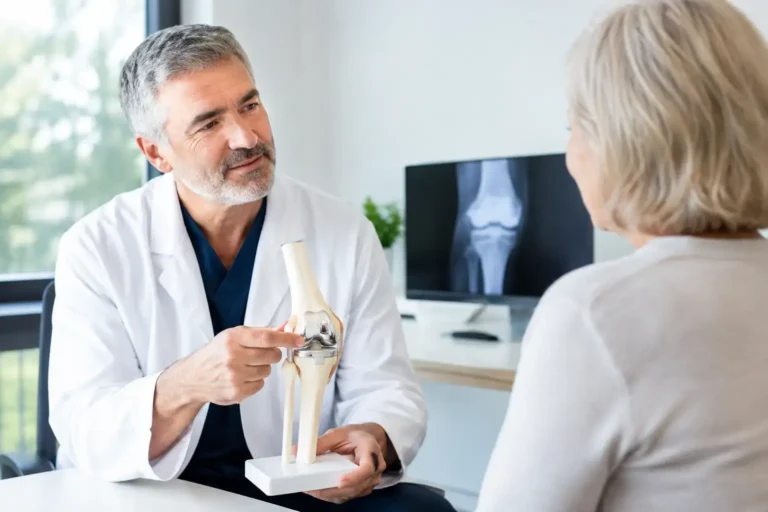

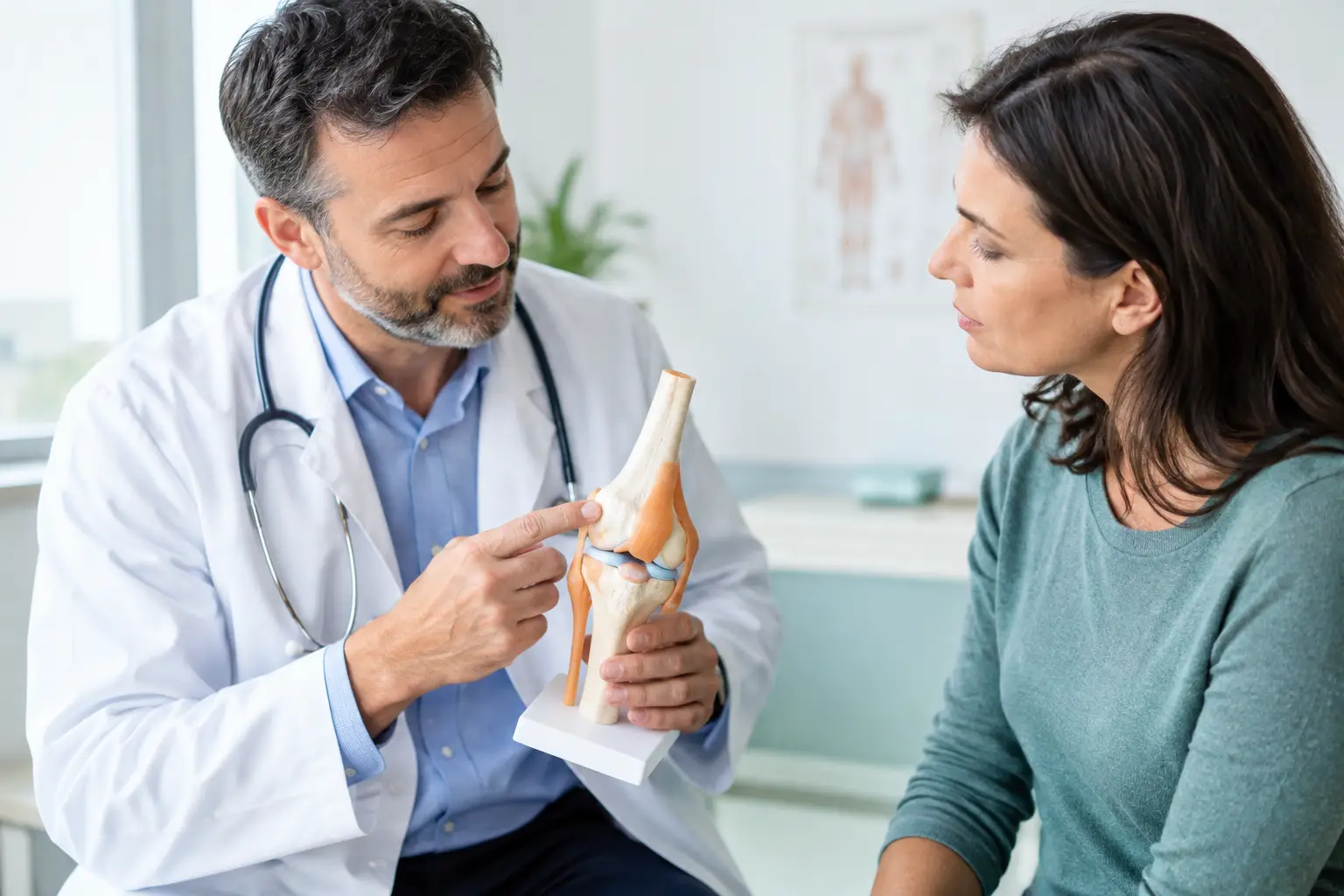
A painful hip or knee does not automatically mean joint replacement is the next step. Joint preservation is the term used for treatments that aim to reduce pain, improve function and, where possible, protect your own joint for longer. For many people, that means getting back to walking comfortably, managing stairs, returning to work or enjoying exercise without planning every movement around pain.
The right approach depends on the cause of the symptoms, the condition of the joint and what you need from it. A detailed assessment can distinguish between a problem that may respond well to targeted treatment and arthritis or damage that has progressed to a point where replacement would offer the more reliable result.
What does joint preservation mean?
Joint preservation is not one procedure. It is a treatment strategy centred on retaining and making the best use of your natural hip or knee joint. It may involve rehabilitation, injections, arthroscopy or reconstructive surgery, depending on the diagnosis.
For example, knee pain caused by a meniscal tear, cartilage injury or instability may need a very different plan from pain caused by advanced osteoarthritis. Similarly, hip pain can arise from tendon problems, impingement, early arthritis or damage following previous injury. Treating the symptoms without identifying the source can delay effective care.
The aim is not simply to postpone surgery at all costs. It is to choose the treatment with the best balance of pain relief, mobility, safety and durability for you. Sometimes preserving the joint is clearly appropriate. Sometimes a replacement is the treatment that is most likely to restore independence and confidence.
When joint preservation may be appropriate
Joint-preserving treatments are often considered when there is still reasonable joint space and the damage is localised rather than widespread. They can be particularly valuable for active adults with a specific mechanical problem, people with early or moderate arthritis, and patients whose symptoms have not improved with appropriate first-line treatment.
Your surgeon will consider your history alongside examination findings and imaging. X-rays remain useful for showing arthritis, alignment and joint space. In some cases, an MRI scan gives a clearer picture of meniscal, cartilage, ligament or tendon damage. The most useful scan is not always the most detailed one – it is the one that answers the clinical question and helps guide a sound decision.
Symptoms matter as much as images. Some people have arthritis visible on an X-ray but little limitation in daily life. Others have pain that interrupts sleep, restricts walking and makes work or family life difficult. Treatment should be based on the whole picture, not on a scan alone.
Non-operative treatment
Non-operative care can be highly effective when it is targeted rather than generic. A tailored physiotherapy programme may improve strength, movement control and confidence around the joint. For hip and knee problems, improving the strength of the surrounding muscles can reduce strain during everyday activities.
Weight management, where relevant, can also lessen the load through a painful knee or hip. This is not about blame. It is about recognising one of several factors that can influence pain and function, and finding a plan that is realistic and sustainable.
Injections may have a role for selected patients. Steroid injections can settle inflammation and provide short-term relief, which may help someone engage more effectively with rehabilitation. Hyaluronic acid injections may be considered in certain cases of knee arthritis, although results vary. Platelet-rich plasma, or PRP, is used in some tendon, soft-tissue and early joint conditions, but it is not a universal solution and outcomes depend on the diagnosis.
Arthrosamid is another non-operative option that may be suitable for some people with knee osteoarthritis. It is designed to provide cushioning within the knee, but it cannot reverse severe joint damage. An honest discussion should include what a treatment can reasonably achieve, how long the benefit may last and what the alternatives are.
Arthroscopy and reconstructive surgery
Keyhole knee surgery, known as arthroscopy, can be valuable when there is a clear mechanical problem to address. This might include certain meniscal tears, loose bodies or cartilage issues. However, arthroscopy is not usually the answer for pain caused primarily by established osteoarthritis. In that situation, removing worn tissue rarely produces the lasting improvement patients understandably hope for.
Reconstructive procedures may be considered in more specific circumstances, such as correcting alignment or addressing focal damage. These operations can be technically demanding and require a careful match between the procedure, the joint condition and the patient’s goals. Recovery also requires commitment: protecting the repair, attending physiotherapy and allowing adequate time for tissues to heal.
The limits of preserving a damaged joint
There is understandable appeal in keeping your natural joint. Yet waiting too long for the sake of avoiding replacement can have consequences. Progressive pain may lead to reduced activity, loss of muscle strength, poorer sleep and a shrinking of the things you feel able to do.
When arthritis is advanced, pain is persistent and day-to-day life is increasingly restricted, a hip or knee replacement may offer a more predictable route to improvement. Modern joint replacement is designed to relieve arthritic pain and restore movement, not merely to tolerate a damaged joint for a little longer.
Age alone should not decide the treatment. A fit person in their seventies with severe arthritis may benefit greatly from replacement, while a younger person with early, localised damage may be better suited to a joint-preserving strategy. Previous operations, alignment, general health, occupation, activity level and expectations all matter.
A replacement also involves trade-offs. It is major surgery, with a period of recovery and small but important risks such as infection, blood clots, stiffness and ongoing pain. For the right patient, however, these risks must be weighed against the impact of continuing severe symptoms and the likely benefit of surgery.
Questions worth discussing at your consultation
A productive consultation should leave you clearer, not more overwhelmed. Ask what is causing the pain, how confident the diagnosis is and whether further imaging would change the recommendation. It is also reasonable to ask what improvement is realistic with each option, what recovery involves and what happens if the suggested treatment does not help.
For injection-based or regenerative options, ask whether the treatment is intended to settle symptoms, support rehabilitation or delay surgery. For arthroscopy or reconstruction, ask what specific problem will be corrected and why it is expected to improve your symptoms. If replacement is recommended, understanding why joint preservation is unlikely to give a durable result can make a major decision easier to approach.
The best plan is one you understand and can commit to. It should account for your pain, your scan findings and the practical realities of your life, whether that means caring for grandchildren, travelling for work, playing sport or simply walking the dog without apprehension.
Specialist assessment for hip and knee pain
Hip and knee conditions can look similar at first but require very different treatment. A specialist assessment provides the opportunity to examine the joint properly, review imaging in context and discuss both non-operative and surgical options without rushing towards a single pathway.
For patients in London and Kent, Mr. Kam Cheema’s practice offers assessment and treatment across the full range of hip and knee care, from injections and arthroscopy to primary, complex and revision joint replacement. The focus is on a precise diagnosis, straightforward advice and a plan that supports durable function.
If pain is limiting your life, the useful question is not simply whether you can avoid surgery. It is which treatment gives you the strongest chance of moving more freely, living with less pain and returning to the activities that matter to you.
When I think a joint can still be protected, I describe the non-surgical options I offer on my regenerative procedures page.