

Knee arthritis does not always affect the whole joint. For some people, pain, stiffness and loss of confidence on stairs arise from wear in just one section of the knee. This guide to unicompartmental knee surgery explains when a partial knee replacement may be a considered alternative to total knee replacement, and what that decision can mean for your mobility, recovery and longer-term comfort.
What is unicompartmental knee surgery?
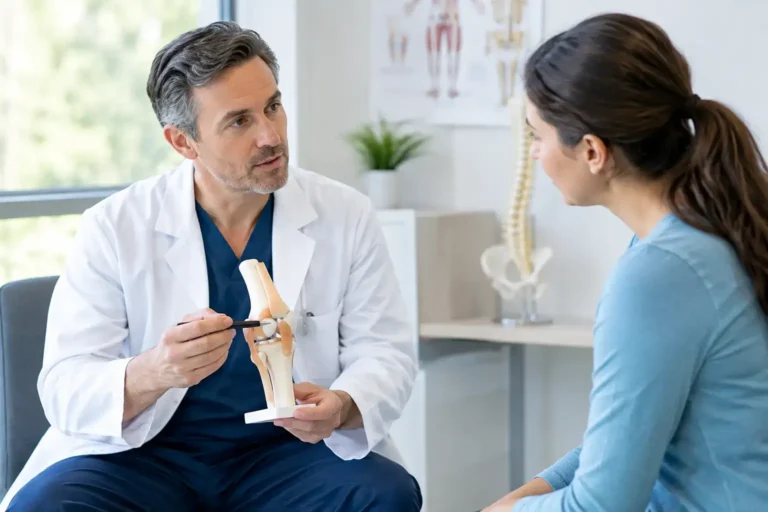
Unicompartmental knee surgery, also called partial knee replacement, replaces only the damaged part of the knee joint. The knee has three compartments: the medial compartment on the inner side, the lateral compartment on the outer side, and the patellofemoral compartment between the kneecap and thigh bone.
Most partial knee replacements are performed for arthritis confined to the medial compartment. During surgery, the worn cartilage and a small amount of underlying bone are carefully removed from that area. Metal components are fixed to the ends of the bones, with a smooth plastic bearing between them to allow movement. The healthy compartments, and usually the main stabilising ligaments, are retained.
That distinction matters. A total knee replacement resurfaces all three compartments of the knee. A partial replacement is designed to address a more localised problem while preserving as much of your own knee as possible.
Who may benefit from partial knee replacement?
The key question is not simply how severe your pain feels. It is where the arthritis is, how the rest of the knee is functioning, and whether non-operative treatment has provided enough relief.
You may be considered for unicompartmental knee surgery if scans and examination show arthritis largely limited to one compartment, particularly the inner side of the knee. Typical symptoms include pain during walking or weight-bearing, stiffness after sitting, reduced walking distance, difficulty with stairs and an altered gait. Some people notice that their legs are becoming more bowed as inner-knee arthritis progresses.
A suitable candidate will usually have reasonably well-preserved cartilage in the other compartments, a knee that is stable enough for the retained ligaments to function properly, and a correctable deformity. Age alone does not determine suitability. An active person in their fifties may be appropriate, while someone older may be better served by a total knee replacement if arthritis is more widespread.
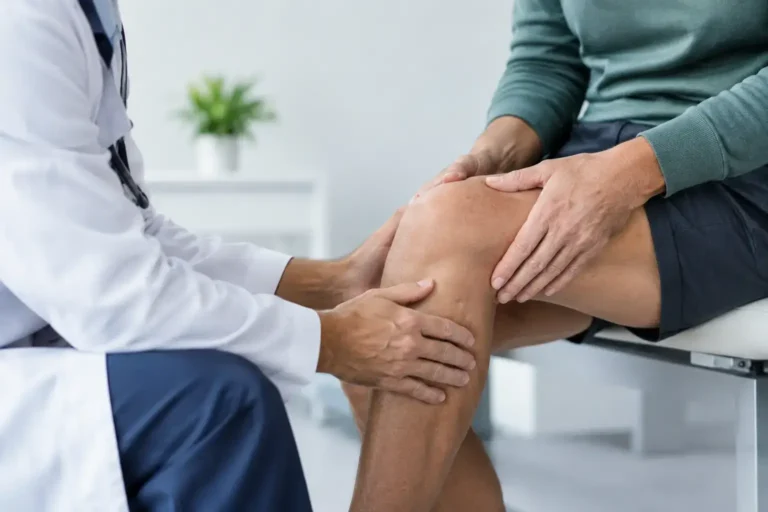
Assessment is detailed and individual. It commonly includes an examination of knee movement and stability, standing X-rays to show how the joint behaves under load, and sometimes further imaging. The aim is to identify the source of pain accurately rather than recommend an operation on the basis of an X-ray alone.
When it may not be the right operation
Partial knee replacement is not suitable for every arthritic knee. Significant arthritis in more than one compartment, severe stiffness, major ligament instability or an uncorrectable deformity can make a total knee replacement the more reliable option. Inflammatory arthritis may also require a different approach.
This is not a compromise or a lesser operation. For the right knee, partial replacement can be an excellent solution. For the wrong knee, it risks persistent pain or earlier failure. Honest surgical advice should focus on the operation most likely to give a durable result, not simply the least extensive procedure.
What happens during the operation?
The operation is performed under anaesthesia, often with a spinal anaesthetic and sedation, or a general anaesthetic where appropriate. Modern pain-control methods may include local anaesthetic around the knee to make the first days of recovery more manageable.
Through an incision at the front of the knee, the surgeon accesses the affected compartment, prepares the damaged joint surfaces and positions the implant with close attention to alignment, soft-tissue balance and stability. Precision in planning and execution is particularly important in partial knee replacement because the implant must work in harmony with the healthy parts of your natural knee.
Surgery itself commonly takes around one hour, although the overall time in theatre is longer. Many patients mobilise on the day of surgery or the following morning with a physiotherapist. Depending on your health, home support and progress, discharge may be possible after one or two nights, though arrangements vary.
Potential benefits of unicompartmental knee surgery
When arthritis is confined to one compartment, retaining healthy bone, cartilage and ligaments can offer meaningful benefits. Many patients find that a partial replacement feels more natural than a total knee replacement, although no artificial joint will feel exactly like an untouched knee.
Recovery can be quicker because the operation is less extensive and the main ligaments are preserved. The knee may bend more easily, and hospital stay may be shorter. The incision is often smaller, although the quality of the surgery and rehabilitation matters far more than the length of the scar.
The intended outcome is not simply a better X-ray. It is less pain when walking, greater confidence on stairs, improved sleep, and a return to the activities that give your routine purpose. That may mean walking the dog, working without constant distraction from pain, travelling comfortably or keeping up with family.
Risks and trade-offs to discuss
Every joint replacement carries risks, including infection, blood clots, stiffness, wound problems, nerve or blood-vessel injury, ongoing pain and anaesthetic complications. Steps are taken to reduce these risks, such as infection-prevention measures, early mobilisation and blood-thinning medication where indicated, but no operation is risk-free.
There are also considerations specific to partial knee replacement. Arthritis can develop later in the parts of the knee that were initially healthy. The implant may loosen or wear over time, and a small number of patients require further surgery. If revision is needed, conversion to a total knee replacement is often possible, but it remains preferable to achieve the best procedure first time.
A partial knee replacement may have advantages in carefully selected patients, but it can carry a higher chance of later revision than a total knee replacement in some groups. That does not mean it is inferior. It means the decision should account for your anatomy, activity goals, expectations and the likely durability of each option.
Preparing for surgery and planning your recovery
Preparation begins before admission. Optimising general health can reduce complications and support rehabilitation. If you smoke, stopping before surgery is one of the most valuable changes you can make. Managing diabetes carefully, discussing medications, maintaining strength within the limits of pain and arranging practical help at home are equally worthwhile.
You will usually be advised to prepare a clear route through your home, keep everyday essentials within easy reach and arrange transport for discharge and early follow-up appointments. Crutches are commonly needed initially. A physiotherapist will show you how to use them, how to get on and off a chair safely, and how to manage stairs.
Recovery is active rather than passive. Early movement helps reduce stiffness and restores confidence, but progress should be steady rather than forced. Swelling is common for several weeks and can fluctuate as activity increases. Elevation, ice used safely, prescribed pain relief and a structured exercise programme can all help.
How long does recovery take?
Everyone recovers at a different pace. Many people are walking with support soon after surgery and transition away from crutches over the following weeks when gait and control allow. Driving may resume when you can safely perform an emergency stop and are no longer taking medication that impairs your reactions. This is often several weeks after surgery, but should be discussed individually.
Desk-based work may be possible after a few weeks for some patients, while physically demanding roles require longer. Improvement continues over months. It is common for the knee to feel warm, swollen or unfamiliar during this period, particularly after physiotherapy or a more active day.
Low-impact exercise such as walking, cycling, swimming and golf is commonly encouraged once recovery is established. High-impact activity may not be advisable for everyone, especially if it risks accelerating wear or causing injury. The goal is to return to sustainable activity, not to rush towards a fixed deadline.
Questions worth asking at your consultation
A specialist consultation should leave you clear about the diagnosis and your choices. Ask whether arthritis is genuinely confined to one compartment, why partial replacement is being recommended over total replacement or non-operative treatment, and what outcome is realistic for your lifestyle.
It is also reasonable to ask about the proposed implant, rehabilitation plan, pain management, expected time away from work and the surgeon’s experience of both primary and revision knee replacement. A clear explanation of benefits, limitations and alternatives supports a decision you can make with confidence.
For patients in Kent and London whose knee pain is limiting daily life despite sensible non-operative care, a focused assessment can establish whether a partial knee replacement is appropriate. The right operation is the one that fits the pattern of arthritis and your life beyond the consulting room. A careful decision now can create the best opportunity to move with less pain and greater confidence in the years ahead. You can read more about how I assess and treat suitable patients on my unicompartmental (partial) knee replacement page. I explain everyday movements that can damage a partial knee replacement in a separate post.