
The first time you stand after hip or knee surgery can feel like a major milestone – and it is. With the right support, most people begin moving within hours or the day after their procedure. Yet joint surgery recovery is not a race to a fixed finish line. It is a carefully managed process of protecting the new or repaired joint while steadily rebuilding strength, confidence and independence.
Whether you have had a hip replacement, knee replacement, revision procedure or knee arthroscopy, your recovery plan should reflect your surgery, overall health, home circumstances and personal goals. Clear expectations help you recognise normal progress, avoid doing too much too soon and know when to ask for advice.
The first days after surgery: movement with support
Immediately after surgery, the priority is safe mobilisation. You will usually be encouraged to sit out of bed, stand and take your first steps with a physiotherapist using a frame or crutches. Early movement helps circulation, reduces stiffness and begins the process of restoring normal walking patterns.
Pain relief is an important part of this stage. It is easier to walk, sleep and complete physiotherapy exercises when pain is controlled, so take medication as prescribed rather than waiting for discomfort to become severe. Modern joint surgery uses a range of pain-management techniques, but some swelling, bruising and discomfort are still expected.
Your surgical team will also explain how to look after your wound, use any prescribed blood-thinning medication and manage daily activities safely. After hip surgery, this may include temporary advice about bending and seating position. After knee surgery, attention often turns quickly to achieving knee straightening and a gradual increase in bend.
Many patients go home within one to a few days, depending on the procedure and their individual circumstances. Before discharge, you should be able to get in and out of bed, walk safely with your walking aid and manage stairs if needed at home.
Joint surgery recovery in the first two weeks
The first fortnight at home is often more tiring than patients expect. Your body is healing from surgery while adapting to a new routine of medication, exercises, short walks and rest. A good day may be followed by a quieter one, particularly after physiotherapy or a poor night’s sleep. This does not necessarily mean recovery has gone backwards.
Aim for regular, purposeful movement rather than long periods on your feet. Short walks around the home and gradually outside can be more effective than attempting one ambitious walk that leaves the joint swollen and painful. Elevating the leg when resting can help manage swelling, particularly after knee surgery.
Your exercises matter, but quality is more useful than simply doing more repetitions. The programme provided by your physiotherapist is designed to restore movement, activate muscles and improve control around the joint. If an exercise causes sharp or escalating pain, stop and seek guidance. General muscular aching and a feeling of stretching are different from severe pain or a sudden new symptom.
It is sensible to arrange practical support for meals, shopping, pets and household tasks. Avoid lifting, twisting and uneven surfaces until you are more secure on your feet. Removing loose rugs, ensuring good lighting and keeping frequently used items within easy reach can reduce the risk of a fall.
Weeks three to six: rebuilding range, strength and confidence
By this point, many people are walking more comfortably and relying less on stronger pain relief. The incision should be healing, although swelling can remain noticeable, especially around the knee. Sleep may still be disrupted, and it is common for the operated leg to feel heavy, tight or fatigued after activity.
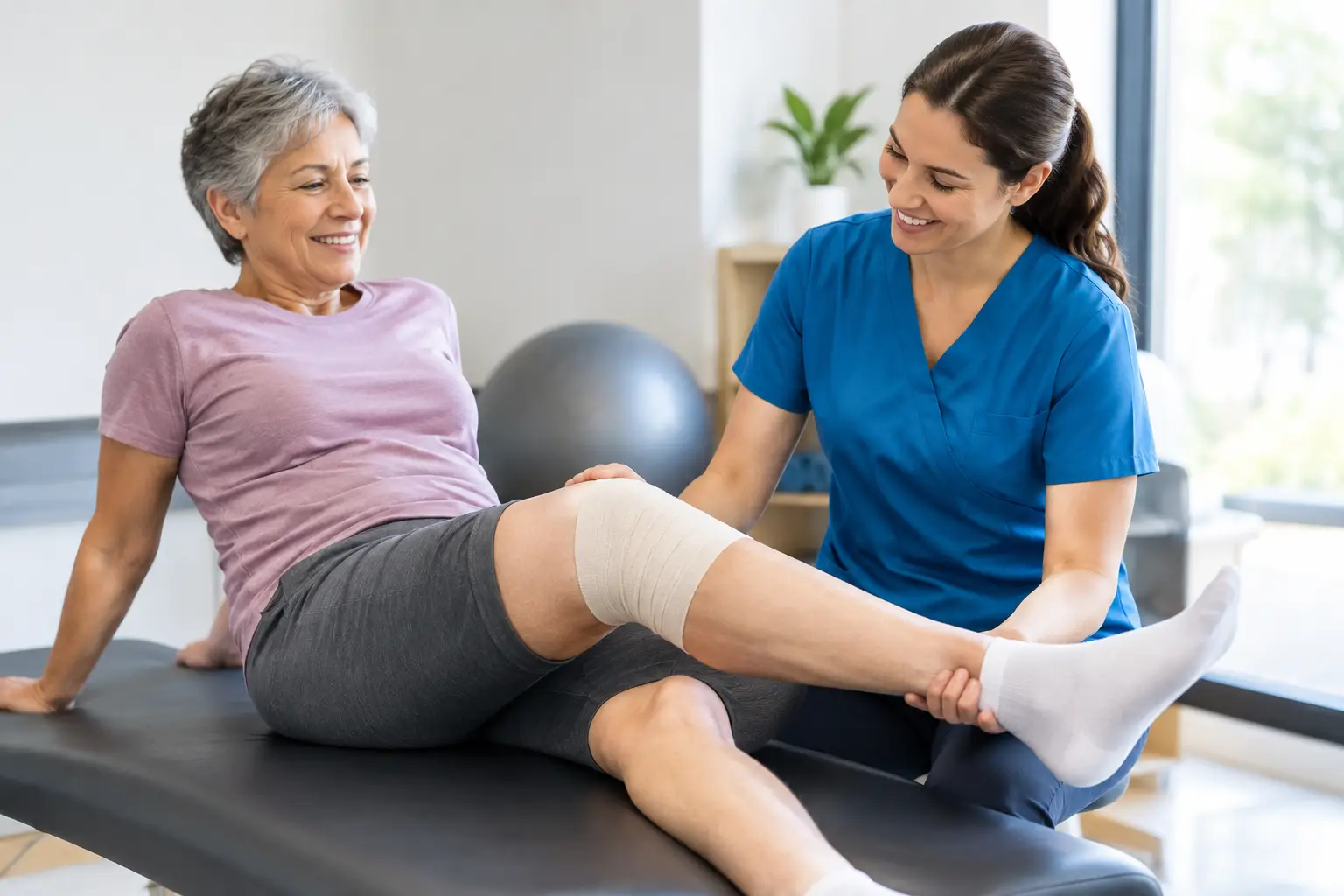
Physiotherapy becomes increasingly focused on movement quality, muscle strength and balance. For a knee replacement, regaining full extension and improving bend are key aims. For a hip replacement, strengthening the muscles around the hip helps stabilise the pelvis and improve walking. The pace varies considerably. A straightforward primary replacement usually follows a different course from revision joint replacement, complex reconstruction or recovery after a significant injury.
You may progress from two crutches to one, then to walking unaided when you can do so without a pronounced limp or loss of balance. Do not abandon a walking aid simply because you are keen to be free of it. Using it for a little longer can support a safer, more natural gait while strength catches up.
Driving should only resume when you can safely control the vehicle, perform an emergency stop without hesitation and are no longer taking medication that impairs alertness. The timing depends on the side operated on, your procedure and your surgeon’s advice. Check with your insurer before driving again.
Weeks six to 12: returning to normal routines
At six to 12 weeks, many patients see meaningful improvements in everyday independence. Walking distances increase, stairs become easier and simple tasks such as dressing, cooking and visiting family require less planning. Those with desk-based roles may be ready to consider a phased return to work, while physically demanding work often requires longer recovery and specific guidance.
This is also a period when expectations need to remain realistic. A new joint may feel very different from the painful arthritic joint it replaced, but the surrounding muscles and soft tissues continue to recover for months. Knee replacement recovery in particular can involve persistent swelling and stiffness for some time. Hip replacement patients may feel more mobile earlier, but still need to build strength and avoid overconfidence.
Low-impact activity is usually the foundation for a successful return to fitness. Walking, an exercise bike, swimming once the wound is fully healed, and tailored strengthening work are commonly useful options. High-impact sport, heavy lifting and twisting activities should be discussed individually. The right answer depends on the implant, procedure, bone and soft-tissue quality, previous activity level and the movement demands of the sport.
What can slow recovery?
Not every delay signals a problem. Recovery can be slower with pre-existing stiffness, reduced muscle strength, diabetes, smoking, anaemia, a more complex operation or previous surgery on the same joint. Revision hip or knee replacement is often more demanding than a first replacement because there may be scar tissue, bone loss or altered anatomy to address.
What matters is the overall direction of travel. Progress is rarely perfectly linear, but pain and function should gradually improve with appropriate rehabilitation. Keeping follow-up appointments allows your surgeon to assess the wound, movement, strength and any concerns before a small issue becomes a larger one.
When to contact your surgical team
Contact your team promptly if you develop increasing redness, heat, drainage or a bad smell from the wound, or if you feel feverish and unwell. New or worsening calf pain, marked swelling in one leg, chest pain or shortness of breath also require urgent medical assessment.
A sudden change in the shape or stability of the joint, a fall, severe pain that is not settling, or loss of movement should never be dismissed. It is always better to ask than to worry at home. I explain how to lower your risk of blood clots after hip or knee surgery in a separate post.
Making recovery work around your life
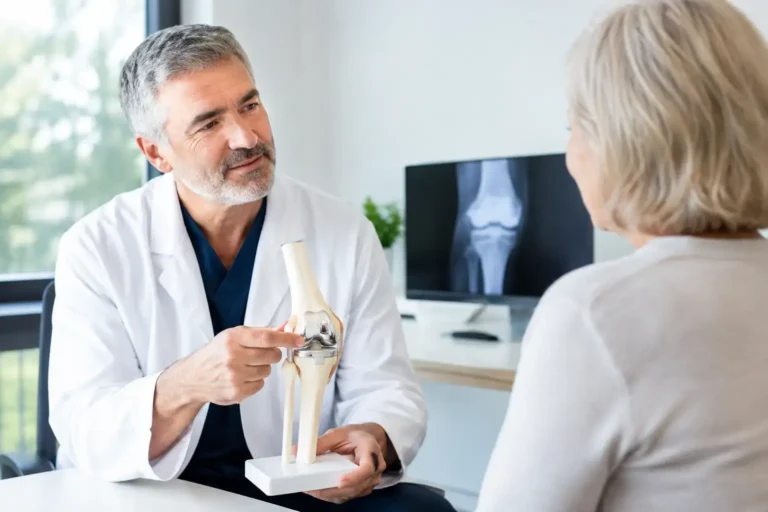
The best recovery plans account for more than an X-ray and an exercise sheet. They consider whether you live alone, need to manage stairs, care for someone else, hope to return to golf or gardening, or need to get back to a role that keeps you on your feet. These details should shape your preparation and rehabilitation from the outset.
Mr Kam Cheema’s approach to hip and knee care is centred on this partnership: precise surgical planning, honest advice and ongoing support directed towards the activities that matter to you. The aim is not simply to recover from an operation, but to regain comfortable, dependable movement with confidence.
Give yourself permission to recover at your own safe pace. Consistent rehabilitation, sensible rest and early communication with your clinical team offer the strongest foundation for returning to the life you want to lead. If your operation is a knee replacement, I explain how I plan it on my total knee replacement page.