
- Home
- /
- Hip Arthritis (Hip Osteoarthritis)
Hip Arthritis (Hip Osteoarthritis)
Expert diagnosis and treatment for hip arthritis across London and Kent — starting with non-surgical care, and surgery only when it’s right for you.
- Fellowship-trained · FRCS (Tr&Orth)
- All major insurers · self-pay welcome
- HCA London Bridge · Chelsfield Park · The Sloane
What is hip arthritis?
Hip arthritis happens when the smooth cartilage lining the hip joint wears away over time, so the bones rub together. This causes pain, stiffness and reduced movement.
It is very common, particularly from mid-life onwards.
Common symptoms
Groin pain, sometimes felt in the buttock or thigh
Stiffness in the morning or after sitting
Pain when walking or standing
Difficulty with daily tasks such as shoes and socks
Shorter walking distance
Limping or needing a stick
Clicking or grinding
Symptoms may develop gradually or flare suddenly.
Why does hip arthritis happen?
Age-related wear
Family history
Previous hip injury
Childhood hip conditions
Excess weight
Demanding work or sport
Inflammatory conditions, e.g. rheumatoid arthritis
Sometimes no clear cause can be identified.
How is hip arthritis diagnosed?
01
Discussion and history
Where the pain is, when it started, how it affects daily life, and any past injuries or conditions.
02
Examination
Your walking pattern, range of movement, tenderness and weakness — plus the spine and knee.
03
Imaging
X-rays are usually enough. MRI is occasionally needed to rule out other causes.
Results are reviewed together, and treatment is tailored to your lifestyle and goals.
Non-surgical (conservative) treatment options
Most patients start here, and many manage well for long periods without surgery.
Exercise and physiotherapy
Strengthening, stretching, low-impact exercise and gait training.
Weight management
Even modest weight loss can reduce the load on the joint.
Pain relief
Simple analgesics and anti-inflammatories, under GP or pharmacist guidance.
Walking aids and lifestyle changes
A stick in the opposite hand, avoiding prolonged standing and high-impact activity, breaking up walks.
Injections
Image-guided steroid or other injections for temporary relief, as part of a wider plan.
Surgical treatment options
Surgery is generally considered when pain significantly affects your quality of life, daily activities or sleep despite non-surgical treatment, and X-rays show moderate to severe arthritis.
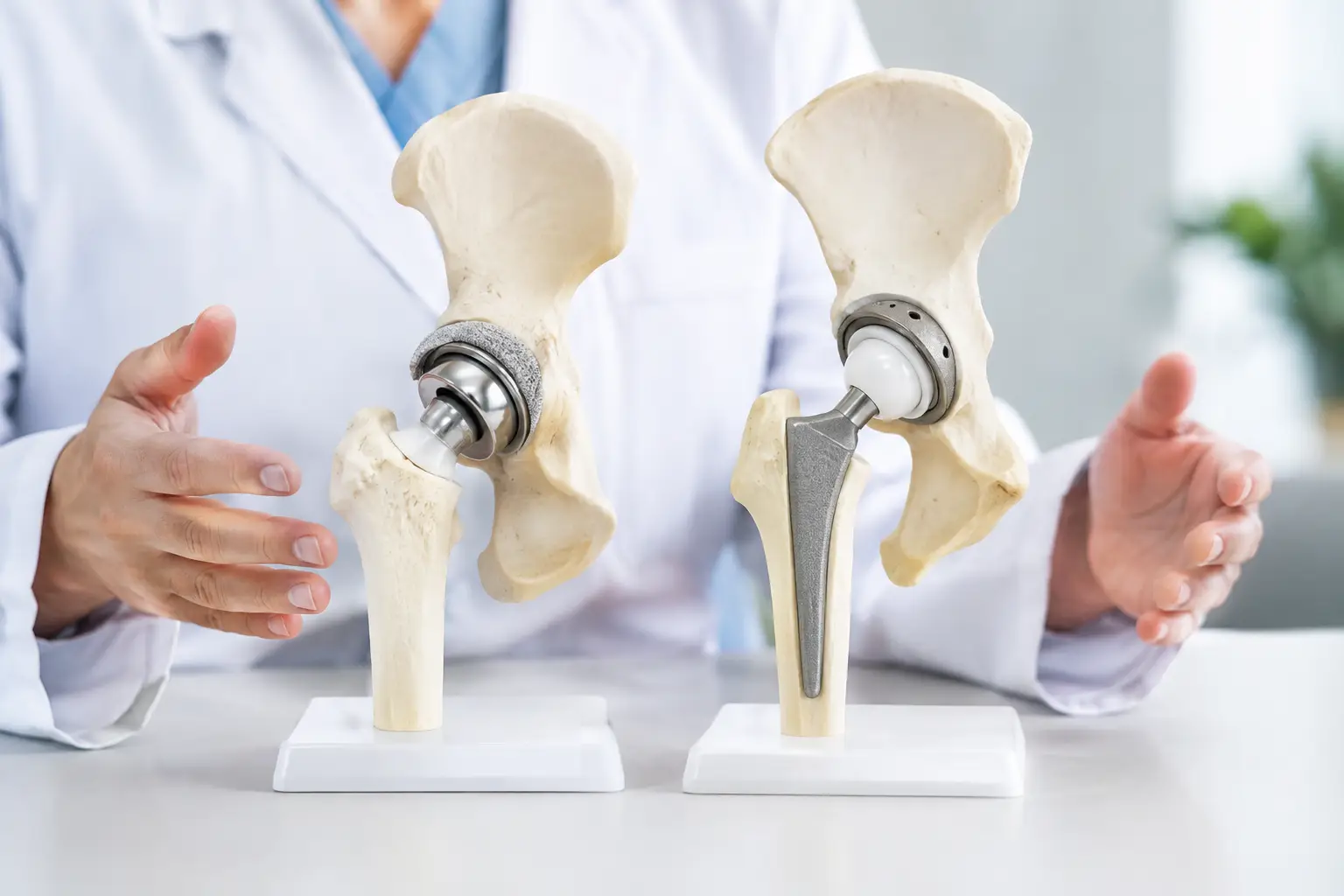
Total Hip Replacement
The damaged joint surfaces are replaced with artificial components to relieve pain, restore movement and improve function. Most patients gain significant or complete pain relief, better mobility and sleep.
Risks and complications
Infection
Blood clots
Leg length or position changes
Dislocation
Component wear that may need revision surgery
All risks and benefits are discussed with you in detail before any decision is made.
Your journey with me
Initial consultation
History, examination and your goals.
Investigations
X-rays, and MRI if needed.
Personalised plan
Non-surgical options first where appropriate.
Follow-up
Reviewing how treatment is working.
Surgical planning
If and when surgery is right.
Post-operative care
Physiotherapy and recovery support.
Frequently asked questions
No. The decision depends on how much your hip affects your life, not only on the X-ray.
Often 15–20 years or more, depending on age, activity, bone quality and implant type.
Most patients can drive after 4–6 weeks, once comfortable and able to perform an emergency stop. This is confirmed at follow-up.
Many return to walking, swimming, cycling and golf. High-impact activities such as running and jumping are usually discouraged.
Hip pain? Get an expert diagnosis
Consultations at HCA London Bridge, Chelsfield Park and The Sloane.
“From the first consultation I felt completely reassured. I am now pain-free and back to enjoying daily activities I had given up on.”
Verified patient · Hip replacement
Book An Appointment Today
Consultations at HCA London Bridge, Chelsfield Park Hospital and The Sloane Hospital. Insured and self-pay patients welcome.