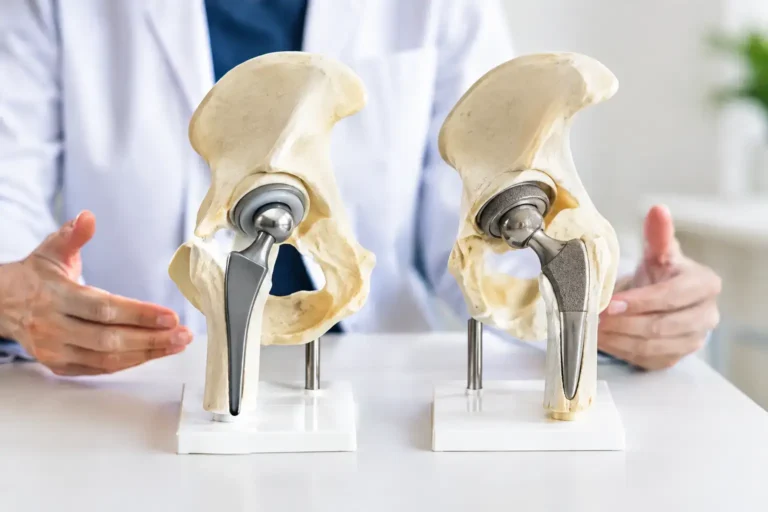


A painful hip or knee replacement can affect far more than walking. It can make stairs uncertain, disturb sleep, limit work and take the enjoyment out of time with family. Careful revision surgery planning is the point at which uncertainty is replaced by a clear, evidence-led plan: identifying why the joint is not performing as it should, deciding whether surgery is genuinely the right option, and preparing for the safest possible recovery.
Revision joint replacement is not simply a repeat operation. The original implants, the surrounding bone and soft tissues, and the cause of the problem all need detailed assessment. For this reason, a considered approach is particularly valuable for patients facing complex hip or knee concerns.
What is revision joint replacement?
Revision surgery is performed when part or all of a previous hip or knee replacement needs to be repaired or replaced. This may be necessary because an implant has loosened or worn over time, the joint has become unstable, there is a fracture around the implant, or infection is suspected. Some patients experience persistent pain without an obvious explanation at first, which is why assessment must be thorough rather than rushed.
A revision may involve replacing one component, such as the socket of a hip replacement or the plastic bearing in a knee, or rebuilding the whole joint construct. In more complex cases, the surgeon may need to address bone loss, correct alignment, use specialised implants or reconstruct damaged soft tissues.
The aim remains practical and personal: to reduce pain, improve stability and help you return to the everyday movement that matters to you. However, the scope of revision surgery can be greater than primary joint replacement, and recovery expectations should be discussed honestly from the outset.
Why revision surgery planning needs to be individual
Two people can have similar symptoms but require very different treatment. A painful knee replacement may relate to loosening, infection, instability, stiffness, malalignment, referred pain from the spine or a problem outside the joint altogether. A hip replacement may be affected by wear, instability, tendon problems, implant position or changes in the bone around it.
Operating before the cause is understood can expose a patient to unnecessary risk and may not solve the problem. Equally, delaying treatment when an implant is failing can make reconstruction more difficult. The value of specialist assessment lies in finding the balance: acting when there is a sound reason to do so, while avoiding surgery when a non-operative option or further investigation is more appropriate.
Planning also takes account of your wider health, activity goals and support at home. A person hoping to walk the dog comfortably may need a different recovery strategy from someone whose priority is returning to a physically demanding job. Both goals are valid, and both should shape the conversation.
The assessment behind a safe plan
A revision consultation begins with listening carefully to your experience. When did the pain start? Is it constant or linked to particular movements? Has the joint ever felt unstable, swollen, warm or as though it may give way? A previous operation report, implant details and earlier scans can all provide useful context.
A detailed examination assesses movement, muscle strength, gait, joint stability and the condition of the surrounding tissues. It also helps distinguish pain arising from the replaced joint from pain that may be coming from the back, pelvis or another source.
Imaging is central to revision surgery planning. Standard X-rays may show implant position, signs of loosening, fracture or changes in bone. Depending on the clinical question, CT scanning can give a more precise view of bone stock and implant alignment, while other specialist imaging may help assess soft tissue structures. Comparing new images with older ones can be especially informative, as gradual changes are not always obvious from one scan alone.
Blood tests are often used to look for signs of infection or inflammation. If infection is a possibility, fluid may be taken from the joint for laboratory testing. This step is essential. An infected joint replacement requires a different treatment pathway from a mechanically loose or worn implant, and the plan must be based on reliable evidence wherever possible.
Deciding whether surgery is the right next step
Not every painful joint replacement requires revision surgery. Physiotherapy, activity modification, targeted injections in selected situations, pain management and treatment for an issue outside the joint may offer relief without an operation. If scans and examination show a stable implant and no correctable surgical cause, revision may be unlikely to deliver the improvement you want.
When there is a clear mechanical problem, progressive bone loss, recurrent dislocation, fracture or confirmed infection, surgery may offer the best route forward. The recommendation should explain not only what can be done, but why it is being advised now and what may happen if treatment is delayed.
A good discussion includes the limitations as well as the potential benefits. Revision surgery can be highly effective, but it usually carries greater technical complexity and a higher risk profile than first-time replacement. The expected gains in pain, walking, stability and function depend on the underlying diagnosis, the quality of bone and soft tissue, previous operations and general health.
Preparing for the operation and recovery
Once surgery is agreed, preparation begins well before admission. This may include optimising blood pressure, diabetes control, nutrition and fitness, alongside reviewing medicines that could affect bleeding, healing or infection risk. Stopping smoking, where relevant, can make a meaningful difference to wound healing and recovery.
The surgical plan is built around the findings from imaging and investigation. In complex cases, specialist implants, augments or bone grafting techniques may be considered to restore support and alignment. The plan also includes contingencies. Revision procedures sometimes reveal more bone loss or tissue damage than scans can show, so an experienced surgical team prepares for sensible alternatives rather than making assumptions on the day.
Recovery varies considerably. Some patients can bear weight soon after surgery, while others need temporary restrictions to protect reconstruction or bone healing. Physiotherapy focuses on safe movement, regaining strength and building confidence with walking, stairs and daily tasks. It is helpful to arrange practical support in advance, particularly for meals, transport, pets and household responsibilities during the early weeks.
Questions worth asking at your consultation
You should leave a revision consultation with a clear understanding of the diagnosis and proposed pathway. Ask what is believed to be causing the problem, what evidence supports that view, and whether any further tests are needed. It is also reasonable to ask what the operation would involve, whether all or part of the implant may need replacing, and what alternatives exist.
Discuss the likely recovery timetable in relation to your own life. Ask when you may be able to drive, return to work, manage stairs, travel and resume particular activities. Your surgeon should explain the important risks in your circumstances, including infection, blood clots, fracture, instability, nerve or blood vessel injury, stiffness and the possibility that further treatment could be required.
For patients in London and Kent seeking an opinion on a painful or failing hip or knee replacement, fellowship-trained specialist input can bring the clarity needed to make a confident decision. Mr. Kam Cheema’s approach is centred on careful diagnosis, precise planning and honest advice about the option most likely to support durable function.
The right next step is not always another operation. It is a clear explanation of what is happening in your joint, what can realistically improve it, and a plan that respects both your safety and the life you want to get back to. For the background on a first hip replacement, I explain how I plan the operation on my total hip replacement page.