

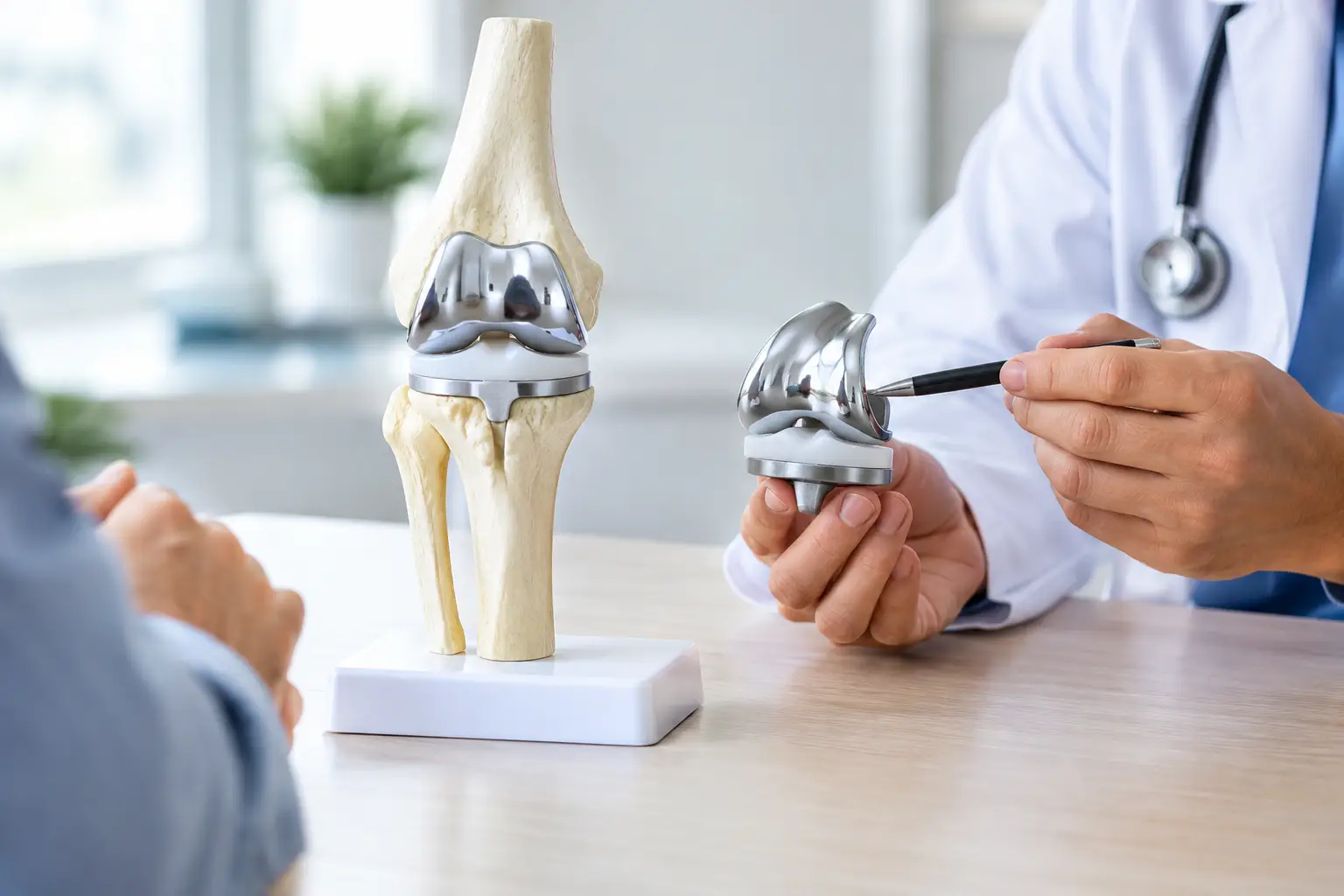
A knee replacement is intended to give you back more than movement. It should make walking, sleeping, working, travelling and enjoying time with family less dominated by pain. So it is entirely reasonable to ask, how long do knee implants last? For most people, a modern knee replacement provides many years of reliable function, but the most useful answer is not a single number. It depends on the type of replacement, how the knee is used, the quality of fixation and alignment, and how well the joint is monitored over time.
How long do knee implants last in practice?
Most modern total knee replacements are designed to last 15 to 20 years or longer. Many continue to function well beyond that point. Large joint-replacement registry data shows that the great majority of knee replacements are still in place at 10 years, and a substantial proportion remain successful at 20 years.
That does not mean every implant has an identical lifespan. A knee replacement is a mechanical joint working inside a living body. The implant materials, the surrounding bone and soft tissues, your activity levels and your overall health all influence the result.
For someone having knee replacement later in life, the original implant may reasonably be expected to last for the rest of their lifetime. For a younger, more active patient, there is more time for gradual wear or other problems to develop, so the chance of requiring further surgery during their lifetime is higher. This is one reason why the decision to proceed with replacement should be individualised, based on pain, function, X-ray findings and the treatments already tried.
Total versus partial knee replacement
The expected durability of a knee implant also depends on the operation performed.
A total knee replacement resurfaces all the main worn compartments of the knee. It is commonly recommended when arthritis affects more than one area of the joint or when the knee is significantly deformed. Modern total knee replacements have a strong long-term record, particularly when the components are accurately positioned and the knee is appropriately balanced.
A partial knee replacement treats only the damaged part of the knee, preserving healthy bone, cartilage and ligaments elsewhere. It can feel more natural for the right patient and may allow a quicker recovery. However, it is only suitable when the arthritis is confined to one compartment and the ligaments are functioning well. Over time, arthritis can progress in the untreated part of the knee, which may lead to a need for conversion to a total knee replacement.
Neither procedure is automatically better. The best option is the one that matches the pattern of arthritis in your knee, your anatomy, your goals and your lifestyle.
What affects how long a knee replacement lasts?
The implant itself matters, but the operation is not simply about choosing a component. Durable results depend on careful diagnosis, planning and execution.
Accurate positioning and soft-tissue balance
A knee implant must be aligned and sized correctly for the individual patient. Just as importantly, the ligaments and soft tissues around it need to be balanced so the knee moves in a stable, controlled way. Small differences in alignment or balance can affect how forces pass through the joint during walking, climbing stairs and rising from a chair.
This is why detailed pre-operative planning and surgeon experience matter. The aim is not merely a satisfactory post-operative X-ray. It is a knee that is stable, comfortable and functional in daily life.
Infection and other early complications
Infection after knee replacement is uncommon, but it is one of the most serious complications because it can threaten the implant’s long-term survival. Persistent wound problems, increasing redness, fever, unexplained pain or swelling should always be assessed promptly.
Blood clots, stiffness, instability and fracture around the implant are other less common reasons a knee replacement may require further treatment. Early recognition often gives the best opportunity to address a problem effectively.
Body weight, muscle strength and activity
Carrying additional body weight increases the forces passing through a replaced knee. It does not mean that knee replacement is unsuitable, nor does it guarantee an implant will fail. However, maintaining a healthy weight where possible can reduce strain on the joint and support mobility.
Strong thigh, hip and core muscles also help. They improve control around the knee, reduce the risk of falls and make everyday activities easier. Physiotherapy is not only for the first weeks after surgery. Keeping active in a sensible, sustainable way remains valuable for the life of the implant.
High-impact and twisting activities can place greater repetitive loads on the knee. Many patients return successfully to walking, cycling, swimming, golf, gardening and low-impact gym work. Activities such as running on hard surfaces, jumping sports and contact sports may be less advisable, particularly if performed frequently. The right level of activity should be discussed in relation to your fitness, surgical result and personal priorities.
The reason for surgery and previous operations
A straightforward primary knee replacement for osteoarthritis generally has a different risk profile from surgery performed after major trauma, previous infection, severe deformity or failed earlier replacement. Complex cases can still achieve meaningful pain relief and improved function, but they require particularly careful planning and realistic discussion of the expected outcome.
Do knee implants wear out?
Modern implants use durable metal and highly engineered plastic bearing surfaces. Gradual wear can still occur over many years. Tiny particles from the bearing surface may, in some cases, trigger a reaction in the surrounding bone, causing loosening of the implant.
Loosening may also occur for reasons other than wear. The bond between bone and implant can weaken, or instability can place excessive stress on the components. Some people have no obvious symptoms initially, which is why periodic review can be helpful even when a knee feels broadly satisfactory.
It is worth remembering that an implant does not need to be replaced simply because it has reached a particular age. Revision surgery is considered when there is evidence of a problem and symptoms or risks that justify intervention. A well-functioning knee replacement should not be revised solely because it is 15 or 20 years old.
Signs that deserve specialist assessment
A replaced knee can have occasional aches after a long walk, kneeling, a change in activity or minor knocks. That alone does not mean the implant is failing. However, new or worsening symptoms should not be ignored, especially if they persist.
Seek specialist advice if you notice increasing pain after a previously good period, recurrent swelling, a sense that the knee is giving way, new stiffness, clicking associated with pain, or reduced confidence when walking. Pain at rest or at night, warmth and redness around the joint, a wound that leaks, fever or a sudden inability to bear weight require more urgent assessment.
A careful review usually includes your medical history, examination and X-rays. In selected cases, blood tests, advanced imaging or tests to exclude infection may be required. The purpose is to identify the true cause of symptoms rather than assuming that pain automatically means the implant has worn out.
When is revision knee replacement needed?
Revision knee replacement means replacing some or all of a previous implant. It may be needed because of loosening, infection, instability, wear, fracture around the implant or progressive bone loss. Revision surgery is generally more complex than first-time knee replacement because there may be scar tissue, reduced bone stock or ligament problems to address.
The objectives remain clear: control pain, restore stability and improve safe function. In some cases, non-operative treatment, targeted physiotherapy or monitoring is the right approach. In others, timely revision can prevent further bone loss and offer the best chance of restoring mobility.
Looking after your knee replacement for the long term
The most practical way to protect a knee implant is to keep the whole person moving well. Complete your rehabilitation, maintain strength and flexibility, choose regular low-impact exercise and address changes in pain before they become limiting. Sensible weight management, good footwear and fall prevention can also make a difference.
Routine dental care and general health management remain worthwhile. If you develop an infection elsewhere in the body or are planning another procedure, tell the treating clinician that you have a joint replacement. Antibiotics are not routinely required for every dental appointment, but individual circumstances vary.
Your knee replacement should support a fuller life, not make you fearful of using it. With precise treatment, appropriate rehabilitation and specialist review when needed, many people enjoy years of comfortable walking and renewed confidence in the activities that matter to them. I explain how I assess patients and plan the operation on my total knee replacement page.